


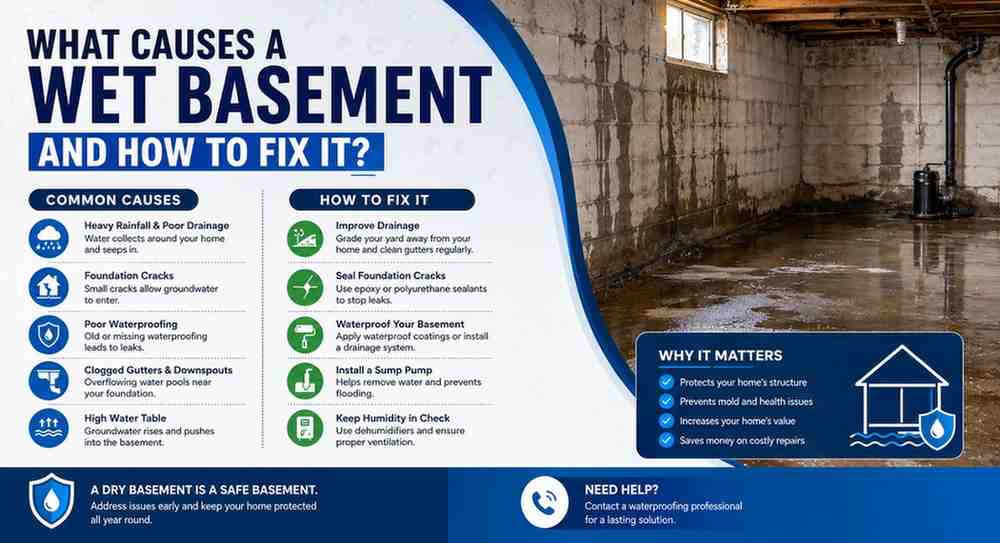
A wet basement creates more than an inconvenience. Persistent moisture can damage structural components, ruin stored belongings, encourage mold growth, and reduce indoor comfort. Water often enters through hidden pathways that remain unnoticed until visible signs appear on walls or floors. Identifying the source of moisture and applying the right repair method helps protect the foundation while preventing expensive future repairs. A proactive approach keeps basement spaces dry, functional, and prepared for changing weather conditions throughout the year.
Why do basements become wet?
Basements sit below ground level, making them naturally vulnerable to groundwater and surface runoff. When drainage systems fail or foundation weaknesses develop, moisture finds its way into the structure.
Moreover, environmental conditions and construction defects often combine to increase water intrusion. Consequently, homeowners may experience recurring dampness despite temporary repairs.
Addressing the root cause remains essential for lasting protection.
Water Always Follows the Easiest Path
Groundwater moves through soil until it reaches an opening with less resistance.
Small cracks, porous concrete, construction joints, and deteriorated seals create ideal entry points. Once moisture enters the basement, humidity rises, and structural materials begin to deteriorate over time.
Proper waterproofing interrupts this process before major damage occurs.
Poor Exterior Drainage
One of the leading causes of basement moisture involves inadequate drainage around the home.
Rainwater that remains near the foundation increases hydrostatic pressure and encourages water penetration.
Improper Landscape Grading
Ground surrounding the home should slope away from the foundation.
Negative grading directs runoff toward basement walls instead of carrying it safely away. Consequently, saturated soil places constant pressure against the structure.
Correcting grading often reduces moisture problems significantly.
Blocked Gutters and Short Downspouts
Roof drainage systems play an important role in foundation protection.
Several drainage problems contribute to wet basements:
- Clogged gutters
- Overflowing downspouts
- Short discharge extensions
- Blocked splash blocks
- Poor drainage channels
- Standing surface water
- Damaged gutter joints
- Improper roof runoff control
Routine maintenance keeps water moving away from vulnerable areas.
Foundation Cracks and Structural Openings
Even small foundation cracks allow moisture to enter under pressure.
As seasonal expansion and contraction continue, these openings gradually widen and increase water infiltration.
Vertical and Horizontal Cracks
Different crack patterns indicate different structural conditions.
Vertical cracks often result from settlement, while horizontal cracks may signal lateral soil pressure. Both create potential moisture pathways that require prompt evaluation and repair.
Ignoring cracks frequently leads to worsening structural damage.
Construction Joints and Pipe Penetrations
Water also enters through joints where concrete sections meet or where utility pipes pass through foundation walls.
Professional sealing techniques restore these vulnerable locations and improve overall basement protection against groundwater intrusion.
Hydrostatic Pressure Around the Foundation
Hydrostatic pressure develops when groundwater accumulates around basement walls.
As pressure increases, water pushes against concrete surfaces until it finds an opening.
How Saturated Soil Creates Pressure
Heavy rainfall saturates surrounding soil, increasing its weight and water content.
The resulting pressure forces moisture through pores, cracks, and expansion joints that would otherwise remain dry.
Effective drainage systems relieve this pressure before leaks occur.
Reducing Hydrostatic Stress
Contractors often recommend:
- French drains
- Drain tile systems
- Surface grading
- Gravel backfill
- Drainage boards
- Sump pumps
- Downspout extensions
- Exterior waterproof membranes
Combining these measures reduces groundwater accumulation around foundations.
Porous Concrete and Aging Materials
Concrete appears solid but contains microscopic pores capable of absorbing moisture.
Older foundations become increasingly vulnerable as protective materials deteriorate over time.
Water Migration Through Concrete
Groundwater slowly travels through porous concrete by capillary action.
Even without visible cracks, basement walls may become damp enough to encourage mold growth and interior damage.
Protective waterproof coatings reduce moisture migration effectively.
Material Deterioration Over Time
Exposure to freezing temperatures, soil movement, and moisture gradually weakens concrete surfaces.
Consequently, older basements often require repairs and updated waterproofing systems to maintain long-term structural performance.
Plumbing Leaks Inside the Basement
Not every wet basement results from exterior water intrusion.
Hidden plumbing leaks frequently create moisture problems that resemble groundwater infiltration.
Leaking Water Supply Lines
Pressurized pipes can develop small leaks behind finished walls or beneath flooring.
Persistent dripping raises humidity levels while damaging insulation, framing, and nearby building materials.
Prompt repairs minimize restoration costs.
Drain Pipe Failures
Drainage pipes may crack or separate due to settlement or aging.
Signs of plumbing-related moisture include:
- Localized dampness
- Musty odors
- Mold growth
- Warped flooring
- Water stains
- Increased humidity
- Slow drainage
- Unexpected utility increases
Professional inspection identifies the exact source.
Window Wells and Basement Openings
Improperly maintained window wells frequently allow water to enter basement spaces.
Heavy rainfall fills poorly drained wells until water reaches window frames.
Blocked Window Well Drains
Leaves, soil, and debris prevent drainage systems from functioning properly.
Cleaning drains regularly helps prevent water accumulation while protecting basement windows from leakage.
Damaged Window Seals
Worn seals around basement windows allow moisture to bypass protective barriers.
Replacing damaged seals restores waterproof performance while improving energy efficiency.
Condensation and Indoor Humidity
Some basement moisture results from condensation rather than direct leaks.
Warm air contacting cool basement surfaces forms water droplets that resemble seepage.
Poor Ventilation Increases Moisture
Limited airflow traps humid air inside enclosed basement spaces.
Consequently, condensation develops on pipes, walls, and concrete floors during seasonal temperature changes.
Improving ventilation reduces indoor moisture levels significantly.
Humidity Control Solutions
Many homeowners researching waterproofing basement walls in Michigan also evaluate vapor barriers, dehumidifiers, insulation improvements, and ventilation upgrades because controlling indoor humidity strengthens long-term moisture protection alongside structural waterproofing methods.
Effective Solutions for Wet Basements
Permanent repairs require identifying moisture sources before selecting appropriate waterproofing techniques.
Temporary fixes rarely provide lasting protection when underlying drainage or structural issues remain unresolved.
Exterior Waterproofing Systems
Exterior protection prevents groundwater from reaching basement walls.
Common solutions include:
- Waterproof membranes
- Foundation coatings
- Drain tile systems
- Drainage boards
- French drains
- Surface grading
- Gravel backfill
- Downspout improvements
Together, these systems reduce moisture pressure and strengthen foundation protection.
Interior Waterproofing Solutions
Interior waterproofing manages water that reaches the foundation and prevents it from damaging finished spaces. Although exterior protection remains highly effective, interior systems provide dependable moisture control when excavation is impractical.
Combining both methods often creates stronger long-term results.
Perimeter Drainage Channels
Professionals install concealed drainage channels beneath basement floors along foundation walls.
These channels collect infiltrating water and direct it toward sump pits before moisture reaches living areas. Consequently, flooring, drywall, and stored belongings remain better protected during heavy rainfall.
Sealants and Crack Repairs
High-quality sealants close minor openings while specialized injection methods repair structural cracks.
Epoxy strengthens stable cracks, whereas polyurethane expands to seal active water pathways. Selecting the appropriate repair method depends on crack movement and moisture conditions within the foundation.
The Importance of Sump Pump Systems
Sump pumps remove collected groundwater before basement flooding occurs. Automatic operation provides reliable protection during severe weather when water levels rise rapidly around the foundation.
Proper installation improves the effectiveness of interior drainage systems.
Essential Components
Modern sump pump systems typically include:
- Primary pump
- Backup battery
- Float switch
- Alarm system
- Discharge pipe
- Protective cover
Each component contributes to dependable operation while reducing flood risks during electrical outages or heavy storms.
Regular Maintenance Improves Reliability
Routine testing confirms that pumps activate correctly under rising water conditions.
Cleaning debris from sump pits, inspecting discharge lines, and replacing aging batteries help maintain dependable performance while preventing unexpected equipment failure.
Preventing Future Basement Moisture Problems
Preventive maintenance protects waterproofing investments and reduces repair costs associated with recurring water intrusion.
Small improvements often produce significant long-term benefits.
Routine Exterior Maintenance
Homeowners should inspect drainage systems regularly and correct minor issues promptly.
Helpful maintenance tasks include:
- Clean gutters frequently
- Extend downspouts away from foundations
- Maintain positive grading
- Remove standing water
- Clear window wells
- Inspect foundation cracks
- Trim nearby vegetation
- Check drainage outlets
Consistent maintenance supports effective moisture control throughout every season.
Monitoring Indoor Conditions
Basement humidity levels provide early warning signs of developing moisture issues.
Monitoring indoor air conditions allows property owners to identify excessive dampness before visible mold growth or structural damage occurs, making corrective action more effective and less expensive.
Common Mistakes When Fixing Wet Basements
Many property owners attempt cosmetic repairs without addressing the actual source of water intrusion.
Such approaches often delay effective solutions while allowing hidden damage to worsen.
Relying Only on Waterproof Paint
Surface coatings improve moisture resistance but cannot overcome severe groundwater pressure.
Without correcting drainage failures or repairing structural openings, water eventually bypasses painted surfaces and continues entering the basement.
Ignoring Small Leaks
Minor seepage rarely remains minor for long.
Repeated water exposure enlarges cracks, weakens concrete, and increases mold risks. Prompt repairs preserve structural integrity while reducing restoration costs associated with larger failures.
How Professional Assessments Improve Results
Every wet basement presents unique conditions that require careful evaluation before repairs begin.
Accurate inspections identify hidden moisture pathways that visual observation alone cannot reveal.
Detailed Moisture Analysis
Professionals examine soil conditions, drainage performance, crack patterns, plumbing systems, grading, humidity levels, and foundation movement.
This systematic evaluation supports targeted repairs rather than temporary fixes that fail to address root causes.
Customized Waterproofing Strategies
Combining drainage improvements, waterproof membranes, crack repairs, sump pumps, and humidity control creates layered protection suited to each property.
Tailored solutions generally perform better over time because they address site-specific conditions rather than relying on a single waterproofing technique.
FAQs
1. What is the most common cause of a wet basement?
Poor exterior drainage remains one of the leading causes of basement moisture. Water collecting around the foundation creates hydrostatic pressure that forces groundwater through cracks, joints, and porous concrete surfaces.
2. Can small foundation cracks cause major leaks?
Yes. Even narrow cracks provide pathways for groundwater under pressure. Moisture entering through these openings can gradually enlarge cracks while causing structural damage and indoor humidity problems.
3. How do French drains help prevent wet basements?
French drains collect groundwater through perforated pipes surrounded by gravel and redirect it away from the foundation. This process lowers hydrostatic pressure and reduces the likelihood of water entering basement walls.
4. Is waterproof paint enough to stop basement leaks?
Waterproof paint improves surface resistance but cannot resolve significant drainage or structural issues. Long-term protection usually requires drainage improvements, crack repairs, and foundation waterproofing systems working together.
5. Why does my basement feel damp without visible flooding?
Condensation, high humidity, porous concrete, or hidden plumbing leaks may create damp conditions even without standing water. Proper inspection helps identify the exact moisture source for effective correction.
6. How often should basement waterproofing systems receive inspection?
Annual inspections help identify developing cracks, drainage problems, and equipment issues before serious damage occurs. Additional evaluations after heavy storms provide extra protection against unexpected moisture intrusion.
7. Can clogged gutters contribute to basement leaks?
Yes. Overflowing gutters allow water to collect near the foundation instead of flowing safely away. This accumulation increases soil saturation and hydrostatic pressure around basement walls.
8. What role does a sump pump play in basement waterproofing?
A sump pump removes collected groundwater from drainage systems before flooding occurs. Automatic operation provides reliable moisture control during heavy rainfall and rising groundwater conditions.
9. Does basement waterproofing increase property value?
A dry basement improves buyer confidence by reducing concerns about structural deterioration and mold. Effective waterproofing also protects finished spaces, making homes more attractive within competitive real estate markets.
10. Can indoor humidity damage a basement without leaks?
Yes. Excess humidity encourages condensation, mold growth, and material deterioration even without groundwater intrusion. Ventilation improvements, dehumidification, and vapor control help maintain healthier indoor conditions.