

Building a new home creates the ideal opportunity to install a basement drainage system that protects the foundation from long-term moisture problems. Careful planning at the construction stage reduces future repair costs, improves structural durability, and supports a healthier indoor environment. Every design decision, from site grading to drainage pipe placement, affects overall performance. Consequently, builders and property owners who prioritize drainage during construction create a stronger defense against water intrusion before the first wall is even finished.
Why Does Early Drainage Planning Matter?
A solid drainage strategy begins before excavation reaches its final depth. Soil conditions, groundwater levels, rainfall patterns, and lot elevation all influence the final design. Moreover, addressing these factors early prevents expensive modifications after construction.
Proper planning also allows contractors to coordinate waterproofing membranes, footing drains, sump systems, and grading activities without conflicts. As a result, every component functions as part of one integrated system rather than a collection of separate installations.
Ignoring drainage during the design phase often leads to moisture accumulation, wall pressure, and basement leaks that become difficult and costly to correct.
Evaluating Site Conditions Before Construction
Every property presents unique drainage challenges. Therefore, a detailed site evaluation provides valuable information before foundation work begins.
Soil Composition
Different soil types absorb and release water at different rates.
- Clay retains water and expands when saturated.
- Sandy soil drains quickly but shifts more easily.
- Loam offers balanced drainage characteristics.
- Rocky soil may require specialized excavation methods.
Consequently, drainage design should match the site’s natural soil behavior instead of relying on a standard approach.
Groundwater Levels
High groundwater can create continuous hydrostatic pressure against basement walls. Engineers often evaluate seasonal fluctuations before determining drain depth and discharge methods.
Furthermore, knowing groundwater conditions helps determine whether additional waterproofing layers or larger drainage capacity will become necessary.
Property Slope
Natural grading significantly affects water movement.
A lot that slopes toward the foundation increases the risk of water accumulation. In contrast, land that directs runoff away from the structure reduces stress on underground drainage systems.
Foundation Drain Placement
Foundation drains serve as the first line of defense against underground water.
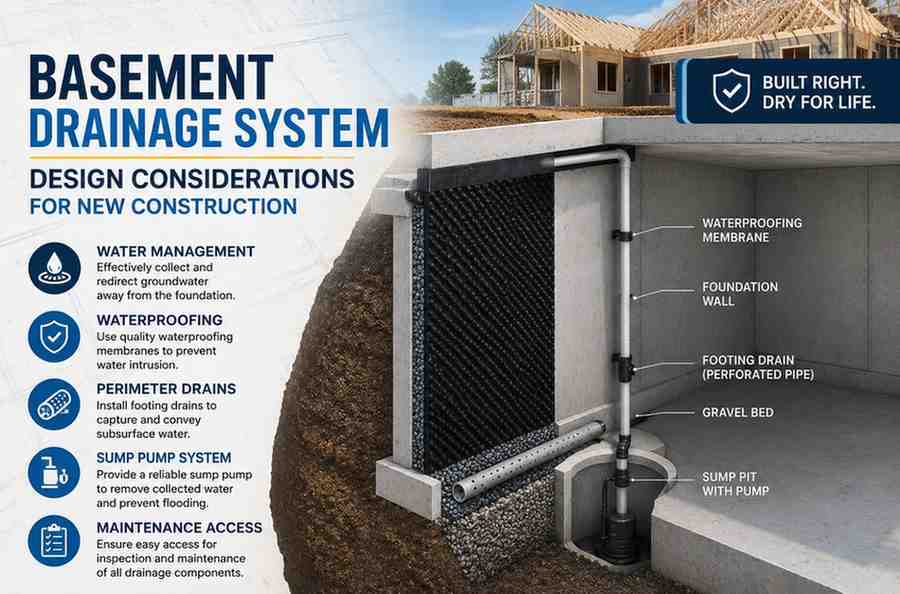
Positioning perforated drain pipes alongside the footing allows groundwater to enter the system before pressure builds against basement walls. Moreover, washed stone surrounding the pipe improves water flow while reducing sediment buildup.
Drain pipes should maintain a consistent slope throughout the installation to encourage continuous movement toward the discharge point. Even small variations may create standing water that limits system effectiveness.
Proper alignment also minimizes maintenance requirements over the life of the structure.
Selecting Appropriate Drain Pipe Materials
Material selection influences durability and long-term performance.
Common choices include:
- Flexible corrugated pipe
- Rigid PVC pipe
- High-density polyethylene pipe
- Perforated composite drainage systems
Rigid PVC generally provides smoother water flow and resists crushing under heavy loads. However, flexible pipe adapts more easily to uneven excavation conditions.
The final choice depends on soil characteristics, installation conditions, and project specifications rather than cost alone.
Importance of Drainage Aggregate
Drainage aggregate creates open spaces that encourage water movement toward the collection pipe.
Crushed washed stone remains a preferred material because it resists compaction while maintaining consistent permeability. Moreover, aggregate distributes water evenly around the drain rather than allowing isolated pressure points.
Installing insufficient aggregate limits water movement and increases clogging risk. Therefore, adequate coverage around the drain pipe plays a critical role in system performance.
Using Filter Fabric to Reduce Sediment
Fine soil particles gradually migrate into drainage systems unless properly controlled.
Filter fabric wraps the aggregate or lines the trench to separate soil from drainage materials while allowing water to pass freely. Consequently, sediment accumulation decreases significantly over time.
Benefits include:
- Reduced pipe blockage
- Longer drainage system life
- Improved water flow
- Lower maintenance needs
- Better aggregate stability
Quality filter fabric installation protects the entire drainage assembly from gradual performance decline.
Exterior Waterproofing and Drainage Integration
Drainage systems perform best when paired with exterior waterproofing.
Waterproof membranes applied to foundation walls prevent moisture penetration before groundwater reaches the concrete surface. Moreover, drainage boards create channels that direct water downward into footing drains.
Combining these components creates multiple protective layers rather than depending on a single barrier.
This coordinated approach lowers hydrostatic pressure and limits long-term deterioration caused by repeated moisture exposure.
The Role of Proper Surface Grading
Surface grading influences basement moisture as much as underground drainage.
Finished landscaping should direct rainfall away from the foundation through gradual slopes extending several feet from the structure. Consequently, runoff reaches safe discharge areas before infiltrating foundation soils.
Poor grading often overwhelms otherwise effective drainage systems.
Important grading objectives include:
- Direct water away from the home
- Prevent standing water near walls
- Reduce soil saturation
- Protect landscaping features
- Support long-term drainage efficiency
Surface management remains one of the simplest yet most valuable preventive measures.
Managing Roof Runoff Effectively
Roof drainage contributes substantial volumes of water during storms.
Gutters and downspouts should discharge well away from foundation walls through splash blocks or underground extensions. Furthermore, collection systems should avoid depositing water into already saturated soil near the basement.
Large roof areas require appropriately sized drainage components to prevent overflow.
Without effective roof water management, even professionally installed footing drains face unnecessary strain during heavy rainfall.
Designing Reliable Sump Pump Systems
Many basement drainage systems rely on sump pumps to remove collected groundwater.
The sump basin should occupy the lowest practical location where footing drains discharge naturally. Moreover, selecting a properly sized pump ensures efficient water removal during peak flow conditions.
Backup power options add another layer of protection during electrical outages.
Critical sump system components include:
- Durable sump basin
- High-capacity pump
- Reliable float switch
- Check valve
- Discharge piping
- Backup power source
Together, these elements create dependable protection against rising groundwater.
Planning for Maintenance Accessibility
Even excellent drainage systems benefit from periodic inspection.
Cleanouts placed at strategic locations allow maintenance crews to inspect and flush drainage lines if sediment accumulation develops. Consequently, small issues receive attention before becoming major failures.
Designing for accessibility also reduces future repair costs because contractors avoid unnecessary excavation.
Maintenance planning should remain part of the original design rather than an afterthought once construction ends.
Accounting for Climate and Regional Conditions
Weather patterns influence drainage requirements.
Areas with frequent freeze-thaw cycles require deeper pipe placement to avoid frost-related damage. Likewise, regions with heavy seasonal rainfall often require larger drainage capacity and enhanced waterproofing measures.
Design professionals should consider local environmental conditions when determining system specifications.
For example, projects involving a basement drainage system Michigan installation often account for cold winters, spring snowmelt, and varying groundwater conditions to improve long-term reliability.
Balancing Cost and Long-Term Value
Budget considerations influence every construction project. However, reducing drainage quality to lower initial expenses often increases future maintenance costs.
Higher-quality materials generally provide longer service life, improved reliability, and fewer repair needs. Consequently, investing in durable drainage components delivers financial value throughout the building’s lifespan.
Property owners should compare lifetime ownership costs rather than installation expenses alone when evaluating drainage options.
Protecting Basement Walls Against Hydrostatic Pressure
Hydrostatic pressure develops when saturated soil pushes against foundation walls. Therefore, reducing water accumulation outside the structure remains a primary design objective.
A properly installed drainage system intercepts groundwater before pressure reaches damaging levels. Moreover, consistent drainage lowers the chance of cracks, seepage, and structural movement. Combining effective water collection with waterproof barriers creates a dependable defense that supports the stability of the entire foundation for many years.
Methods That Reduce Hydrostatic Pressure
Several construction practices improve pressure relief around basement walls.
- Install perforated footing drains below the slab level.
- Place clean aggregate around drainage pipes.
- Apply exterior waterproof membranes.
- Maintain positive surface grading.
- Extend roof runoff away from the foundation.
- Keep discharge points free from obstruction.
Together, these measures create a coordinated system that manages water before it threatens structural integrity.
Drainage Design for Finished Basements
Many homeowners intend to convert basements into living areas after construction. Consequently, drainage design should anticipate future occupancy rather than only protecting unfinished storage space.
Dry conditions help preserve flooring, insulation, framing, and electrical systems. Furthermore, moisture control reduces mold growth and unpleasant odors that may affect indoor comfort. Designing for finished use from the beginning limits renovation costs and provides greater flexibility for future improvements.
Integrating Interior Drainage Solutions
Exterior drainage provides primary protection, yet interior systems add another layer of security.
Interior perimeter drains collect water that reaches the foundation and direct it toward the sump basin. In contrast to exterior systems, interior channels remain accessible for maintenance and inspection after construction.
Using both approaches creates redundancy that improves reliability during unusually wet conditions or unexpected groundwater fluctuations.
Common Design Mistakes to Avoid
Small planning errors can reduce the effectiveness of an otherwise well-built drainage system.
Frequent mistakes include:
- Installing pipes without sufficient slope.
- Using clogged or contaminated aggregate.
- Omitting filter fabric.
- Directing downspouts beside foundation walls.
- Allowing negative grading around the home.
- Choosing undersized sump pumps.
- Ignoring local soil characteristics.
Avoiding these issues during construction prevents expensive corrective work and improves long-term system performance.
Coordinating Drainage With Landscaping Plans
Landscape design affects basement protection long after construction ends.
Trees with aggressive roots may interfere with drainage components if planted too close to the foundation. Likewise, decorative beds that trap water against walls increase moisture exposure. Consequently, landscape planning should complement drainage objectives instead of creating new risks.
Permeable surfaces, thoughtful planting locations, and proper grading preserve drainage efficiency while enhancing curb appeal.
The Importance of Quality Installation
Even superior materials cannot compensate for poor workmanship.
Drain pipes require accurate alignment, secure connections, and consistent support throughout the trench. Moreover, waterproof coatings must cover every surface without gaps or damage. Careful inspection during installation confirms that each component performs as intended before backfilling begins.
Attention to construction quality protects the investment and reduces the likelihood of future repairs.
Planning for Long-Term Performance
An effective drainage system should continue protecting the structure for decades.
Regular inspection of gutters, discharge outlets, and sump equipment supports reliable operation. Furthermore, maintaining proper grading around the property prevents gradual changes that could redirect water toward the foundation.
Long-term success depends on combining sound engineering, quality materials, proper installation, and routine maintenance into one coordinated strategy that keeps groundwater under control through changing seasons.
Conclusion
A well-designed basement drainage system provides lasting protection against moisture intrusion, structural stress, and costly repairs. Careful evaluation of site conditions, thoughtful material selection, coordinated waterproofing, and proper installation all contribute to dependable performance. Moreover, planning for maintenance and future use increases the value of the investment. Building drainage into the original construction process creates a stronger foundation, improves indoor conditions, and supports the long-term durability of the entire structure.
FAQs
1. Why should basement drainage be planned before construction begins?
Planning drainage before construction allows designers to evaluate soil, groundwater, and grading conditions before the foundation is installed. Consequently, builders can integrate drainage components efficiently, reduce future excavation needs, improve waterproofing performance, and lower the risk of costly moisture problems after the building is complete.
2. What type of soil creates the greatest drainage challenge?
Clay soil usually presents the biggest challenge because it retains large amounts of water and drains slowly. Moreover, saturated clay expands and increases pressure against foundation walls. Proper drainage aggregate, footing drains, and grading become especially important when construction occurs on clay-heavy sites.
3. How does a footing drain protect the basement?
A footing drain collects groundwater surrounding the foundation and redirects it toward a safe discharge location. Consequently, water does not accumulate beside basement walls, reducing hydrostatic pressure and lowering the possibility of seepage, cracks, and structural damage over time.
4. Why is washed stone used around drainage pipes?
Washed stone creates open spaces that allow water to flow freely toward perforated drainage pipes. Furthermore, it resists compaction better than ordinary soil, helping maintain consistent drainage capacity while reducing sediment buildup that could eventually restrict water movement.
5. Does every new basement require a sump pump?
Not every project requires a sump pump, but many benefit from one depending on groundwater conditions and local drainage characteristics. A properly sized sump system offers valuable backup protection by removing collected water before it reaches the basement floor level.
6. What purpose does filter fabric serve in drainage systems?
Filter fabric separates surrounding soil from drainage aggregate while allowing water to pass through. Consequently, fine particles remain outside the system instead of clogging pipes and reducing flow. This simple component extends drainage life and lowers maintenance requirements significantly.
7. Can surface grading affect basement moisture problems?
Yes. Surface grading strongly influences how rainwater moves around the property. Positive slopes direct runoff away from the foundation, while poor grading allows water to collect beside basement walls. Proper grading therefore supports underground drainage and improves overall moisture protection.
8. How often should drainage components be inspected?
Property owners should inspect visible drainage components at least once each year and after severe storms. Gutters, discharge outlets, and sump pumps deserve particular attention because prompt maintenance prevents small issues from developing into expensive structural problems.
9. Why should roof drainage connect with the overall drainage strategy?
Roof runoff produces significant water volume during heavy rainfall. Extending downspouts away from the foundation prevents excessive saturation around basement walls. Consequently, footing drains operate more efficiently because they manage groundwater instead of unnecessary surface runoff from the roof.
10. What provides the best long-term basement moisture protection?
The strongest protection comes from combining effective footing drains, waterproof membranes, drainage aggregate, filter fabric, proper grading, reliable sump equipment, and routine maintenance. Together, these elements create a coordinated system that controls water movement and preserves foundation integrity for many years.