


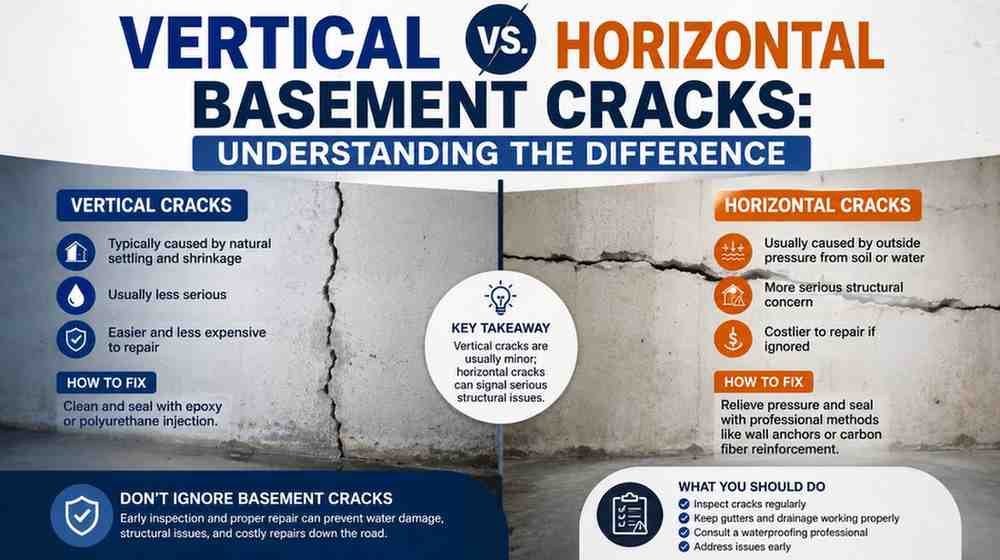
Basement cracks often raise concerns because they may signal anything from normal concrete movement to serious structural stress. The direction, width, and location of a crack provide valuable clues about its cause and potential impact. Proper evaluation allows homeowners to address problems before they become expensive repairs. Consequently, recognizing the distinction between vertical and horizontal cracks supports better maintenance decisions and helps protect the long-term strength and safety of the entire foundation.
Why Basement Cracks Develop?
Concrete changes throughout its service life as it cures, settles, and responds to environmental conditions. These natural processes can create visible cracks that vary in appearance and severity.
Moreover, soil movement, groundwater pressure, temperature changes, and construction loads all influence foundation behavior. Some cracks remain cosmetic, while others indicate structural concerns that require prompt attention.
Careful observation of crack patterns provides important information about the forces affecting the foundation.
What Vertical Basement Cracks Indicate
Vertical cracks usually extend upward or downward with minimal sideways movement.
In many cases, these cracks develop because concrete shrinks slightly during curing or because minor settlement occurs after construction. Consequently, narrow vertical cracks often present lower structural risk than other crack types.
However, widening gaps or active water seepage should never be ignored because changing conditions may signal continued movement.
Common Causes of Vertical Cracks
Several conditions contribute to vertical crack formation.
- Normal concrete shrinkage
- Minor foundation settlement
- Seasonal temperature changes
- Slight soil consolidation
- Moisture variation around the footing
Identifying the underlying cause helps determine whether monitoring or repair provides the best solution.
Typical Characteristics
Vertical cracks generally display predictable features.
They often remain relatively straight, extend from floor to ceiling, and maintain consistent width throughout their length. Furthermore, they rarely create noticeable wall displacement unless additional structural movement develops.
Routine inspection helps confirm whether these cracks remain stable over time.
What Horizontal Basement Cracks Suggest
Horizontal cracks frequently deserve greater attention because they often result from lateral soil pressure pushing against foundation walls.
When saturated soil expands, pressure increases substantially. Consequently, basement walls may begin to bow inward, creating long horizontal fractures that indicate structural stress rather than simple concrete shrinkage.
Prompt evaluation becomes especially important when horizontal cracks continue growing or appear alongside wall movement.
Primary Causes of Horizontal Cracks
Several external forces create horizontal cracking patterns.
- Hydrostatic pressure from groundwater
- Expanding clay soil
- Improper exterior drainage
- Heavy backfill loads
- Freeze and thaw cycles
- Foundation wall overload
Each factor increases sideways pressure that challenges wall stability.
Visible Warning Signs
Horizontal cracks often appear with additional indicators.
Homeowners may notice inward wall deflection, stair-step separation near corners, sticking doors, or water leakage through the damaged area. Moreover, repeated seasonal movement may gradually enlarge existing fractures.
Early detection reduces the likelihood of extensive structural repairs.
Comparing Vertical and Horizontal Cracks
Although both crack types affect basement walls, their causes and implications differ significantly.
Vertical cracks commonly result from normal settlement or shrinkage, whereas horizontal cracks usually reflect external pressure acting against the foundation. In contrast, horizontal fractures demand closer evaluation because they may indicate compromised structural performance.
Correct identification supports appropriate repair planning and long-term protection.
Major Differences at a Glance
- Vertical cracks often follow concrete shrinkage.
- Horizontal cracks usually result from soil pressure.
- Vertical cracks commonly remain stable.
- Horizontal cracks may worsen without intervention.
- Water intrusion can occur through either type.
- Structural risk generally increases with horizontal movement.
Recognizing these distinctions allows property owners to prioritize repairs effectively.
The Role of Water in Crack Formation
Moisture strongly influences foundation performance.
Poor drainage allows soil to retain excess water, increasing hydrostatic pressure against basement walls. Furthermore, repeated wet and dry cycles cause expansion and contraction that gradually weaken surrounding materials.
Maintaining proper grading, gutters, and drainage systems reduces water-related stress and limits future crack development.
How Soil Conditions Affect Basement Walls
Every foundation depends on the soil supporting it.
Expansive clay soils absorb moisture and increase in volume, creating substantial lateral pressure. Sandy soils drain more efficiently but may settle under changing moisture conditions. Consequently, soil characteristics influence both crack patterns and repair strategies.
Accurate diagnosis requires evaluating surrounding ground conditions in addition to visible foundation damage.
When Crack Width Becomes a Concern
Not every crack requires immediate structural repair.
Hairline openings often remain stable for years without affecting foundation integrity. However, cracks that widen noticeably, allow water penetration, or show displacement deserve prompt inspection.
Regular measurement and documentation help identify movement trends before serious structural damage develops.
Moisture Intrusion Through Basement Cracks
Even small openings create pathways for water infiltration.
Rainfall, melting snow, and groundwater pressure may force moisture through cracks into finished or unfinished basement spaces. Consequently, damp conditions encourage mold growth, material deterioration, and indoor air quality concerns.
Sealing cracks while addressing drainage issues provides more reliable long-term protection than surface patching alone.
Repair Methods for Vertical Cracks
Repair selection depends on crack activity and foundation condition.
Epoxy Injection
Epoxy restores structural continuity by bonding cracked concrete surfaces together.
This method works well for stable cracks where movement has stopped, and structural reinforcement remains desirable.
Polyurethane Injection
Flexible polyurethane expands to seal water leaks while accommodating slight movement.
Its moisture-resistant properties make it particularly useful for active seepage conditions without creating rigid stress points.
Surface Sealants
Surface coatings improve appearance and provide limited moisture resistance.
However, they do not address deeper structural concerns or active movement within the foundation.
Repair Methods for Horizontal Cracks
Horizontal cracks usually require solutions that address structural pressure instead of only sealing the visible opening. Consequently, repair strategies often include reinforcement systems that stabilize the wall and reduce future movement.
Professional evaluation identifies whether the wall requires strengthening, drainage improvements, or pressure relief before cosmetic repairs begin. Addressing the root cause protects the foundation more effectively than treating surface symptoms alone.
Wall Reinforcement Systems
Several reinforcement methods improve wall stability.
- Carbon fiber reinforcement strips
- Steel wall braces
- Anchoring systems
- Reinforced concrete buttresses
- Interior support beams
- Exterior pressure relief measures
Each solution matches specific wall conditions and structural requirements, making accurate assessment essential before repairs proceed.
Drainage Improvements
Reducing water pressure often forms a critical part of horizontal crack repair.
Improved grading, foundation drains, gutter extensions, and waterproofing systems decrease soil saturation around basement walls. Moreover, lowering hydrostatic pressure helps prevent repaired cracks from reopening after restoration work is complete.
Monitoring Crack Movement
Regular observation provides valuable information about foundation stability.
Homeowners can mark crack endpoints and measure width changes over several months. Consequently, visible expansion becomes easier to identify before major structural issues develop.
Photographs taken from the same location under similar lighting conditions also create useful records for future comparison and maintenance planning.
Preventing Future Basement Cracks
Although some concrete movement remains unavoidable, proper maintenance significantly reduces future cracking risks.
Control Surface Water
Managing rainwater around the home protects the foundation.
Simple preventive measures include:
- Cleaning gutters regularly
- Extending downspouts away from walls
- Maintaining positive grading
- Preventing standing water
- Repairing damaged drainage systems
Together, these practices reduce soil saturation and lessen pressure against basement walls.
Maintain Consistent Soil Moisture
Extreme moisture fluctuations encourage soil movement that affects foundations.
During prolonged dry periods, controlled landscape watering helps minimize excessive soil shrinkage around the structure. In contrast, proper drainage prevents oversaturation after heavy rainfall, creating more stable support conditions throughout seasonal changes.
Signs That Immediate Attention Is Necessary
Certain crack conditions indicate elevated structural concern.
Property owners should seek prompt evaluation if they notice:
- Rapid crack growth
- Wall bowing
- Water flowing through cracks
- Stair-step masonry cracking
- Floor separation near walls
- Doors or windows becoming difficult to operate
These warning signs often suggest foundation movement extending beyond simple cosmetic damage.
The Connection Between Drainage and Crack Prevention
Effective drainage reduces one of the leading causes of basement wall distress.
Groundwater accumulation increases the hydrostatic pressure that pushes against concrete surfaces. Consequently, maintaining efficient exterior drainage systems lowers stress on the foundation and decreases the likelihood of both horizontal and vertical crack formation.
Long-term foundation protection depends as much on moisture management as on structural design.
How Seasonal Changes Influence Crack Behavior
Seasonal weather affects soil movement and foundation performance.
Spring moisture may increase lateral pressure, while summer dryness can produce settlement through soil shrinkage. Furthermore, freezing temperatures expand trapped water within surrounding soils, creating additional stress against basement walls.
Monitoring crack behavior through changing seasons helps determine whether movement remains stable or requires corrective action.
The Value of Early Intervention
Small cracks often remain easier and less expensive to repair than extensive structural damage.
Early action prevents water intrusion, reduces ongoing wall movement, and limits deterioration of surrounding materials. Moreover, timely repairs preserve property value while protecting finished basement spaces from future moisture-related problems.
Waiting until visible damage worsens frequently increases repair complexity and overall project costs.
Choosing an Appropriate Repair Strategy
No single repair method fits every basement crack.
Effective solutions depend on crack orientation, width, activity, moisture conditions, wall displacement, and surrounding soil characteristics. Consequently, selecting repairs based on careful evaluation provides more durable results than applying generic patching materials without addressing underlying causes.
Thoughtful planning supports long-term structural performance and minimizes recurring problems.
Conclusion
Vertical and horizontal basement cracks reveal different conditions affecting foundation performance, making accurate identification essential for proper repair planning. While many vertical cracks remain relatively stable, horizontal cracks often signal greater structural pressure that requires prompt attention. Moreover, controlling drainage, monitoring crack movement, and addressing underlying causes help preserve foundation strength and reduce future repair needs. Consistent maintenance combined with timely corrective action provides lasting protection for both the basement and the entire structure.
FAQs
1. Are all vertical basement cracks considered harmless?
No. Many vertical cracks result from normal shrinkage or settlement, yet widening cracks or those allowing water intrusion deserve closer evaluation. Regular monitoring helps identify changes that may indicate continued foundation movement requiring repair.
2. Why do horizontal cracks often raise greater concern?
Horizontal cracks frequently develop because soil pressure pushes against basement walls. This lateral force may weaken structural stability over time. Consequently, horizontal cracks often require reinforcement and drainage improvements rather than simple cosmetic sealing.
3. Can water enter through hairline cracks?
Yes. Even narrow cracks may allow moisture penetration under hydrostatic pressure. Although seepage may appear minor initially, repeated water intrusion can damage finishes, encourage mold growth, and contribute to long-term foundation deterioration if left untreated.
4. How can homeowners monitor basement cracks?
Marking crack ends, measuring widths, and taking periodic photographs create useful records of movement. Comparing these observations over time helps identify whether cracks remain stable or continue expanding, supporting informed repair decisions before significant damage develops.
5. Does poor drainage contribute to foundation cracks?
Poor drainage allows excess water to saturate surrounding soil, increasing hydrostatic pressure against basement walls. Consequently, improper moisture management contributes to crack development, water intrusion, and structural stress that may worsen without corrective drainage improvements.
6. What repair works best for leaking vertical cracks?
Polyurethane injection often seals leaking vertical cracks effectively because the material expands and remains flexible after curing. This flexibility accommodates slight movement while blocking water infiltration more successfully than many rigid repair materials.
7. Can horizontal cracks be repaired without reinforcing the wall?
Minor cases may require only drainage correction and sealing, but significant horizontal cracks often need structural reinforcement. Carbon fiber systems, steel braces, or anchoring methods strengthen weakened walls while reducing the chance of continued movement.
8. How do seasonal weather changes affect basement cracks?
Changing moisture levels cause soil expansion and contraction around the foundation. Freeze-thaw cycles also increase stress on basement walls. These environmental factors may enlarge existing cracks or create new ones when drainage remains inadequate.
9. Is crack sealing alone enough to solve foundation problems?
Surface sealing addresses visible openings but may not eliminate underlying structural movement or water pressure. Lasting repairs often combine crack treatment with drainage improvements and reinforcement measures that target the root cause of the damage.
10. Why is early crack repair important for homeowners?
Early repairs prevent water intrusion, reduce structural deterioration, and limit repair costs. Addressing minor damage before movement progresses helps preserve foundation stability, maintain indoor conditions, and protect the long-term value of the property, making timely action a practical investment.