


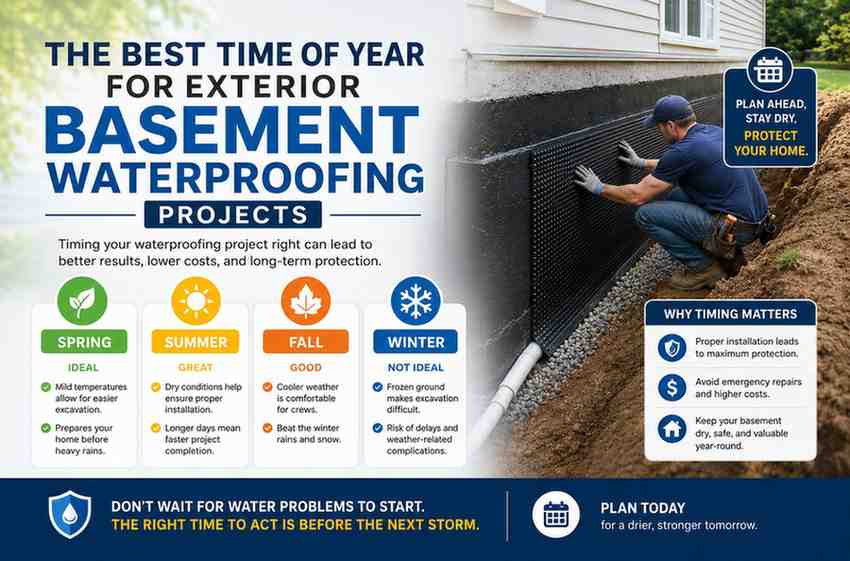
Exterior basement waterproofing protects foundations by stopping groundwater before it reaches basement walls. Although the system itself provides long-term moisture protection, project timing also affects installation quality and efficiency. Soil conditions, temperature, rainfall, and ground moisture all influence excavation and waterproof membrane performance. Consequently, choosing the appropriate season improves construction conditions, supports proper material application, and reduces unexpected delays that may interfere with project completion or long-term waterproofing success.
Why does project timing matter?
Exterior basement waterproofing requires excavation around the foundation, making weather conditions an important consideration.
Dry soil allows easier digging, cleaner wall preparation, and more reliable membrane installation. Moreover, stable temperatures help waterproof materials cure properly while reducing the risk of moisture becoming trapped beneath protective layers.
Scheduling work during favorable conditions often improves efficiency and contributes to longer-lasting results.
How Weather Affects Waterproofing Performance
Environmental conditions directly influence both installation and finished system performance.
Heavy rain can saturate excavation areas, delay construction, and complicate wall preparation. In contrast, moderate temperatures and dry conditions create an ideal environment for applying waterproof membranes and drainage components.
Careful scheduling reduces interruptions while supporting better adhesion and overall waterproof reliability.
Weather Factors That Influence Installation
Several environmental conditions deserve attention before beginning work.
- Soil moisture levels
- Air temperature
- Rainfall frequency
- Groundwater conditions
- Wind exposure
- Frost depth
Each factor affects excavation quality and membrane application success.
Spring Waterproofing Projects
Spring often marks the beginning of construction activity after winter conditions improve.
Advantages of Spring Installation
Moderate temperatures support many waterproofing materials during application and curing.
Furthermore, addressing waterproofing before heavy seasonal rainfall protects basements from moisture challenges that increase throughout the year.
Contractor availability may also improve during early spring before peak construction demand develops.
Potential Spring Challenges
Spring rainfall can delay excavation and create muddy job sites.
High groundwater resulting from melting snow may also complicate foundation work. Consequently, scheduling flexibility becomes valuable when planning projects during this season.
Careful monitoring of weather forecasts helps reduce unnecessary delays.
Summer as a Popular Waterproofing Season
Many property owners choose summer because dry weather often creates favorable installation conditions.
Excavation generally proceeds more efficiently when soil remains stable and excessive groundwater stays absent. Moreover, waterproof membranes frequently perform well within recommended temperature ranges during summer months.
Long daylight hours also support faster project completion and improved scheduling flexibility.
Summer Benefits
Several advantages make summer attractive for exterior waterproofing.
- Lower soil moisture
- Faster excavation
- Better membrane curing
- Reduced weather interruptions
- Longer working hours
- Improved construction efficiency
These conditions often contribute to smoother project execution.
Considerations During Hot Weather
Although summer provides many benefits, extreme heat introduces its own challenges.
Some waterproof materials require controlled application temperatures to maintain proper consistency and adhesion. Consequently, installation crews may adjust work schedules to cooler morning hours during periods of excessive heat.
Protecting freshly applied membranes from rapid drying also supports better long-term performance.
Fall Offers Excellent Waterproofing Conditions
Fall frequently combines moderate temperatures with relatively stable weather patterns.
Cooler air reduces heat-related installation concerns while soil often remains workable before winter frost develops. Furthermore, completing waterproofing before winter protects foundations against freezing moisture and seasonal groundwater fluctuations.
Many professionals consider fall one of the most practical times for exterior waterproofing work.
Advantages of Autumn Projects
Fall projects provide several practical benefits.
- Comfortable working temperatures
- Stable curing conditions
- Reduced summer heat stress
- Preparation before winter
- Good excavation conditions
- Improved scheduling opportunities
These factors create favorable conditions for quality installation.
Winter Waterproofing Challenges
Winter introduces conditions that may complicate excavation and membrane application.
Frozen ground increases excavation difficulty while snow and ice create additional moisture concerns. Moreover, certain waterproof materials require temperatures above minimum thresholds for proper curing and adhesion.
Although winter projects remain possible in some locations, scheduling often depends on local climate conditions and specialized construction methods.
The Importance of Soil Conditions
Soil moisture influences excavation stability and foundation preparation.
Dry, stable soil allows cleaner trench walls and easier equipment operation. In contrast, saturated soil may collapse into excavations, increasing labor requirements and delaying installation.
Selecting periods with balanced soil moisture improves efficiency while supporting safe construction practices.
Groundwater Levels and Project Planning
Groundwater conditions vary throughout the year depending on rainfall and seasonal changes.
High groundwater complicates excavation by allowing water to collect around exposed foundations. Consequently, lower groundwater periods often simplify waterproofing installation and improve wall preparation before membrane application begins.
Evaluating local conditions helps determine the most suitable construction window.
How Membrane Materials Respond to Temperature
Modern waterproof membranes perform best within manufacturer-recommended temperature ranges.
Moderate conditions promote proper bonding, flexibility, and curing while reducing application challenges associated with freezing temperatures or excessive heat. Consequently, selecting favorable weather supports long-term waterproof integrity.
Proper installation conditions contribute directly to membrane durability beneath surrounding soil.
Scheduling Around Landscaping Concerns
Exterior waterproofing requires excavation that temporarily affects landscaping.
Planning projects during seasons when plant growth slows may reduce landscape disruption and simplify restoration after construction finishes. Moreover, dry conditions often allow grading and soil replacement to proceed more efficiently.
Thoughtful scheduling protects both the foundation and the appearance of the surrounding property.
Regional Climate Differences
Ideal project timing varies according to local weather patterns.
Areas with extended winters may offer shorter construction windows, while milder climates provide greater flexibility throughout the year. Projects involving exterior basement waterproofing in Michigan homes often receive careful scheduling because seasonal freezing, spring thaw, and changing groundwater conditions significantly influence excavation and membrane installation quality.
Planning Improves Project Success
Careful scheduling provides enough time for inspections, excavation planning, material selection, and weather monitoring before work begins. Consequently, property owners can avoid rushed decisions that may affect installation quality.
Early planning also allows contractors to coordinate equipment, drainage improvements, and waterproof membrane application without unnecessary interruptions, creating a smoother construction process from start to finish.
Benefits of Advance Scheduling
Planning several weeks before the intended start date offers important advantages.
- Greater scheduling flexibility
- Better material availability
- More accurate weather preparation
- Improved project coordination
- Reduced construction delays
- Easier landscape restoration planning
Organized preparation contributes to efficient installation and dependable long-term waterproofing performance.
Balancing Cost and Seasonal Demand
Project costs sometimes fluctuate with construction demand.
Peak building seasons may reduce scheduling flexibility because many homeowners begin outdoor improvements during the same period. In contrast, less busy months occasionally provide greater availability for waterproofing projects.
However, installation quality should remain the primary consideration because favorable weather often delivers better long-term results than choosing a season based only on potential cost differences.
The Importance of Foundation Inspection Before Waterproofing
A detailed foundation inspection should precede excavation and membrane installation.
Visible cracks, deteriorated mortar joints, uneven settlement, and drainage deficiencies require attention before waterproofing materials cover the wall surface. Moreover, repairing structural concerns first allows membranes to perform more effectively over the life of the foundation.
Addressing existing issues before excavation concludes minimizes future repair complexity.
Inspection Areas Worth Evaluating
A careful inspection typically includes several critical components.
- Foundation wall condition
- Existing cracks
- Drainage performance
- Surface grading
- Window wells
- Utility penetrations
Evaluating these areas creates a stronger foundation for successful waterproofing installation.
Coordinating Waterproofing With Other Exterior Projects
Many homeowners schedule waterproofing alongside landscaping or foundation improvements.
Combining projects reduces repeated excavation and minimizes disruption around the property. Furthermore, drainage upgrades, grading corrections, and retaining wall work often complement waterproofing objectives by improving water management across the site.
Coordinated planning frequently saves time while producing better overall results.
Why Dry Excavation Conditions Matter
Dry excavation provides safer working conditions and cleaner foundation surfaces for membrane application.
Wet trenches may collapse, delay installation, and introduce additional moisture that interferes with waterproof material adhesion. Consequently, selecting periods with relatively stable weather improves both construction efficiency and waterproofing quality.
Maintaining clean excavation walls also simplifies inspection before backfilling begins.
Common Scheduling Mistakes to Avoid
Certain timing decisions increase project challenges unnecessarily.
Common mistakes include:
- Waiting until active leaks appear
- Scheduling during prolonged rainy periods
- Ignoring local frost conditions
- Beginning excavation without weather monitoring
- Delaying drainage repairs until after waterproofing
- Overlooking grading corrections
Avoiding these issues improves installation conditions and supports durable basement protection.
Preparing the Property Before Work Begins
Proper preparation helps waterproofing projects proceed without unnecessary complications.
Removing landscape obstacles, identifying underground utilities, and protecting nearby structures simplify excavation activities. Moreover, temporary relocation of outdoor furniture or decorative features reduces accidental damage during construction.
Organized site preparation supports efficient workflow while preserving surrounding property features.
Helpful Preparation Steps
Several practical measures improve project readiness.
- Trim vegetation near the foundation.
- Mark irrigation systems.
- Clear access routes for equipment.
- Relocate movable landscape features.
- Confirm drainage discharge locations.
- Secure outdoor utilities when necessary.
Preparation reduces delays and supports smoother construction operations.
Long-Term Benefits of Choosing the Right Season
Selecting favorable weather conditions benefits the waterproofing system long after installation ends.
Proper membrane adhesion, stable excavation, effective drainage placement, and careful backfilling all contribute to lasting moisture protection. Consequently, seasonal planning becomes an investment in durability rather than simply a scheduling decision.
Well-timed projects often require fewer corrective measures while delivering dependable performance throughout changing environmental conditions.
Weather Monitoring During Construction
Even carefully scheduled projects benefit from continued weather observation.
Unexpected storms or rapid temperature changes may require temporary adjustments to excavation or membrane application. Furthermore, flexible scheduling allows installers to protect exposed foundations and newly applied materials until conditions improve.
Ongoing weather awareness supports quality workmanship and reduces unnecessary project risks.
Selecting the Best Time for Individual Property Conditions
Every property presents unique site characteristics that influence scheduling decisions.
Soil composition, groundwater levels, drainage patterns, landscape design, and regional climate all affect installation timing. Consequently, the best season for one home may differ from another despite similar construction methods.
Evaluating local environmental conditions alongside weather forecasts produces more reliable waterproofing outcomes and stronger long-term foundation protection.
Conclusion
The ideal season for exterior basement waterproofing depends on weather stability, soil conditions, groundwater levels, and proper project planning. Moderate temperatures and relatively dry conditions generally support better excavation, membrane application, and curing performance. Moreover, scheduling work before severe seasonal moisture challenges strengthens long-term protection against water intrusion. Careful preparation, thoughtful timing, and coordinated drainage improvements create a durable waterproofing system that preserves foundation integrity and helps maintain a dry, healthy basement for years.
FAQs
1. What season generally offers the best conditions for exterior basement waterproofing?
Spring, summer, and fall often provide suitable conditions depending on the local climate. Moderate temperatures and relatively dry soil usually support easier excavation, proper membrane adhesion, and efficient project completion while reducing weather-related delays during installation.
2. Why can heavy rainfall delay waterproofing projects?
Heavy rain saturates soil, fills excavations with water, and complicates wall preparation. Consequently, waterproof membranes may not adhere properly until surfaces dry, making construction slower and potentially affecting long-term installation quality.
3. Is summer always the best season for waterproofing?
Summer frequently provides favorable conditions, yet excessive heat may influence material application and curing. Early morning installation and careful temperature management often improve results when extremely warm weather develops during construction.
4. Can exterior basement waterproofing be completed during winter?
Winter projects remain possible in some regions, although frozen ground, snow, and low temperatures create additional challenges. Specialized equipment and appropriate weather conditions become essential when excavation and membrane installation occur during colder months.
5. How does soil moisture affect waterproofing installation?
Balanced soil moisture supports stable excavation and cleaner foundation surfaces. In contrast, saturated soil increases trench collapse risk and complicates membrane application, while extremely dry conditions may create dust that interferes with proper surface preparation.
6. Why should foundation inspections occur before waterproofing begins?
Inspecting the foundation identifies cracks, structural defects, and drainage concerns that require correction before waterproof membranes cover the wall. Addressing these issues first improves system performance and reduces future repair requirements.
7. Does landscaping influence project scheduling?
Yes. Excavation temporarily affects surrounding landscaping, making seasonal timing important. Planning waterproofing during periods of slower plant growth often simplifies restoration and minimizes disruption to lawns, gardens, and decorative landscape features.
8. Should drainage improvements accompany exterior waterproofing?
Drainage improvements strengthen waterproofing performance by directing groundwater away from foundation walls. Consequently, combining drainage upgrades with membrane installation reduces hydrostatic pressure and improves long-term moisture protection beneath surrounding soil.
9. How far in advance should homeowners schedule waterproofing work?
Scheduling several weeks or months ahead allows time for inspections, weather planning, material ordering, and contractor coordination. Early preparation often creates greater flexibility while reducing delays associated with peak construction demand.
10. What factors determine the best timing for an individual property?
Regional climate, soil type, groundwater conditions, drainage patterns, landscape design, and seasonal weather all influence project timing. Evaluating these factors together helps identify favorable construction conditions that support reliable waterproofing performance and lasting foundation protection.