


Table of Contents
Waking up to a damp, musty smell in your basement is a frustration many Michigan homeowners know all too well. After a heavy spring rain or a sudden winter thaw, that dreaded dark spot appears on the floor, or worse, you find yourself ankle-deep in water. This constant battle against moisture isn’t just a nuisance; it’s a direct threat to your home’s foundation, air quality, and value.
For homeowners in Southeast Michigan, the question isn’t whether you need a drainage solution, but which one is right for your property. When comparing a french drain vs sump pump in Michigan, it is rarely a simple “either/or” choice. The unique challenges of our region—heavy clay soil, high water tables, and dramatic freeze-thaw cycles—demand a more sophisticated approach than a one-size-fits-all fix.
Key Takeaways
- Not an “Either/Or” Choice: Michigan’s dense clay soil often means the most effective solution is a hybrid system using both a French drain and a sump pump.
- Understand the Problem: French drains manage surface water moving horizontally, while sump pumps handle rising water tables and hydrostatic pressure from below.
- The Freeze-Thaw Danger: Proper installation depth is critical to prevent frozen discharge lines during Michigan winters.
- Local Regulations: Cities like Troy and Sterling Heights have specific ordinances regarding where you can discharge water.
The Michigan Drainage Dilemma: Surface Runoff vs. Hydrostatic Pressure
To understand which system you need, you first have to understand the two primary ways water threatens your basement: from the side and from below. Many homes in areas like Troy and Rochester Hills are built in what is known as the “Clay Bowl.” When a basement is excavated, the hole is backfilled with porous soil. However, the surrounding native clay doesn’t absorb water well, causing the backfill to hold water against your foundation walls like a sponge.
Simultaneously, we face significant hydrostatic pressure relief in Michigan homes. As snow melts or heavy rains fall, the water table rises, pushing water vertically through the cracks and joints in your basement floor. While a French drain primarily deals with surface water, a sump pump is the champion against this upward pressure.
Local Tip: If moisture appears high on your basement walls, it’s likely surface water pressure. If it seeps in where the wall meets the floor, hydrostatic pressure from a rising water table is the primary culprit.
French Drain Installation in Rochester MI: Passive Perimeter Defense
A French drain is a gravity-based system designed to intercept and redirect groundwater before it can saturate your foundation. It works passively, requiring no electricity to function. At Mansour’s Innovations, we specialize in french drain installation in Rochester MI and surrounding communities, ensuring these vents are deep enough to bypass the frost line.
Interior vs. Exterior French Drains
- Exterior French Drains: This is your first line of defense. Dug around the outside perimeter, it redirects water before it ever touches your foundation. For homeowners looking for exterior water management in Bloomfield Hills MI, this is often the most effective method to stop seepage.
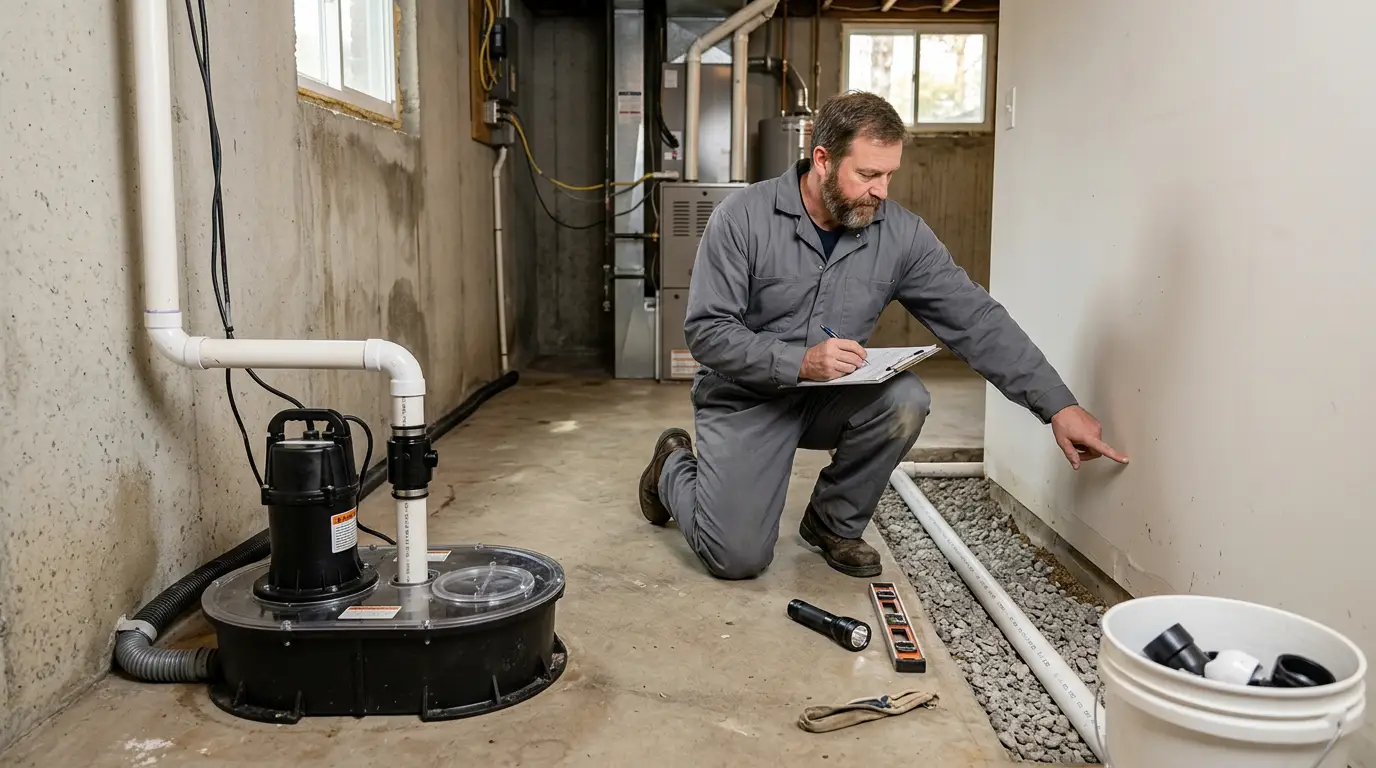
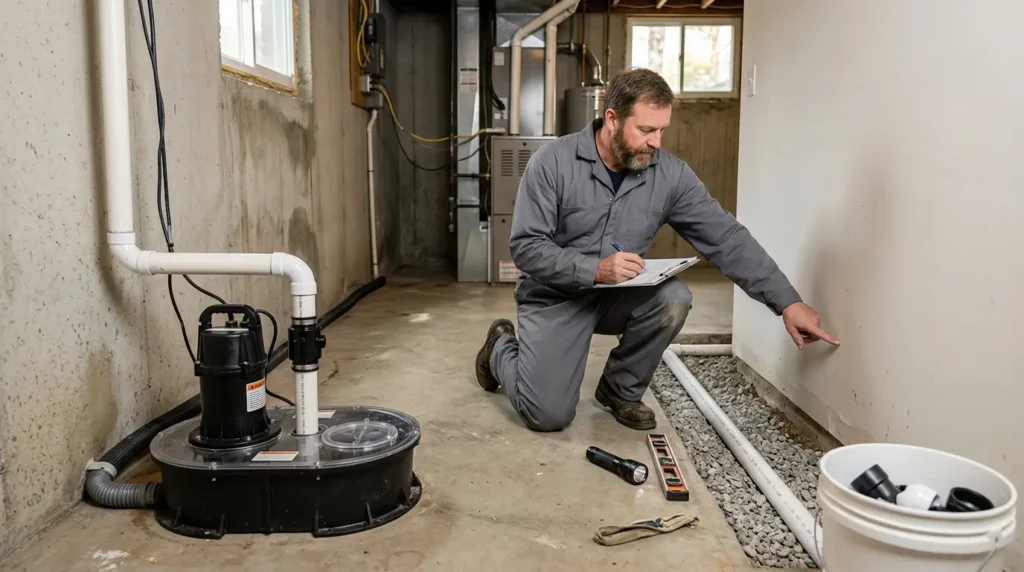
- Interior French Drains: Installed inside the basement perimeter, this system captures water that has already seeped through and channels it to a sump pump. This is a common component of basement drainage systems in Shelby Township MI.
Sump Pump Services in Sterling Heights MI: The Last Line of Defense
If a French drain is the shield, the sump pump is the sword. It is an active, mechanical system designed to physically eject water that has collected under your foundation. Because our region is prone to power outages during severe storms, we always recommend a battery backup as part of our sump pump services in Sterling Heights MI.
A high-quality sump pump system is the only reliable way to fight the immense upward pressure exerted by saturated ground in Utica and Sterling Heights. To see how these costs compare with other solutions, you can view our 2026 Basement Waterproofing Cost Guide.
Foundation Drainage Contractors in Troy MI: Navigating Local Codes
A critical aspect of any drainage project is municipal compliance. You cannot simply pipe water to the curb in many Michigan cities. Experienced foundation drainage contractors in Troy MI know the specific ordinances regarding storm sewer connections and property line setbacks.
| Feature | Exterior French Drain | Sump Pump System |
|---|---|---|
| Primary Purpose | Intercept surface water runoff | Relieve hydrostatic pressure |
| Power Source | Gravity (Passive) | Electricity (Active) |
| Maintenance | Low (Check outlets) | Medium (Check pump & battery) |
| Best Michigan Use | Heavy clay soil drainage | High water table management |
For many residents, the ideal setup is a hybrid. We often recommend an exterior system to manage runoff combined with an interior pump as a safety net. This multi-layered approach is discussed further in our guide on Interior vs Exterior Waterproofing in Michigan.
Frequently Asked Questions About French Drain vs. Sump Pump in Michigan
1. Do I need a French drain if I already have a sump pump?
It depends on the source of your water. If your pump handles a high water table but you still see dampness on walls, an exterior French drain can be highly beneficial. It reduces the water reaching your foundation and prevents your pump from short-cycling.
2. How long do French drains last in heavy Michigan clay?
A professionally installed French drain using the correct filter fabric and gravel can last for decades. The key is preventing fine clay and silt from clogging the pipe. DIY installations in Michigan often fail in 3-5 years, which is why working with an experienced waterproofing contractor is critical.
3. What’s better for hydrostatic pressure, a French drain or a sump pump?
A sump pump is the most direct solution. Hydrostatic pressure builds up under your basement floor. An interior French drain works with the pump to relieve this pressure by creating a channel for the rising water to travel to the sump pit.
4. Can I install a French drain myself in Rochester Hills, MI?
While a DIY drain is possible, it is a massive undertaking. Improper slope or incorrect materials can lead to failure. For a project this critical, professional exterior drainage services are strongly recommended to ensure the system handles Michigan’s unique soil.
5. My basement walls have cracks. Will a drainage system fix them?
No, a drainage system manages water but doesn’t fix structural damage. After addressing the water issue, cracks must be repaired separately. A service like foundation crack injection is often used to seal them permanently.
6. My sump pump discharge line freezes every winter. What can I do?
The best solution is to have a professional reroute the line with a proper downward slope and install an ‘IceGuard’ or similar grated outlet. This ensures your pump works effectively even during a deep freeze. Our team provides these as part of our sump pump services in Sterling Heights MI.