

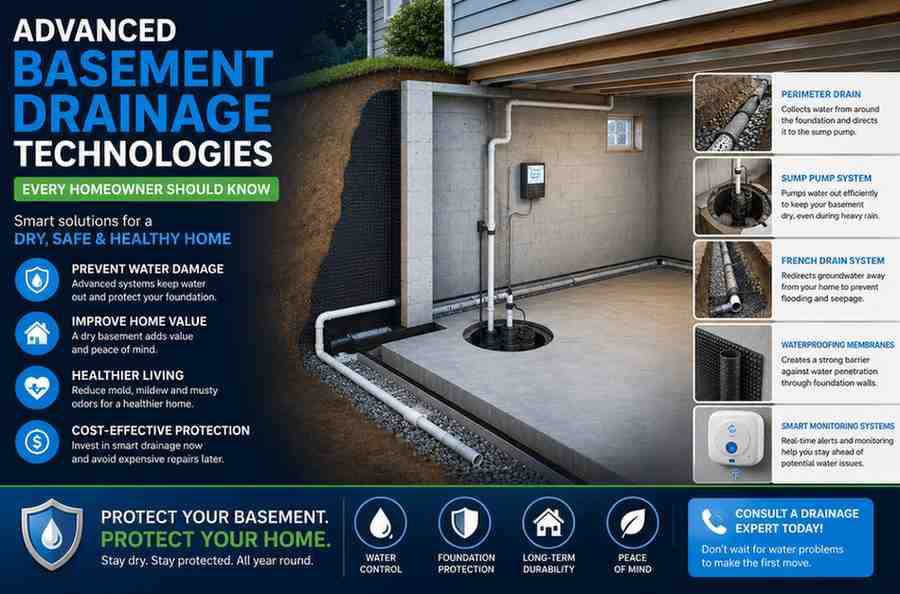
A dry basement supports structural stability, indoor comfort, and long-term property value. Modern drainage technologies have transformed moisture management through smarter materials, automated equipment, and integrated protection systems. Careful selection of these solutions helps prevent water intrusion before it threatens the foundation or interior spaces. Consequently, homeowners who invest in advanced drainage methods gain stronger protection against seasonal rainfall, groundwater pressure, and unexpected water accumulation while reducing maintenance demands over the life of the home.
Why Drainage Technology Continues to Improve
Construction methods continue to evolve because moisture remains one of the greatest threats to below-grade structures. Engineers and manufacturers focus on solutions that increase efficiency while reducing maintenance and installation challenges.
Moreover, advanced drainage components work together rather than operating as isolated products. Integrated systems capture, redirect, monitor, and discharge water through coordinated designs that improve reliability during severe weather conditions.
Modern technology also emphasizes durability, allowing drainage systems to maintain performance for decades with proper maintenance.
Smart Perimeter Drainage Systems
Traditional footing drains remain effective, yet newer perimeter systems provide enhanced water collection and flow control.
Improved Water Collection Channels
Modern channel designs maximize groundwater capture by increasing surface exposure around perforated pipes. Consequently, water enters the drainage network faster before pressure develops against foundation walls.
Manufacturers also design channel profiles that minimize sediment accumulation, supporting more consistent long-term performance.
Engineered Pipe Configurations
Advanced pipe layouts improve drainage efficiency through optimized perforation patterns and stronger structural materials.
Benefits include:
- Better groundwater collection
- Reduced clogging potential
- Higher structural strength
- Longer service life
- Improved hydraulic capacity
These improvements increase reliability without requiring major maintenance over time.
High-Performance Drainage Boards
Drainage boards create vertical pathways that direct water downward toward footing drains while protecting waterproof coatings.
Unlike older flat membranes, modern drainage panels feature molded channels that maintain open flow paths even under soil pressure. Furthermore, the air gap created by these boards encourages faster moisture movement and limits prolonged wall contact.
This combination reduces hydrostatic pressure while supporting foundation longevity.
Advanced Waterproof Membrane Technology
Drainage systems perform best when paired with high-quality waterproof membranes.
Flexible Elastomeric Coatings
Elastomeric membranes stretch with minor foundation movement while maintaining continuous protection. Consequently, they resist cracking better than rigid coatings exposed to seasonal expansion and contraction.
Their flexibility improves durability in changing environmental conditions.
Self-Healing Membrane Systems
Certain advanced membranes contain materials that seal around small penetrations or fasteners after installation.
This technology limits moisture migration through tiny openings and strengthens the overall waterproof barrier.
Combined with effective drainage, these systems provide multiple layers of protection against groundwater intrusion.
Geocomposite Drainage Materials
Geocomposite drainage products combine filtration fabric with molded drainage cores into one engineered assembly.
Advantages include:
- Faster installation
- Consistent drainage capacity
- Reduced aggregate requirements
- Excellent soil separation
- High compressive strength
Moreover, these materials simplify construction while delivering dependable water movement beneath varying soil conditions.
Interior Channel Drainage Innovations
Interior drainage technology has advanced significantly beyond basic collection trenches.
Modern channel systems fit along basement perimeters with engineered profiles that collect seepage efficiently while remaining concealed beneath finished flooring. Consequently, homeowners gain moisture protection without sacrificing usable interior space.
Maintenance access points also improve serviceability and inspection capabilities throughout the system’s lifespan.
Intelligent Sump Pump Technology
Traditional sump pumps remove collected groundwater, yet newer models include digital features that improve reliability and performance.
Smart Monitoring Features
Integrated sensors track water levels, operating cycles, and pump activity.
Many systems provide:
- Water level alerts
- Maintenance reminders
- Battery status monitoring
- Pump failure notifications
- Operating history records
These functions allow quicker responses before small issues become major flooding events.
Variable-Speed Pump Operation
Variable-speed motors adjust output according to water volume instead of operating at one constant level.
Consequently, pumps consume less energy, reduce wear, and maintain more stable water management during changing groundwater conditions.
Battery Backup and Secondary Pump Systems
Power outages frequently occur during severe storms when drainage protection becomes most critical.
Battery backup pumps continue removing water after electrical service fails. Furthermore, secondary pumps provide redundancy if the primary unit experiences mechanical problems.
Multiple protection layers significantly reduce flooding risk during emergency conditions.
Water Level Monitoring Sensors
Advanced moisture detection technology extends beyond sump pits.
Wireless sensors positioned around vulnerable basement areas detect water accumulation before visible flooding develops. Consequently, homeowners receive early warnings that allow prompt corrective action.
Many systems also integrate with home automation platforms for centralized monitoring.
Remote Drainage Monitoring
Remote connectivity has expanded basement protection capabilities.
Internet-enabled drainage systems transmit operational information directly to mobile devices, allowing property owners to monitor performance from virtually any location.
For homes equipped with a basement drainage system Michigan contractors often recommend that remote monitoring add valuable oversight during heavy snowmelt and extended rainfall periods by providing immediate alerts whenever operating conditions change unexpectedly.
Advanced Filter Fabric Technology
Filter fabrics continue to improve through stronger fibers and enhanced permeability characteristics.
Modern materials allow rapid water movement while blocking increasingly fine soil particles. Moreover, ultraviolet resistance and higher tensile strength improve durability during installation and throughout long-term service.
Efficient filtration extends drainage life while reducing maintenance frequency.
High-Capacity Aggregate Alternatives
Engineered drainage media now supplement or replace traditional stone in certain applications.
Lightweight synthetic aggregates create consistent void spaces that promote rapid water movement while reducing transportation weight and installation labor.
These products also resist biological degradation and maintain stable performance under sustained soil loads.
Foundation Crack Drainage Integration
Modern repair systems often incorporate drainage technology directly into crack management.
Specialized injection materials combine with drainage channels that redirect moisture before it enters occupied spaces. Consequently, repaired foundations receive both structural sealing and ongoing water management rather than relying on one corrective method alone.
Pressure Relief Systems for Foundation Protection
Modern drainage design focuses on preventing hydrostatic pressure before it affects foundation walls. Pressure relief systems collect groundwater efficiently and redirect it through engineered drainage channels toward safe discharge points.
Moreover, these systems reduce stress on concrete surfaces, minimize crack formation, and improve long-term structural stability. By controlling underground water movement, pressure relief technology supports the performance of every other waterproofing component installed around the basement.
Key Benefits of Pressure Relief Technology
Advanced pressure management systems provide several important advantages.
- Lower hydrostatic pressure against walls
- Reduced chance of foundation cracks
- Better moisture control around footings
- Improved drainage efficiency during heavy rainfall
- Longer service life for waterproofing materials
- Reduced repair and maintenance costs
Together, these benefits strengthen the entire basement protection strategy.
Permeable Collection Systems
Permeable collection systems improve groundwater movement through engineered materials that maintain open drainage pathways beneath the soil.
Unlike compacted backfill, these systems encourage consistent water flow while limiting sediment buildup. Consequently, drainage components remain effective for longer periods with fewer blockages.
Their adaptable design also supports installation around foundations with varying shapes and elevations, making them suitable for many new and existing structures.
Hybrid Drainage Solutions
Modern basement protection increasingly combines multiple technologies into one coordinated system.
Exterior footing drains, interior channels, drainage boards, smart pumps, and waterproof membranes work together to create overlapping layers of defense. Therefore, if one component experiences reduced performance, the remaining elements continue protecting against water intrusion.
This integrated approach delivers greater reliability than depending on a single drainage method.
Energy-Efficient Drainage Equipment
Drainage technology now places greater emphasis on energy efficiency without sacrificing performance.
High-efficiency motors consume less electricity while maintaining dependable pumping capacity. Furthermore, optimized operating cycles reduce mechanical wear, extending equipment lifespan and lowering maintenance expenses.
Quiet operation also improves comfort for finished basements where living areas occupy space near mechanical equipment.
Environmentally Responsible Water Management
Many advanced drainage systems support sustainable construction practices.
Collected groundwater may discharge into approved stormwater management areas where regulations permit. In addition, durable materials reduce replacement frequency and decrease long-term construction waste.
Efficient drainage also protects surrounding landscapes by preventing uncontrolled erosion and prolonged soil saturation around foundations.
Maintenance Technologies That Improve Reliability
Maintenance remains essential even for sophisticated drainage systems. Fortunately, technology now simplifies inspection and servicing.
Accessible Inspection Points
Strategically placed cleanouts allow technicians to inspect drainage lines without excavation. Consequently, routine maintenance becomes faster and less disruptive to landscaping.
Early identification of sediment buildup prevents larger problems that could compromise drainage performance.
Diagnostic Monitoring Systems
Electronic monitoring devices record pump cycles, water levels, and operating trends.
These records help identify unusual patterns before equipment failure occurs. Moreover, preventive maintenance based on actual performance extends system life and reduces unexpected repair costs.
Selecting the Right Technology for a Home
Every property presents unique moisture conditions. Therefore, drainage technology should match site characteristics rather than follow a standard formula.
Important evaluation factors include:
- Soil composition
- Groundwater conditions
- Foundation depth
- Annual precipitation
- Landscape grading
- Basement usage
- Maintenance expectations
Careful planning ensures that selected technologies operate efficiently under local environmental conditions while supporting long-term foundation protection.
Future Developments in Basement Drainage
Innovation continues to improve basement moisture management through advanced materials and digital monitoring.
Emerging technologies include predictive sensors that analyze groundwater patterns, automated discharge controls, and enhanced filtration media that resist clogging for longer periods. Furthermore, integrated building management systems may eventually coordinate drainage equipment with weather forecasting to optimize performance before storms arrive.
These advancements continue strengthening preventive moisture control rather than relying solely on corrective action after water enters the basement.
Conclusion
Advanced basement drainage technologies combine engineering, automation, and durable materials to create dependable protection against groundwater intrusion. Smart monitoring, improved drainage channels, high-performance waterproofing, and integrated system design all contribute to stronger foundation defense and lower maintenance demands. Moreover, selecting technology that matches site conditions improves long-term reliability while preserving structural integrity and indoor comfort. A carefully planned drainage system remains one of the most valuable investments for protecting any basement from moisture-related damage.
FAQs
1. What makes advanced basement drainage different from traditional systems?
Advanced systems combine engineered drainage materials, intelligent monitoring, efficient pumps, and improved waterproofing into one coordinated design. Consequently, they provide better moisture control, require less maintenance, and offer greater reliability during severe weather than older drainage methods.
2. Are smart sump pumps worth installing?
Smart sump pumps provide valuable monitoring features that notify homeowners about water levels, battery status, and equipment performance. Moreover, early alerts reduce the chance of unexpected flooding by allowing maintenance before system failure occurs during heavy rainfall.
3. How do drainage boards improve basement protection?
Drainage boards create vertical channels that move groundwater downward toward footing drains while shielding waterproof membranes from soil pressure. As a result, basement walls remain drier, hydrostatic pressure decreases, and waterproof coatings maintain their effectiveness for longer periods.
4. Why are filter fabrics important in advanced systems?
Filter fabrics separate fine soil particles from drainage materials while allowing water to pass freely. Consequently, drainage pipes remain cleaner, aggregate stays effective, and water continues flowing efficiently without frequent maintenance or expensive excavation for cleaning.
5. Can advanced drainage technology reduce maintenance needs?
Yes. Improved materials, better filtration, accessible cleanouts, and automated monitoring significantly reduce maintenance frequency. However, periodic inspection remains important because regular servicing helps preserve long-term system performance and prevents minor issues from becoming major repairs.
6. What role do wireless moisture sensors play?
Wireless sensors detect water accumulation in vulnerable basement areas and send immediate alerts when moisture appears. Therefore, homeowners can respond quickly before standing water damages flooring, walls, insulation, or stored belongings.
7. Do energy-efficient pumps perform as well as standard models?
Modern energy-efficient pumps deliver strong performance while consuming less electricity. Additionally, variable-speed operation reduces mechanical stress, extends equipment lifespan, and maintains steady water removal during changing groundwater conditions without unnecessary power consumption.
8. How does hydrostatic pressure affect basement walls?
Hydrostatic pressure develops when saturated soil pushes against the foundation. Over time, this force may contribute to cracks and seepage. Effective drainage systems relieve that pressure by collecting groundwater before it builds against basement walls.
9. Should older homes receive advanced drainage upgrades?
Many older homes benefit from drainage modernization because improved materials and monitoring technologies strengthen moisture protection. Upgrading selected components often increases reliability and reduces future repair costs without requiring complete foundation replacement.
10. What combination of technologies offers the best protection?
The strongest protection combines footing drains, waterproof membranes, drainage boards, smart sump pumps, filter fabric, moisture sensors, proper grading, and routine maintenance. Together, these components create multiple layers of defense that manage groundwater effectively and support long-term basement durability.