


Table of Contents
That sinking feeling—you head down to your basement after a heavy rain and spot it. A dark patch on the wall, a puddle on the floor, or that unmistakable damp, musty smell. A leaking basement is more than just a nuisance; it’s a threat to your home’s structural integrity and your family’s health. For homeowners in Southeast Michigan, understanding the specific causes of basement leaking is the first step toward a permanent fix.
Why do homes in areas like Shelby Township, Troy, and Rochester Hills struggle so much with wet basements? The answer lies in a unique combination of our region’s specific geology, common 20th-century construction practices, and the increasingly intense rainfall patterns we’ve seen recently. This guide dives deep into the local factors that cause your basement to leak and how to address them.
Key Takeaways:
- The “Clay Bowl” Effect: Dense clay soil in Oakland and Macomb counties traps water against your foundation.
- Hydrostatic Pressure: Saturated soil pushes water through microscopic pores and cracks in concrete.
- The Cove Joint: The seam where the wall meets the floor is the most common entry point for water.
- Infrastructure Stress: Aging municipal systems and intense 2026 weather patterns are overwhelming local drainage.
- Structural Red Flags: Horizontal cracks and bowing walls require immediate professional foundation repair.
The ‘Clay Bowl’ Effect: Why Southeast Michigan Soil Causes Leaks
To understand the primary causes of basement leaking in Southeast Michigan, you first have to understand what your house is sitting in. Much of the region, especially across Macomb and Oakland counties, is built on a type of soil known as glacial till. This soil is packed with dense, heavy clay.
Think of this clay soil like a giant, non-porous bowl surrounding your foundation. When it rains or snow melts, water doesn’t easily drain away. Instead, the clay remains saturated and holds that water directly against your concrete walls. This “clay bowl” effect is the root of most basement seepage in Macomb MI. Standard drainage systems that might work in sandy regions are quickly overwhelmed here, leaving your home sitting in a bathtub of wet earth long after the rain has stopped.
Hydrostatic Pressure: Wet Basement Solutions in Troy MI
Now that you have a picture of your foundation sitting in wet clay, let’s introduce the force that pushes that water inside: hydrostatic pressure. It is a simple concept from physics: the deeper you go, the more pressure water exerts.
When the soil around your foundation is saturated, it creates significant force. Concrete may seem solid, but it is actually porous. This pressure is strong enough to force water through microscopic pores, tiny cracks, and weak points in the concrete. This is a leading reason homeowners seek wet basement solutions in Troy MI. It’s not just about a single hole; it’s the entire weight of the waterlogged earth forcing its way inside, which creates persistent dampness even when the walls look superficially dry.
Cove Joints and Foundation Leak Repair in Rochester MI
If you’ve noticed water entering right where the basement wall meets the floor, you’ve found the most common culprit in our region: the cove joint. This is the seam that exists between your foundation wall and the concrete floor slab. It is a natural result of how foundations are built in stages.
In many homes built throughout the 20th century, the foundation footing was poured first, then the walls, and finally the floor. This creates a “cold joint”—a path of least resistance for water under pressure. If you are experiencing this, you likely need foundation leak repair in Rochester MI. Over decades, the original exterior drainage tiles can clog with silt, leaving water with nowhere to go but up through this joint.
Leaking Basement Walls in Sterling Heights MI: Symptoms and Signs
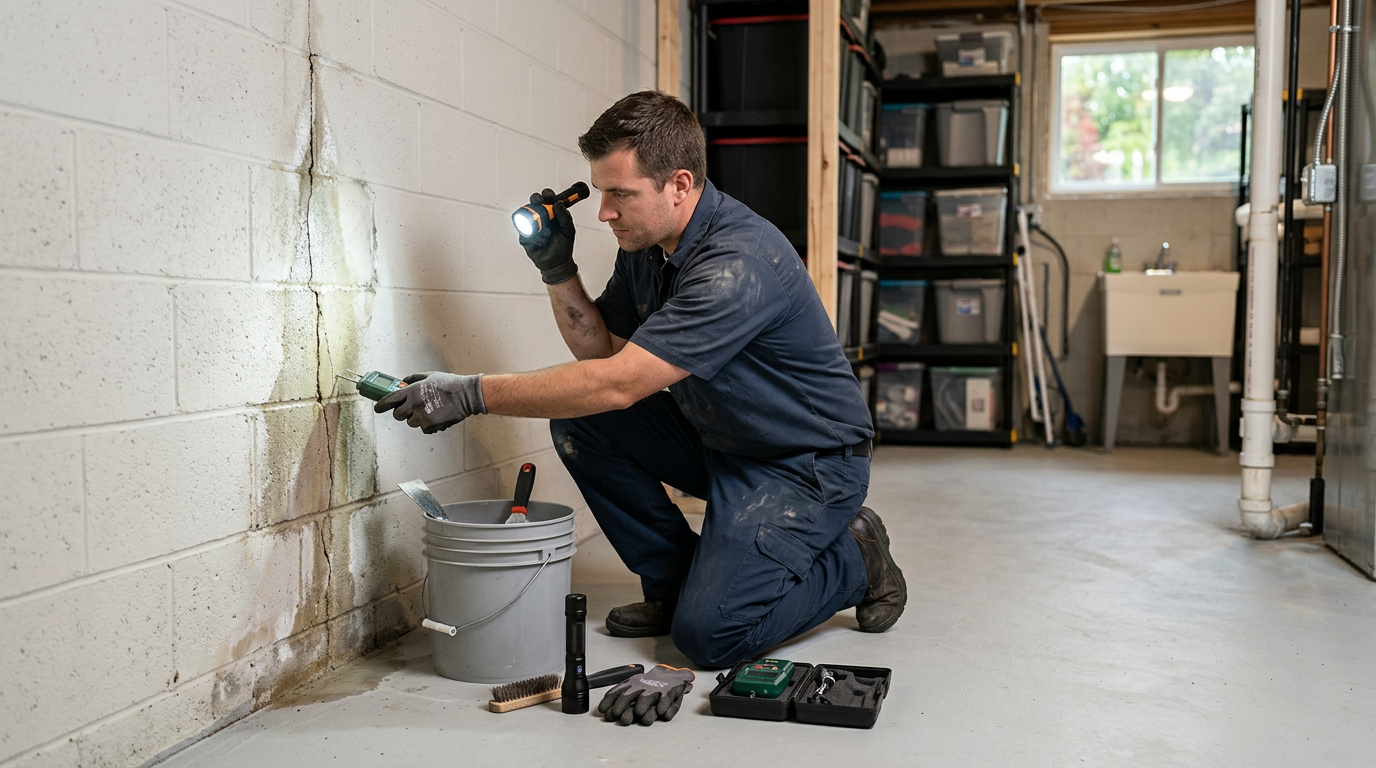
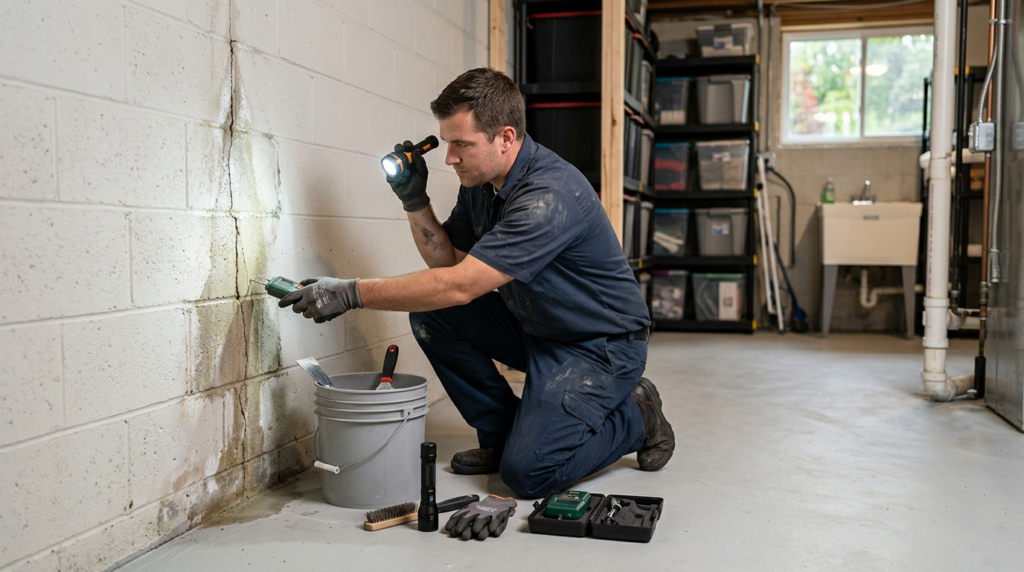
When you see a white, chalky substance on your concrete walls, it’s easy to assume it’s mold. However, it’s more likely to be efflorescence. Understanding the difference is crucial for diagnosing the health of leaking basement walls in Sterling Heights MI.
Efflorescence is a mineral salt deposit left behind when water seeps through concrete and evaporates. While not a health hazard itself, it is a clear symptom that water is actively moving through your foundation. Ignoring this sign often leads to actual mold growth, which thrives in the damp environments common in Southeast Michigan basements.
Professional Tip: To distinguish between the two, spray a little water on the substance. Efflorescence will dissolve; mold will not. Efflorescence also feels like a fine powder, whereas mold often feels slimy or fuzzy.
| Feature | Efflorescence | Mold |
|---|---|---|
| Appearance | White, powdery, or crystalline. | Black, green, or fuzzy white. |
| Texture | Crumbles into fine dust. | Smears or feels slimy. |
| Significance | Indicates water seepage. | Indicates a health hazard. |
Foundation Water Damage in Bloomfield Hills MI: Knowing the Red Flags
While some small leaks are manageable, certain signs indicate a serious threat to your home’s structural integrity. If you observe foundation water damage in Bloomfield Hills MI, it is often due to expansive clay soil putting extreme lateral pressure on your walls. Watch for these emergency red flags:
- Horizontal Cracks: A major sign that the soil is pushing the wall inward.
- Stair-Step Cracks: Common in block foundations, indicating uneven settling.
- Bowing Walls: If the wall is curving inward, it is at risk of catastrophic failure.
- Active Gushing: If water is pouring in, your sump pump or drainage system has likely failed.
The ‘Landscape’ Myth: Why Grading is Only a Partial Fix
You may be told that fixing your gutters and grading will solve your problems. While proper landscape grading is essential for managing surface rain, it does nothing to stop the groundwater rising from below. To achieve a truly dry home, many need a combination of surface management and basement waterproofing in Shelby Township MI. This two-pronged approach ensures that both rain and groundwater are kept far away from your living space.
Frequently Asked Questions About Basement Leaking in Southeast Michigan
1. How much does it cost to fix a leaking basement in Southeast Michigan?
The cost for waterproofing services varies based on the severity of the issue. A targeted foundation crack injection might cost a few hundred dollars, while a comprehensive interior waterproofing system can range from several thousand to over ten thousand dollars depending on the home’s footprint.
2. Can I fix a basement leak myself?
While homeowners can handle minor gutter cleaning or downspout extensions, leaks involving leaking basement walls in Sterling Heights MI or hydrostatic pressure require industrial-grade solutions. DIY paints often fail under the intense pressure of Michigan clay, trapping moisture and potentially accelerating structural damage.
3. Why does my basement only leak in the spring?
This is a classic regional issue caused by the spring thaw. As snow melts and heavy rains arrive, the dense clay soil becomes oversaturated. This creates peak hydrostatic pressure, making it the most common time for basement seepage in Macomb MI. Proactive maintenance is the best wet basement solution in Troy MI.
4. My sump pump runs constantly. Is that a problem?
A pump that never rests usually signals an undersized unit, a failing check valve, or a very high local water table. To prevent a catastrophic failure, you should schedule a sump pump service in Rochester MI to evaluate your system’s capacity and health.
5. What is the difference between interior and exterior waterproofing?
Exterior waterproofing involves excavation to the footing to apply a waterproof membrane—a permanent but invasive barrier. Interior waterproofing manages water once it enters the foundation, directing it to a sump pump. Both are effective, but the best choice depends on your specific foundation type and budget.