

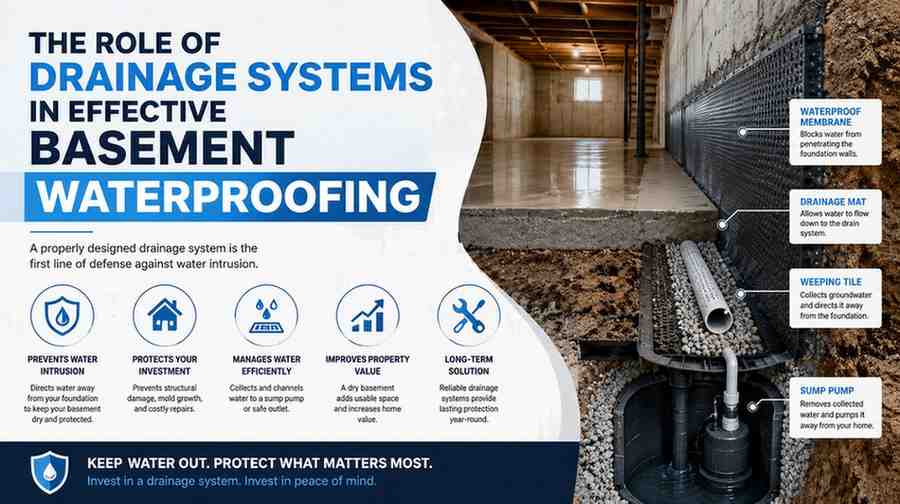
Water remains one of the greatest threats to a home’s foundation, especially when poor drainage allows moisture to collect around basement walls. Excess groundwater creates pressure that forces water through cracks, joints, and porous concrete, leading to structural deterioration and indoor moisture problems. Effective drainage systems form a critical part of basement waterproofing by directing water away from vulnerable areas before damage occurs. A well-planned drainage strategy protects property value, improves indoor conditions, and supports the long-term durability of the entire structure.
Why Do Drainage Systems Matter in Basement Waterproofing?
Waterproof coatings and sealants provide valuable protection, yet drainage systems remove water before it creates excessive pressure against foundation walls.
Moreover, proper drainage limits soil saturation, reducing the likelihood of leaks and structural movement. Consequently, waterproofing systems perform more efficiently and remain effective for longer periods.
A balanced approach combines drainage management with waterproof barriers to create dependable moisture protection.
The Relationship Between Water Pressure and Foundation Damage
Groundwater naturally moves toward areas of lower resistance.
When heavy rainfall saturates surrounding soil, hydrostatic pressure builds against basement walls. Without adequate drainage, moisture seeks entry through tiny openings, eventually causing dampness, cracks, and flooding.
Reducing water accumulation significantly lowers this pressure and protects structural components.
How Drainage Systems Prevent Water Intrusion
Drainage systems collect and redirect water before it reaches vulnerable sections of a building.
Rather than relying solely on waterproof coatings, these systems actively manage groundwater movement around the foundation.
Controlling Surface Water
Rainwater flowing toward the home increases foundation stress.
Proper drainage channels allow runoff to flow away through carefully designed slopes and collection systems. As a result, less water remains near basement walls during heavy storms.
This preventive approach strengthens the effectiveness of every waterproofing component.
Managing Groundwater Movement
Underground drainage systems intercept groundwater before it contacts foundation walls.
Key drainage components include:
- Perforated drain pipes
- Gravel backfill
- Drainage mats
- Collection basins
- Filter fabric
- Outlet piping
- Catch basins
- Discharge points
Working together, these elements create efficient water management beneath the soil surface.
French Drains and Basement Protection
French drains remain one of the most widely used drainage solutions for residential waterproofing.
Installed around foundations, these systems capture groundwater and transport it away from the structure.
How French Drains Operate
Perforated pipes surrounded by washed gravel create a path of least resistance for groundwater.
Instead of building pressure against foundation walls, water enters the drainage pipe and flows toward a designated discharge location.
Consequently, hydrostatic pressure decreases substantially.
Benefits of French Drain Systems
French drains offer several advantages:
- Lower groundwater pressure
- Reduced basement leaks
- Improved foundation stability
- Better landscape drainage
- Long service life
- Minimal maintenance
These benefits make French drains an essential component of many waterproofing strategies.
Exterior Drainage Systems
Exterior drainage provides the first line of defense against basement moisture.
Contractors often combine drainage improvements with foundation waterproof membranes for stronger long-term protection.
Foundation Drain Tile Systems
Drain tile systems surround the foundation below ground level.
These perforated pipes collect groundwater and transport it safely away before water contacts basement walls. Moreover, gravel layers surrounding the pipes improve water movement while preventing soil blockage.
Proper installation supports decades of reliable performance.
Surface Grading Improvements
Poor grading frequently directs water toward the home.
Professionals reshape the landscape to encourage runoff away from foundation walls.
Effective grading typically includes:
- Positive slopes
- Proper soil compaction
- Controlled runoff paths
- Downspout extensions
- Swales
- Drainage channels
These adjustments significantly reduce moisture accumulation around the structure.
Interior Drainage Systems
Some homes require interior drainage solutions when exterior excavation proves impractical.
Interior systems manage incoming water before it damages finished basement spaces.
Perimeter Drainage Channels
Contractors install drainage channels beneath basement floors along foundation walls.
Water entering through joints flows into concealed piping systems before reaching interior living areas. Consequently, moisture remains controlled despite groundwater activity outside.
The system operates continuously with minimal disruption.
Connection to Sump Pumps
Collected groundwater requires reliable removal.
Interior drainage channels direct water into sump pits where automatic pumps discharge it safely away from the home.
Combining these systems creates dependable protection against flooding.
The Importance of Sump Pump Systems
Drainage systems function most effectively when paired with efficient sump pumps.
Without reliable discharge equipment, collected groundwater could still accumulate beneath the basement floor.
Automatic Water Removal
Modern sump pumps activate automatically when water reaches predetermined levels.
Essential system components include:
- Primary pump
- Backup battery
- Float switch
- Alarm system
- Discharge pipe
- Protective basin cover
Together, these components provide continuous protection during severe weather.
Routine Maintenance Preserves Performance
Testing sump pumps regularly helps identify mechanical issues before heavy rainfall occurs.
Cleaning debris, inspecting discharge lines, and checking backup systems improve reliability while reducing emergency repair risks.
Drainage Boards and Foundation Protection
Drainage boards create protective channels that encourage water movement downward instead of inward.
Installed alongside exterior waterproof membranes, these products reduce prolonged contact between groundwater and foundation walls.
Supporting Waterproof Membranes
Drainage boards relieve pressure against waterproof barriers by promoting rapid water movement.
Moreover, they protect membrane surfaces from damage during backfilling operations, extending service life and preserving waterproof integrity.
Reducing Soil Pressure
Water-saturated soil becomes significantly heavier than dry soil.
Effective drainage reduces moisture content, lowering lateral pressure against basement walls while improving long-term structural stability.
Protecting Basement Waterproofing Through Proper Maintenance
Even advanced drainage systems require periodic inspection.
Routine maintenance prevents small issues from developing into expensive repairs while preserving waterproofing performance.
Essential Maintenance Practices
Property owners should regularly:
- Clean gutters
- Remove drain obstructions
- Inspect discharge outlets
- Test sump pumps
- Check grading
- Monitor foundation cracks
- Clear window wells
- Remove standing water
Preventive maintenance strengthens every part of the waterproofing system.
Drainage Systems and Indoor Air Quality
Moisture entering a basement affects more than structural materials.
Excess humidity encourages mold growth while creating musty odors that spread throughout the home.
Reducing Humidity Levels
Effective drainage minimizes groundwater intrusion before moisture enters indoor spaces.
Consequently, humidity remains lower, helping preserve insulation, wood framing, drywall, and stored belongings from water-related deterioration.
The Connection Between Drainage and Mold Prevention
Mold thrives in damp environments where excess moisture remains trapped for extended periods. Proper drainage systems reduce water accumulation around foundations, limiting the conditions that encourage biological growth.
As a result, indoor spaces remain cleaner and healthier.
Protecting Finished Basements
Finished basements contain flooring, drywall, insulation, furniture, and decorative materials that absorb moisture quickly.
Effective drainage helps protect:
- Carpet and flooring
- Wood framing
- Drywall panels
- Ceiling materials
- Electrical components
- Furniture
- Storage items
- Interior finishes
Maintaining dry conditions extends the lifespan of these materials while reducing restoration expenses.
Supporting Healthy Indoor Environments
Lower moisture levels discourage mold spores and unpleasant odors that often spread through shared ventilation systems.
Consequently, drainage improvements contribute to better indoor air quality throughout the home while preserving comfort for occupants.
Choosing the Right Drainage Solution
Every property presents different challenges related to soil composition, groundwater levels, foundation design, and surrounding landscape.
Professional evaluation identifies the drainage strategy best suited for long-term moisture control.
Important Factors That Influence Drainage Design
Several conditions affect drainage system selection.
These include:
- Soil permeability
- Foundation depth
- Groundwater elevation
- Rainfall intensity
- Landscape grading
- Existing drainage systems
- Building age
- Basement construction type
Careful planning creates solutions tailored to actual site conditions rather than generic installation methods.
Combining Multiple Waterproofing Strategies
Drainage works most effectively when integrated with waterproof membranes, crack repairs, vapor barriers, and sump pump systems.
Many homeowners researching basement waterproofing systems in Michigan evaluate drainage performance alongside waterproof coatings and interior moisture control methods to create a layered defense against groundwater intrusion.
Common Drainage Mistakes That Lead to Basement Leaks
Even well-built homes experience moisture problems when drainage systems fail or receive inadequate maintenance.
Recognizing common mistakes helps property owners protect their investment.
Ignoring Clogged Gutters and Downspouts
Blocked gutters overflow during rainfall, allowing water to collect near foundation walls.
Extending downspouts away from the structure and cleaning debris regularly reduces unnecessary moisture accumulation around the basement.
Poor Landscape Grading
Negative grading directs runoff toward the home rather than away from it.
Simple grading corrections improve drainage performance significantly while reducing hydrostatic pressure against foundation walls.
Long-Term Financial Benefits of Effective Drainage
Drainage improvements represent preventive investments that reduce future repair costs.
Protecting the foundation limits expensive restoration projects involving structural components and interior finishes.
Reducing Repair Expenses
Persistent moisture damages flooring, drywall, insulation, electrical systems, furniture, and stored belongings.
Proper drainage minimizes these risks while lowering maintenance costs associated with recurring basement leaks and water intrusion.
Supporting Property Value
Prospective buyers often view moisture problems as serious concerns during property inspections.
Reliable drainage systems demonstrate responsible maintenance and improve confidence in the structural condition of the home, supporting stronger market appeal and long-term resale value.
FAQs
1. Why are drainage systems essential for basement waterproofing?
Drainage systems remove groundwater and surface water before pressure builds against foundation walls. By controlling moisture around the structure, they reduce leaks, flooding risks, and long-term structural deterioration while supporting overall waterproofing performance.
2. What is hydrostatic pressure in basement waterproofing?
Hydrostatic pressure develops when saturated soil pushes groundwater against foundation walls. Excessive pressure forces moisture through cracks and porous concrete, making effective drainage critical for preventing basement leaks.
3. How does a French drain protect a basement?
A French drain collects groundwater through perforated pipes surrounded by gravel and redirects it away from the foundation. This process lowers soil moisture and reduces pressure against basement walls, limiting water intrusion.
4. Can drainage systems work without waterproof membranes?
Drainage reduces water accumulation effectively, yet combining drainage with waterproof membranes provides stronger protection. Layered systems manage groundwater while creating barriers that resist moisture penetration through foundation surfaces.
5. How often should drainage systems receive maintenance?
Annual inspections and routine cleaning help maintain efficient water flow. Homeowners should also inspect drainage components after severe storms to identify blockages, damaged pipes, or grading issues that require prompt correction.
6. Does poor grading affect basement waterproofing?
Yes. Improper grading directs rainwater toward foundation walls instead of away from the home. Correcting landscape slopes significantly improves drainage performance and reduces groundwater pressure around the basement.
7. Are sump pumps part of drainage systems?
Sump pumps complement drainage systems by removing collected groundwater from sump pits. Together with drainage channels and drain pipes, they create an effective strategy for controlling basement moisture during heavy rainfall.
8. Can effective drainage reduce mold growth?
Proper drainage limits moisture accumulation around foundations and inside basements. Lower humidity reduces favorable conditions for mold development while helping protect indoor air quality and building materials.
9. Is interior drainage enough to stop basement leaks?
Interior drainage manages incoming water effectively but often performs best when combined with exterior drainage improvements and waterproof barriers. Multiple layers of protection provide more dependable long-term moisture control.
10. Why should homeowners inspect drainage systems regularly?
Routine inspections identify clogs, damaged pipes, grading problems, and equipment failures before serious water damage develops. Preventive maintenance extends system lifespan while protecting the basement from unnecessary moisture intrusion.