


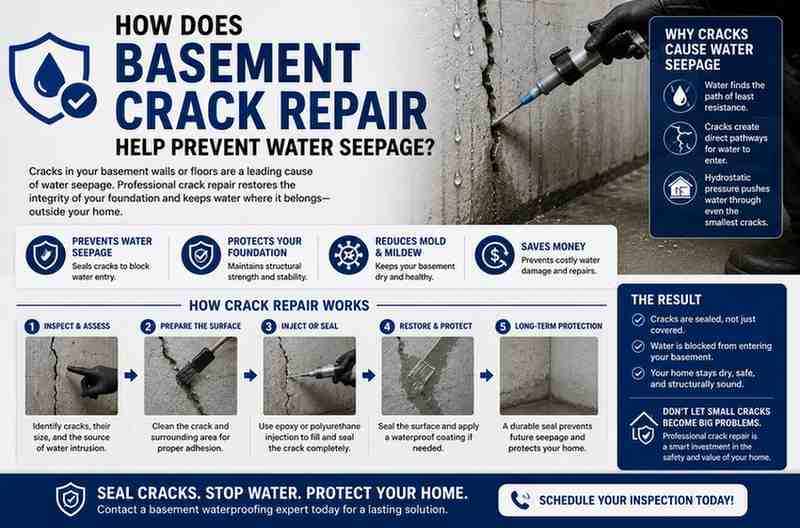
Water seepage through basement cracks can threaten structural stability, indoor air quality, and the overall condition of a home. Even a narrow opening may allow moisture to enter when groundwater pressure increases around the foundation. Proper crack repair blocks these entry points and helps preserve the integrity of basement walls. Consequently, timely repairs reduce moisture-related damage, limit costly restoration work, and create a safer, drier environment throughout the lower level of the property.
Why Basement Cracks Allow Water to Enter?
Concrete provides excellent strength, yet it naturally develops small openings because of shrinkage, settlement, and environmental changes.
Moreover, surrounding soil absorbs water during rainfall and snowmelt, increasing pressure against basement walls. This hydrostatic force pushes moisture toward any available opening, including visible and hidden cracks.
Once water enters the structure, it may spread through porous concrete and affect flooring, insulation, and stored belongings.
The Connection Between Hydrostatic Pressure and Seepage
Groundwater surrounding a foundation creates constant pressure beneath and beside basement walls.
When soil becomes saturated, water searches for the path of least resistance. Consequently, even hairline cracks may become channels that allow seepage into interior spaces.
Reducing water entry requires both sealing existing cracks and controlling the external conditions that contribute to pressure buildup.
Factors That Increase Hydrostatic Pressure
Several conditions contribute to higher pressure around foundations.
- Heavy rainfall
- Poor yard grading
- Blocked gutters
- Short downspouts
- High groundwater levels
- Compacted clay soil
Addressing these issues supports long-term moisture control while reducing stress on repaired cracks.
How Crack Repair Blocks Water Entry
Effective crack repair restores the continuity of the foundation wall by filling openings that permit moisture penetration.
Furthermore, quality repair materials bond with surrounding concrete and create durable barriers against groundwater infiltration. Once sealed properly, repaired cracks no longer provide direct pathways for seepage under normal conditions.
Repair also strengthens weakened sections of the wall, helping preserve structural performance over time.
Types of Basement Cracks That Cause Seepage
Not every crack behaves the same way.
Vertical Cracks
Vertical cracks often develop through concrete shrinkage or minor settlement. Although many remain stable, water may still penetrate when external pressure increases.
Consequently, sealing these openings prevents recurring moisture problems and protects finished basement spaces.
Horizontal Cracks
Horizontal cracks frequently result from lateral soil pressure acting against basement walls.
Because these cracks may indicate structural stress, they often require reinforcement in addition to sealing. Addressing both issues improves moisture protection and foundation stability simultaneously.
Diagonal Cracks
Diagonal cracks usually reflect uneven settlement or shifting soil conditions.
Their irregular shape may create multiple seepage points that require careful evaluation before repair materials are applied.
Repair Materials Used to Stop Water Seepage
Modern repair systems offer different solutions depending on crack activity and moisture conditions.
Epoxy Injection
Epoxy penetrates deep into stable cracks and bonds separated concrete surfaces together.
This method restores structural continuity while preventing water movement through the repaired area.
Polyurethane Injection
Polyurethane expands after application, filling irregular spaces and creating a flexible seal.
Its ability to accommodate slight movement makes it particularly effective for active leaks where water seepage remains present during repair.
Surface Sealants
Surface coatings improve appearance and provide limited moisture resistance.
However, they generally perform best when combined with deeper repair methods that address the full thickness of the crack.
Benefits of Early Basement Crack Repair
Prompt repairs provide several long-term advantages.
- Stops active water seepage
- Protects structural components
- Reduces mold risk
- Preserve finished basement materials
- Prevents crack expansion
- Lowers future repair costs
Early intervention minimizes damage before moisture affects larger areas of the home.
How Moisture Affects Basement Air Quality
Water seepage influences more than structural materials.
Persistent dampness increases humidity levels, creating conditions favorable for mold and mildew growth. Moreover, excess moisture may produce unpleasant odors that spread throughout the home.
Maintaining a dry basement supports healthier indoor conditions while protecting furniture, stored items, and building materials from deterioration.
Why Crack Repair Supports Foundation Strength
Open cracks interrupt the continuity of concrete walls.
When water repeatedly enters these openings, freeze-thaw cycles and mineral deposits may enlarge existing damage over time. Consequently, repairing cracks reduces deterioration and helps preserve the original load-bearing capacity of the foundation.
Structural integrity and moisture protection often improve together through proper repair techniques.
The Role of Drainage in Preventing Future Seepage
Crack repair performs best when combined with effective drainage management.
Proper grading, foundation drains, gutter maintenance, and downspout extensions reduce soil saturation around basement walls. Furthermore, lower groundwater pressure decreases the likelihood that repaired cracks will experience renewed seepage during severe weather conditions.
Managing exterior moisture remains an important part of long-term basement protection.
Signs That Water Is Entering Through Cracks
Homeowners should watch for early warning signs before visible flooding develops.
Common indicators include:
- Damp wall surfaces
- White mineral deposits
- Peeling paint
- Musty odors
- Wet floor edges
- Mold growth near cracks
Recognizing these symptoms allows timely repairs that prevent broader moisture-related damage.
Selecting the Appropriate Repair Method
Each basement presents unique conditions.
Crack width, wall movement, seepage level, structural stress, and surrounding soil characteristics all influence repair selection. Consequently, matching the repair method to the actual cause provides stronger long-term performance than applying temporary surface patches alone.
For many properties requiring basement crack repair Michigan homeowners often prioritize moisture control because seasonal groundwater fluctuations place additional stress on foundation walls.
Preventing Water Damage Beyond the Crack
Repairing a crack stops a direct entry point for moisture, yet protecting the basement requires attention to surrounding conditions as well. Consequently, combining crack repair with moisture management creates a stronger defense against recurring seepage.
Proper maintenance of drainage systems, grading, and exterior waterproofing reduces pressure against foundation walls and extends the life of repaired areas.
Exterior Moisture Control Measures
Several improvements reduce water accumulation around the foundation.
- Maintain clean gutters throughout the year.
- Extend downspouts away from the home.
- Grade soil to direct runoff outward.
- Repair damaged drainage components promptly.
- Prevent standing water near basement walls.
- Maintain proper landscaping around the foundation.
Together, these measures reduce hydrostatic pressure and improve long-term moisture protection.
How Sealed Cracks Protect Interior Finishes
Finished basements contain drywall, flooring, insulation, electrical components, and personal belongings that remain vulnerable to moisture.
Even minor seepage may stain walls, warp flooring, and weaken building materials over time. Moreover, damp conditions encourage biological growth that affects indoor environments.
Sealing foundation cracks protects these investments by limiting water intrusion before damage spreads throughout the basement.
The Importance of Ongoing Inspection
Crack repair should become part of a broader maintenance strategy rather than a one-time task.
Periodic inspections allow homeowners to identify new cracks, monitor repaired areas, and address drainage issues before water penetration resumes. Consequently, small concerns receive attention before they require extensive structural or waterproofing work.
Routine observation supports long-term foundation performance and moisture control.
What to Check During Inspections
Regular evaluations should include several key areas.
- Foundation wall surfaces
- Basement floor joints
- Window wells
- Interior wall corners
- Sump system operation
- Exterior grading conditions
Consistent monitoring helps maintain a dry basement throughout changing weather conditions.
Seasonal Weather and Water Seepage
Changing seasons influence groundwater movement around foundations.
Heavy rainfall saturates surrounding soil, while melting snow increases underground moisture levels. In contrast, dry periods may cause soil shrinkage that contributes to additional cracking.
Because seasonal conditions vary throughout the year, repaired foundations benefit from continued observation and preventive maintenance that addresses changing environmental pressures.
Common Mistakes That Increase Seepage Risk
Certain maintenance oversights allow moisture problems to return even after crack repair.
Examples include:
- Ignoring clogged gutters
- Allowing downspouts to drain beside the foundation
- Delaying drainage repairs
- Covering cracks without sealing them properly
- Neglecting foundation inspections
- Permitting landscape grading to deteriorate
Avoiding these mistakes helps preserve repair effectiveness and protects the basement against recurring moisture intrusion.
Long-Term Financial Benefits of Timely Repair
Addressing cracks before water damage expands often reduces future expenses significantly.
Early repairs protect flooring, wall finishes, insulation, furniture, and stored possessions from costly replacement. Furthermore, preserving structural integrity may prevent major foundation restoration projects that require extensive labor and excavation.
Preventive action often delivers greater value than waiting until visible damage becomes widespread.
How Crack Repair Supports Property Value
Foundation condition strongly influences buyer confidence and property appeal.
Visible water stains or active seepage may raise concerns about structural stability and maintenance history. Consequently, properly repaired cracks contribute to a cleaner, drier basement that reflects responsible property care.
A well-maintained foundation also supports smoother inspections during future real estate transactions.
Combining Repair With Waterproofing Systems
Crack repair provides excellent protection, yet integrating waterproofing measures creates additional security.
Exterior membranes, drainage boards, footing drains, and sump systems reduce groundwater pressure while repaired cracks prevent direct water entry. Moreover, multiple protective layers continue working together even during periods of unusually high moisture.
This coordinated approach offers greater reliability than relying on a single solution.
Choosing Lasting Protection Over Temporary Fixes
Surface patching products may hide visible cracks without solving deeper problems.
Durable repairs address the full depth of the crack while targeting the conditions that caused moisture intrusion. Consequently, properly selected repair methods reduce recurring seepage and improve foundation performance for many years.
Investing in quality repairs supports structural durability and lowers the likelihood of repeated maintenance.
Conclusion
Basement crack repair plays an essential role in preventing water seepage by sealing entry points, strengthening foundation walls, and limiting moisture-related damage. Moreover, combining effective repairs with proper drainage and routine maintenance creates lasting protection against groundwater intrusion. Early attention to cracks preserves structural integrity, improves indoor conditions, and reduces long-term repair costs. A proactive approach to foundation care helps maintain a dry basement while protecting the overall value and durability of the entire home.
FAQs
1. Can a small basement crack really allow significant water seepage?
Yes. Even narrow cracks may admit substantial moisture when hydrostatic pressure increases around the foundation. Repeated seepage can damage finishes, encourage mold growth, and weaken nearby materials, making prompt repair an effective preventive measure.
2. Why does water enter through foundation cracks after heavy rain?
Heavy rainfall saturates surrounding soil and increases hydrostatic pressure against basement walls. Consequently, groundwater seeks available openings, including cracks, joints, and porous concrete surfaces, allowing moisture to enter interior spaces.
3. Is sealing the surface of a crack enough to stop leaks?
Surface sealing alone often addresses appearance rather than the full depth of the crack. Long-lasting repairs typically involve injection methods or structural restoration that create continuous barriers against moisture throughout the wall thickness.
4. How does polyurethane injection prevent water seepage?
Polyurethane expands after application, filling irregular spaces inside the crack and forming a flexible seal. Its ability to adapt to slight movement makes it highly effective for stopping active leaks and preventing recurring water intrusion.
5. Can repaired cracks reopen later?
Repaired cracks generally remain stable when underlying causes receive proper attention. However, continued settlement, excessive hydrostatic pressure, or poor drainage may create additional movement, making maintenance and moisture management important after repairs.
6. Does basement humidity increase because of wall cracks?
Yes. Moisture entering through cracks raises basement humidity and creates favorable conditions for mold and mildew growth. Sealing cracks reduces water infiltration and supports healthier indoor air while protecting stored belongings and building materials.
7. What signs suggest that seepage has become a serious problem?
Persistent dampness, mold growth, peeling paint, mineral deposits, musty odors, and visible water accumulation indicate ongoing moisture intrusion. These warning signs often justify prompt inspection and repair before more extensive structural damage develops.
8. Why should drainage improvements accompany crack repair?
Drainage improvements reduce groundwater pressure surrounding the foundation. Consequently, repaired cracks experience less external stress, lowering the chance of renewed seepage and improving the long-term effectiveness of the repair system.
9. Are vertical cracks more likely to leak than horizontal cracks?
Both crack types may leak when exposed to sufficient water pressure. Vertical cracks often result from settlement or shrinkage, while horizontal cracks commonly indicate lateral soil pressure that may require structural reinforcement in addition to moisture sealing.
10. How often should basement walls be inspected for new cracks?
Annual inspections, along with additional checks after severe storms or significant seasonal changes, help identify developing cracks early. Regular observation supports timely repairs that prevent water seepage, preserve foundation strength, and reduce long-term maintenance costs.