


Table of Contents
That musty smell in the basement. A dark stain creeping up the concrete wall. A puddle of water after a heavy spring rain. For homeowners across Southeast Michigan, from the bustling suburbs of Sterling Heights to the historic streets of Rochester, these are all-too-familiar signs of a water problem. A wet basement isn’t just an annoyance; it’s a threat to your home’s structural integrity, air quality, and overall value.
The good news is that there are powerful, effective solutions. The challenge? Deciding between the two primary approaches: interior and exterior waterproofing. One method works from the inside out, managing water after it enters. The other creates an impenetrable barrier from the outside in, stopping water before it ever touches your foundation.
Choosing the right path depends on your home’s age, your foundation type, the specific soil on your property, and your budget. This guide provides a clear expert comparison of interior vs. exterior waterproofing in Michigan, helping you make the best decision for your home and peace of mind.
Key Takeaways
- Michigan’s Soil is the Real Culprit: Southeast Michigan, especially Macomb County, has expansive clay soil that holds water against your foundation, creating immense hydrostatic pressure.
- Exterior is Proactive, Interior is Reactive: Exterior systems stop water from ever touching your foundation walls, while interior systems manage water once it has already penetrated.
- Cost vs. Disruption: Interior waterproofing is generally more affordable and less disruptive to landscaping. Exterior waterproofing requires significant excavation but offers structural protection.
- Foundation Type Matters: Modern poured concrete responds well to both, but older brick or stone foundations often require exterior solutions to preserve mortar integrity.
The Waterproofing Dilemma in Southeast Michigan
Living in Michigan means experiencing the full force of four distinct seasons. From heavy spring thaws in Troy to summer thunderstorms in Utica, our homes are under constant assault. The high water tables prevalent in Oakland and Macomb Counties mean that groundwater is always looking for a way in.
The force exerted by this groundwater, known as hydrostatic pressure, can force moisture through even the tiniest cracks in your concrete or block walls. This leads to dampness, mold growth, and efflorescence. To combat this, homeowners must evaluate the best waterproofing methods for Michigan basements:
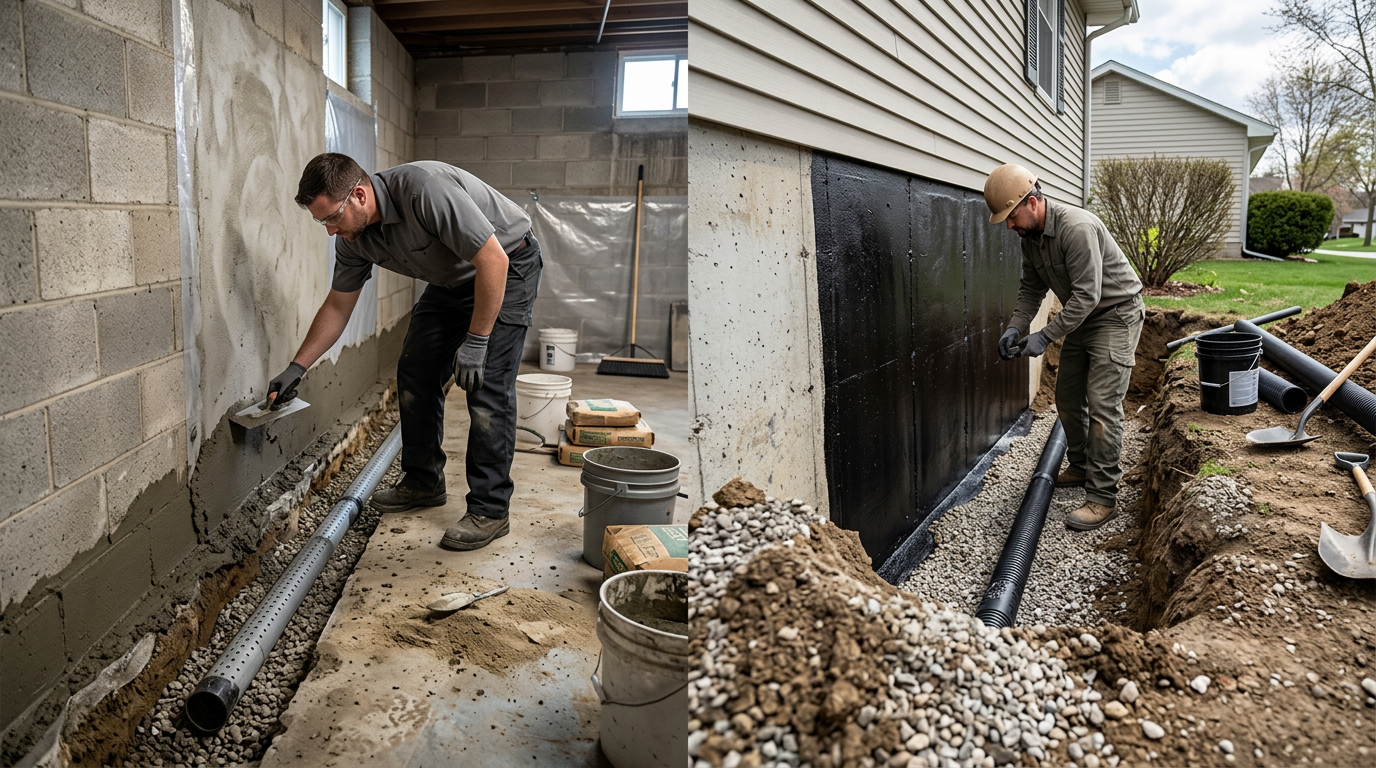
- Exterior Waterproofing: Involves excavating around the foundation and applying a waterproof barrier directly to the exterior walls.
- Interior Waterproofing: Involves installing a drainage system inside the basement along the perimeter to channel water to a sump pump.
The Southeast Michigan Soil Problem: Why Clay Changes the Rules
You can’t talk about interior vs. exterior waterproofing in Michigan without discussing the soil. In areas like Shelby Township, Macomb, and Sterling Heights, the dominant soil is heavy, expansive clay. Unlike sandy soils that drain quickly, clay acts like a sponge, creating the “Bowl Effect” around your foundation.
This saturated clay exerts the immense force that hydrostatic pressure solutions in Michigan homes are designed to combat. It is a primary driver of drainage issues and the key reason why a generic, one-size-fits-all approach often fails in our region.
Local Tech Tip: The Michigan frost line can extend 42 inches deep. As the ground freezes and thaws, it shifts and heaves, putting immense stress on foundation walls. Any exterior drainage solution must be installed below this line to remain effective during the winter.
Exterior Waterproofing: The ‘Primary Defense’ for Foundations
Exterior waterproofing is the most comprehensive way to keep your basement dry. It is the only method that stops water from ever coming into contact with your foundation walls, protecting the masonry itself from degradation.
Think of it as giving your home a perfect, permanent raincoat. This exterior foundation membrane installation in MI is intensive but incredibly effective for long-term structural health.
The Exterior Process
- Excavation: Our professional excavation services carefully dig a trench around the perimeter down to the footings.
- Wall Preparation: Walls are cleaned, and aging tar coatings are removed.
- Membrane Application: A high-quality, polymer-based waterproof membrane is applied. This creates the impenetrable barrier.
- Drainage and Protection: New weeping tile is installed, often paired with a dimpled drainage board.
- Backfilling: The trench is filled with gravel and soil to promote proper drainage away from the wall.
This systematic approach is why many consider our exterior waterproofing services the gold standard for high-value properties in Bloomfield Hills and Rochester Hills.
Interior Waterproofing: The ‘Hydrostatic Pressure Value’ Choice
What if excavation isn’t practical or in the budget? That’s where interior vs exterior drainage solutions in Michigan favor the interior approach. This method doesn’t stop water from entering the wall; instead, it is an ingenious water management system that controls moisture and safely removes it.
The Interior Process
- Trench Creation: A narrow trench is cut into the concrete floor slab along the perimeter.
- Drainage Pipe: A perforated drain pipe (French drain) is laid and surrounded by gravel.
- Weep Holes: For block walls, we drill holes into the hollow cores to allow trapped water to drain into the system.
- Sump Basin & Pump: Water is directed to a sump basin. We specialize in high-performance sump pump installation and repair to ensure this water is expelled far from the home.
Interior systems are ideal for finished basements in Royal Oak or Ferndale where exterior digging is not feasible due to tight lot lines.
Comparison Matrix: Which Method Wins?
| Feature | Interior Waterproofing | Exterior Waterproofing |
|---|---|---|
| Primary Goal | Water Management (Reactive) | Water Prevention (Proactive) |
| Average Cost | Lower ($8,000 – $15,000) | Higher ($15,000 – $30,000+) |
| Disruption | Low (All work inside) | High (Requires yard excavation) |
| Structural Protection | Moderate (Keeps floor dry) | Maximum (Protects wall exterior) |
| Best For | Finished basements, small lots | Older stone/brick foundations |
The Older Michigan Home Dilemma
In historic areas like Bloomfield Township or West Bloomfield Township, many homes feature fieldstone, brick, or limestone foundations. These materials are held together by lime-based mortar that can erode if water is allowed to pass through it constantly.
For these “Michigan Basements,” exterior waterproofing is often the superior choice. If the leaks are minor and isolated to a specific spot, a professional foundation crack injection might serve as a temporary fix, but protecting the exterior remains the only way to stop mortar decay.
Frequently Asked Questions About Interior vs. Exterior Waterproofing
1. Which waterproofing method is cheaper?
Generally, an interior basement waterproofing system is significantly more affordable than an exterior solution. This is because it avoids the extensive labor and equipment costs associated with excavating your entire foundation perimeter.
2. How long does exterior waterproofing last?
When installed correctly using modern, high-quality polymer-based membranes, an exterior waterproofing services system is a long-term solution. These advanced materials are designed to last for decades, often for the life of the home.
3. What if I only have one small leak from a crack in the wall?
For a single, isolated crack in a poured concrete foundation, a full waterproofing system may be overkill. In these cases, a targeted repair using professional-grade foundation crack injection with epoxy or polyurethane is often a very effective and highly affordable solution.
4. My sump pump runs constantly; will waterproofing help?
If your pump runs non-stop, it indicates a high volume of groundwater. An interior drainage system will effectively channel this water to the pump. Ensuring you have a heavy-duty primary pump and a battery backup is crucial; our sump pump installation and repair services can ensure your system is up to the task.
5. Can I waterproof my basement myself?
While DIY kits are available, basement waterproofing is complex and carries structural risks. In Michigan’s expansive clay soil, improper installation can lead to catastrophic flooding and expensive repairs. For a guaranteed, warrantied solution, it’s always best to hire a professional contractor with experience in Michigan’s specific soil and climate conditions in cities like Shelby Township.