

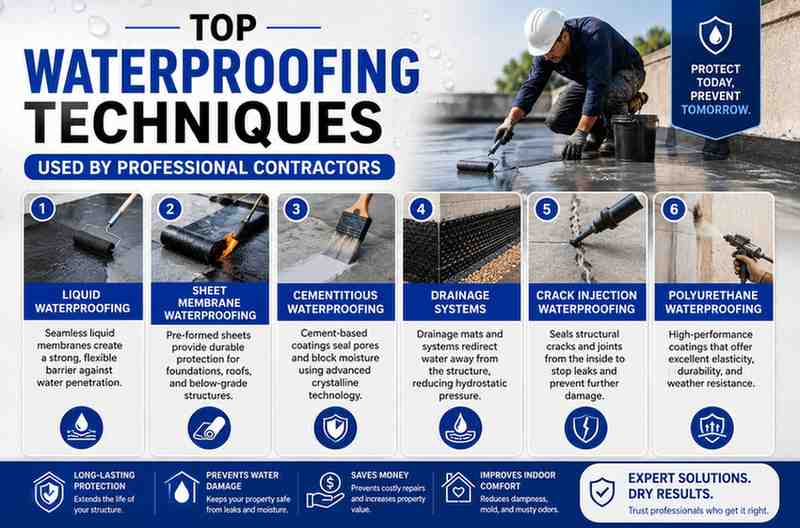
Water intrusion threatens every part of a building, from the foundation to the roof. Even a small leak can create costly repairs when moisture spreads through walls, floors, and structural components. Professional waterproofing techniques provide dependable protection by stopping water before it damages essential building materials. Each property requires a specific approach based on construction type, soil conditions, and drainage patterns. Selecting the proper solution extends the life of a structure while preserving safety, comfort, and property value.
Why Do Professional Waterproofing Techniques Matter?
Effective waterproofing involves much more than applying a surface coating. Contractors evaluate moisture sources, structural conditions, and environmental factors before selecting suitable materials and installation methods.
Moreover, a professionally designed system addresses both visible and hidden risks. Consequently, homeowners reduce maintenance expenses while protecting their investment against future deterioration.
A strategic waterproofing plan also improves indoor air quality, lowers humidity levels, and prevents mold development in vulnerable areas.
The Importance of Long-Term Protection
Temporary repairs often fail because they treat symptoms instead of addressing underlying causes.
Professional waterproofing techniques create lasting barriers that resist hydrostatic pressure, groundwater movement, and seasonal weather changes. Furthermore, these systems continue performing effectively when paired with proper drainage maintenance and routine inspections.
The combination of preventive planning and quality installation produces durable results that safeguard structural integrity.
Exterior Foundation Waterproofing
Exterior waterproofing remains one of the most effective methods for protecting below-grade structures.
Rather than allowing water to penetrate foundation walls, contractors install protective barriers that stop moisture before it reaches the concrete surface.
Excavation and Surface Preparation
Proper preparation creates the foundation for successful waterproofing.
Contractors remove soil surrounding the foundation and inspect exposed surfaces for cracks, voids, or damaged areas. After cleaning and repairing imperfections, they prepare the wall for membrane application.
Careful preparation improves adhesion and extends system performance.
Application of Waterproof Membranes
Flexible waterproof membranes create a continuous protective shield.
These materials resist groundwater pressure while accommodating natural foundation movement. Moreover, seamless installation reduces the likelihood of leaks developing at joints or transitions.
Common membrane benefits include:
- High moisture resistance
- Long service life
- Crack bridging capability
- Excellent adhesion
- Resistance to soil chemicals
- Flexible performance during seasonal movement
Proper installation significantly improves foundation durability.
Interior Drainage Systems
When exterior excavation becomes impractical, interior drainage systems provide effective moisture management.
These systems collect infiltrating water and direct it away before flooding occurs.
Perimeter Drainage Channels
Contractors install channels along basement walls beneath the floor surface.
Water entering through foundation joints flows into the drainage system before reaching finished spaces. Consequently, interior damage remains minimal even during periods of heavy rainfall.
This approach offers dependable protection without disturbing exterior landscaping.
Sump Pump Installation
Collected water requires efficient removal.
Modern sump pump systems automatically discharge groundwater away from the structure through dedicated piping systems. Backup batteries provide additional protection during electrical outages.
Professional installations frequently include:
- Primary pump units
- Battery backup systems
- Water level alarms
- Secondary emergency pumps
- High-capacity discharge piping
- Protective covers
Together, these components reduce flood risks under demanding conditions.
Cementitious Waterproofing
Concrete structures benefit from cement-based waterproof coatings that bond directly with masonry surfaces.
These materials create rigid barriers capable of resisting moisture penetration in basements, water tanks, and retaining walls.
Advantages of Cement-Based Systems
The application requires relatively simple preparation compared with other techniques.
Moreover, cementitious waterproofing provides excellent durability in permanently damp environments. Contractors often select this method for utility areas where surface movement remains limited.
Its affordability also makes it attractive for many residential applications.
Limitations to Consider
Rigid coatings perform best on stable surfaces.
Significant structural movement may create cracks that compromise waterproof protection. Therefore, contractors frequently combine cementitious materials with flexible sealants when movement remains possible.
The correct combination produces stronger long-term performance.
Liquid Waterproofing Membranes
Liquid-applied systems create seamless waterproof barriers after curing.
Professionals apply these coatings using rollers, brushes, or spray equipment depending on project requirements.
Benefits of Liquid Membranes
Unlike sheet membranes, liquid coatings conform easily to irregular shapes and complex architectural details.
Additional advantages include:
- Seamless coverage
- Fast application
- Flexible performance
- UV resistance
- Strong adhesion
- Reduced joint failures
Consequently, these systems provide dependable protection across diverse construction designs.
Common Applications
Liquid membranes frequently protect:
- Balconies
- Roof decks
- Foundations
- Terraces
- Concrete slabs
- Wet rooms
Proper curing ensures optimal waterproof performance.
Bituminous Waterproofing Systems
Bituminous coatings contain asphalt-based compounds that resist moisture infiltration effectively.
Contractors often use these materials beneath foundations and on retaining structures exposed to constant soil moisture.
Protective Characteristics
Bituminous coatings provide excellent resistance against groundwater and corrosion.
Moreover, additional protective boards shield the coating from damage during backfilling operations.
The resulting barrier remains highly effective beneath ground level.
Suitable Installation Conditions
Dry weather supports successful installation.
Surface cleanliness and temperature control also influence adhesion quality. Therefore, contractors carefully schedule the application during favorable environmental conditions.
Attention to installation details maximizes long-term reliability.
Polyurethane Waterproofing
Polyurethane coatings create highly elastic waterproof membranes capable of bridging structural movement.
These systems perform particularly well on exposed surfaces experiencing temperature fluctuations.
Flexibility and Durability
Elastic performance allows polyurethane coatings to expand and contract without cracking.
Consequently, roofs and terraces receive durable protection despite changing weather conditions.
Proper application thickness further improves service life.
Maintenance Considerations
Routine inspections help identify mechanical damage before leaks develop.
Minor repairs restore membrane integrity without requiring complete replacement, making polyurethane systems practical for long-term maintenance strategies.
Crack Injection Technology
Foundation cracks frequently permit water infiltration even when surrounding walls remain intact.
Professional crack injection permanently seals these openings using specialized materials.
Epoxy Injection
Epoxy restores structural continuity by bonding cracked concrete together.
This technique strengthens damaged areas while preventing moisture penetration through repaired sections.
It performs best where structural stability remains the primary objective.
Polyurethane Injection
Polyurethane expands after injection and fills active water pathways.
Unlike rigid epoxy, flexible polyurethane accommodates slight movement while maintaining an effective moisture barrier.
Contractors select materials according to crack behavior and environmental conditions.
Drainage Improvement Techniques
Effective waterproofing depends heavily on proper water management outside the structure.
Poor drainage often creates hydrostatic pressure that overwhelms otherwise effective waterproof systems.
French Drain Installation
French drains intercept groundwater before it reaches foundation walls.
The system includes perforated pipes surrounded by gravel that redirect water toward designated discharge points.
Benefits include:
- Reduced soil saturation
- Lower hydrostatic pressure
- Improved foundation stability
- Better landscape drainage
- Flood prevention
- Long service life
Proper grading enhances overall system efficiency.
Surface Water Management
Contractors also improve site drainage through grading adjustments and drainage structures.
Extending downspouts, reshaping slopes, and installing channel drains prevent surface runoff from accumulating around foundations.
These improvements complement structural waterproofing systems for maximum protection.
Vapor Barrier Installation
Moisture does not always enter as liquid water.
Water vapor travels through concrete and soil, increasing indoor humidity levels and encouraging mold growth.
Crawl Space Protection
Contractors install heavy-duty vapor barriers across crawl space floors and walls.
Sealed seams reduce moisture migration while improving indoor air quality throughout the building.
Additionally, vapor barriers help preserve insulation performance.
Basement Moisture Control
Finished basements particularly benefit from vapor control systems.
Reducing humidity protects flooring, drywall, furniture, and stored belongings while creating a more comfortable living environment.
Roof Waterproofing Techniques
Roof surfaces endure constant exposure to rain, sunlight, wind, and temperature changes. Professional contractors apply specialized waterproofing methods that preserve roofing materials while preventing leaks from reaching interior spaces.
Proper roof protection extends structural life and reduces maintenance costs.
Protective Roof Coatings
Elastomeric and reflective coatings form durable barriers against moisture and ultraviolet exposure.
These coatings provide several advantages:
- Seamless protection
- Reduced heat absorption
- Enhanced flexibility
- Longer roof lifespan
- Lower maintenance needs
- Improved weather resistance
Moreover, routine inspections help maintain coating performance over many years.
Flashing and Joint Sealing
Roof joints often create vulnerable entry points for water.
Professional contractors install high-quality flashing around chimneys, skylights, vents, and wall intersections. Consequently, these details prevent leaks that frequently occur where different building materials meet.
Accurate installation significantly improves overall waterproofing performance.
Balcony and Terrace Waterproofing
Balconies and terraces remain exposed to constant weather conditions while supporting regular foot traffic. Without proper waterproofing, water penetrates surface materials and damages structural components beneath.
Professional systems combine flexibility with durability.
Membrane Protection Systems
Contractors install waterproof membranes beneath tile or concrete finishes to create hidden moisture barriers.
These systems accommodate slight structural movement while preventing water from reaching supporting slabs. Furthermore, they protect reinforcing steel from corrosion caused by prolonged moisture exposure.
Proper Surface Drainage
Effective waterproofing depends on proper water runoff.
Professionals design slight surface slopes that direct rainwater toward drainage outlets instead of allowing pooling. As a result, standing water remains less likely to weaken protective membranes over time.
Choosing the Right Waterproofing Technique
Every building presents unique conditions that influence waterproofing requirements. Contractors evaluate environmental exposure, construction materials, foundation design, and drainage patterns before recommending suitable solutions.
Customized planning produces better long-term results than standardized approaches.
Factors That Influence Material Selection
Several considerations determine which waterproofing technique performs most effectively.
These include:
- Soil conditions
- Groundwater levels
- Building age
- Structural movement
- Climate exposure
- Surface material
- Drainage quality
- Intended building use
Evaluating these factors allows contractors to match waterproofing systems with actual site conditions.
Professional Assessment Creates Better Results
Accurate inspection identifies hidden moisture pathways that visual observation alone may miss.
Many property owners researching waterproofing contractors in Michigan compare inspection methods, repair strategies, and waterproofing technologies before selecting professionals capable of providing durable solutions tailored to local environmental conditions.
Maintenance After Waterproofing
Proper maintenance protects waterproofing investments and extends system lifespan. Even high-quality installations benefit from periodic inspection and timely repairs.
Preventive attention reduces the likelihood of unexpected failures.
Routine Inspection Checklist
Homeowners should regularly inspect:
- Basement walls
- Roof surfaces
- Exterior grading
- Downspouts
- Gutters
- Expansion joints
- Foundation cracks
- Drainage outlets
Prompt correction of minor problems prevents larger structural concerns.
Seasonal Maintenance Practices
Heavy rainfall, freezing temperatures, and debris accumulation can affect waterproofing systems.
Consequently, cleaning gutters, testing sump pumps, removing standing water, and monitoring drainage patterns support long-term performance while protecting structural components from unnecessary moisture exposure.
Common Mistakes That Reduce Waterproofing Performance
Several errors limit the effectiveness of waterproofing systems even when quality materials are used.
Avoiding these mistakes improves durability and overall protection.
Ignoring Drainage Problems
Waterproof coatings alone cannot overcome severe drainage failures.
Without proper grading and runoff control, excessive water pressure eventually challenges even advanced waterproofing systems.
Delaying Minor Repairs
Small cracks often become significant leaks when ignored.
Timely sealing and maintenance prevent moisture from reaching deeper structural elements, reducing repair costs while preserving system integrity.
FAQs
1. Which waterproofing technique lasts the longest?
Exterior membrane systems combined with effective drainage typically provide the greatest longevity. However, installation quality, environmental conditions, and ongoing maintenance significantly influence overall service life and long-term waterproofing performance.
2. Can waterproofing stop basement flooding completely?
A properly designed waterproofing system greatly reduces flooding risk by controlling groundwater and surface runoff. Complete protection depends on drainage quality, maintenance practices, and selection techniques appropriate for local site conditions.
3. What causes waterproofing systems to fail?
Improper installation, poor drainage, structural movement, neglected maintenance, and material deterioration commonly contribute to waterproofing failure. Regular inspections help identify developing issues before major damage occurs.
4. Are waterproof coatings enough to protect a foundation?
Surface coatings provide valuable protection but often perform best when combined with drainage improvements, crack repairs, and exterior membranes that reduce hydrostatic pressure around the structure.
5. Why do contractors recommend exterior waterproofing?
Exterior systems stop water before it reaches foundation walls, reducing pressure against structural components. This preventive approach generally offers stronger long-term protection than relying solely on interior moisture management.
6. How often should waterproofing systems receive inspection?
Annual inspections identify developing problems early. Additional evaluations after severe storms or flooding events help verify that drainage systems, membranes, and protective barriers continue functioning effectively.
7. Does waterproofing improve indoor air quality?
Yes. Waterproofing reduces excess moisture that encourages mold growth and elevated humidity. Consequently, indoor air becomes healthier while minimizing unpleasant odors and protecting building materials from deterioration.
8. Can contractors repair active foundation cracks without excavation?
Many active cracks respond effectively to polyurethane or epoxy injection techniques performed from the interior. Material selection depends on crack movement, structural conditions, and moisture activity.
9. Does landscaping influence waterproofing performance?
Proper grading and drainage direct water away from foundations, supporting waterproof systems. Poor landscaping practices often increase soil saturation and hydrostatic pressure, creating unnecessary moisture risks.
10. Is waterproofing only necessary for older homes?
New and older homes both require protection from moisture intrusion. Construction quality, drainage design, soil conditions, and weather exposure all influence waterproofing needs regardless of building age.