


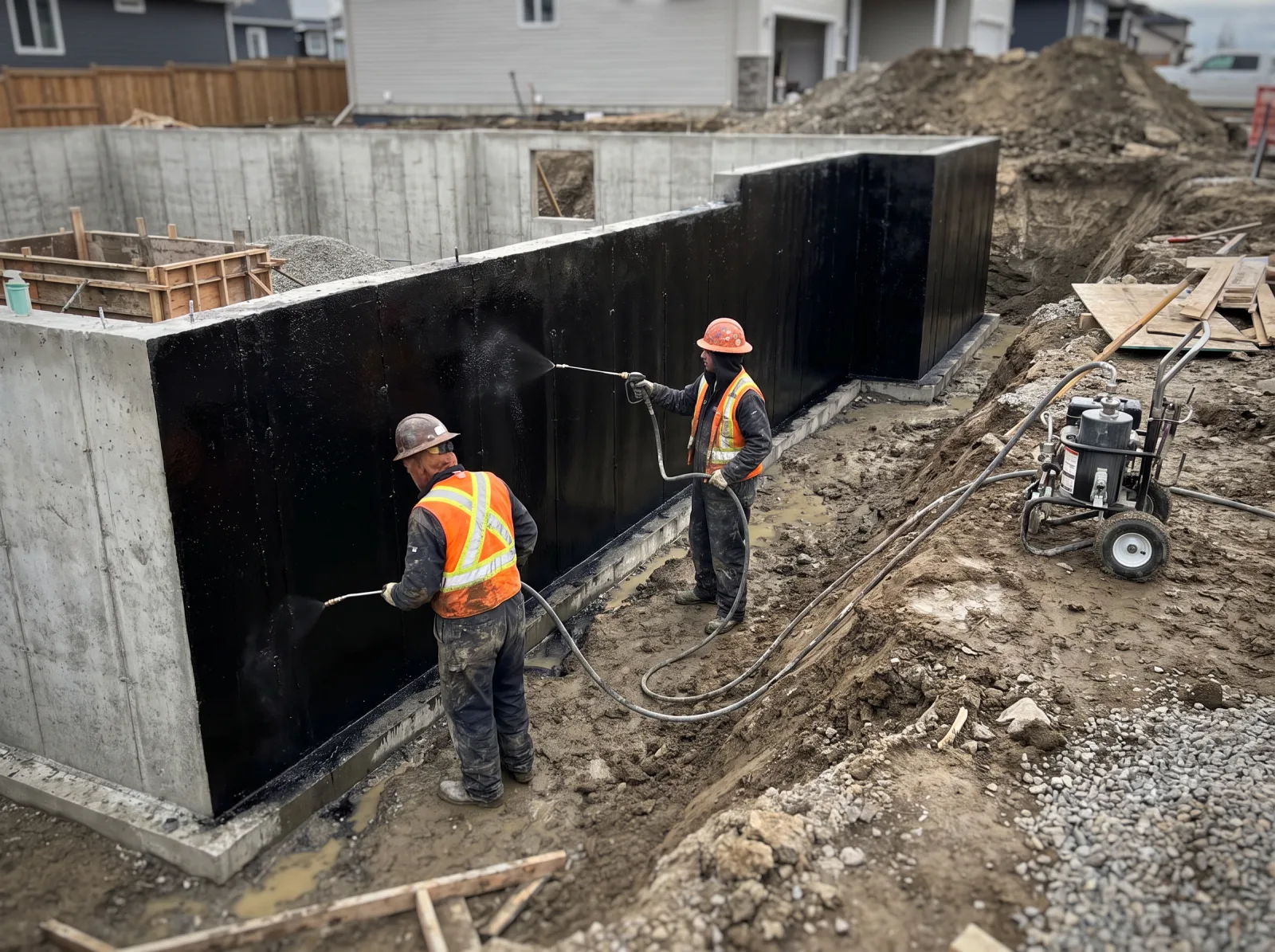
The Waterproofing Package Built For New Foundations, Not Repairs
Most of the waterproofing calls we get start the same way: a finished basement, a landscaped yard, and water finding its way in years after the house was built. This service exists to make sure that call never happens. We install a complete exterior waterproofing and drainage package directly on brand-new foundations — while the walls are still exposed and before the builder backfills — so the two systems that actually keep water out of a foundation are both in place from the very first winter.
The combination that works long-term is not complicated, but it has to be done in the right order and at the right point in the construction schedule: a continuous exterior waterproofing membrane on the wall, and a footing drain at the base of the wall that gives water somewhere to go instead of somewhere to push against. Skip either half, and the system is incomplete — a membrane with no drain still lets hydrostatic pressure build against the wall over time, and a drain with no membrane still lets water track through hairline cracks and cold joints in the concrete itself.
This is new construction work, not repair work. If you already have a house with a leaking or damp basement, that is a different job with different methods — see our exterior waterproofing and interior waterproofing pages for retrofit solutions on existing homes.
What’s Included
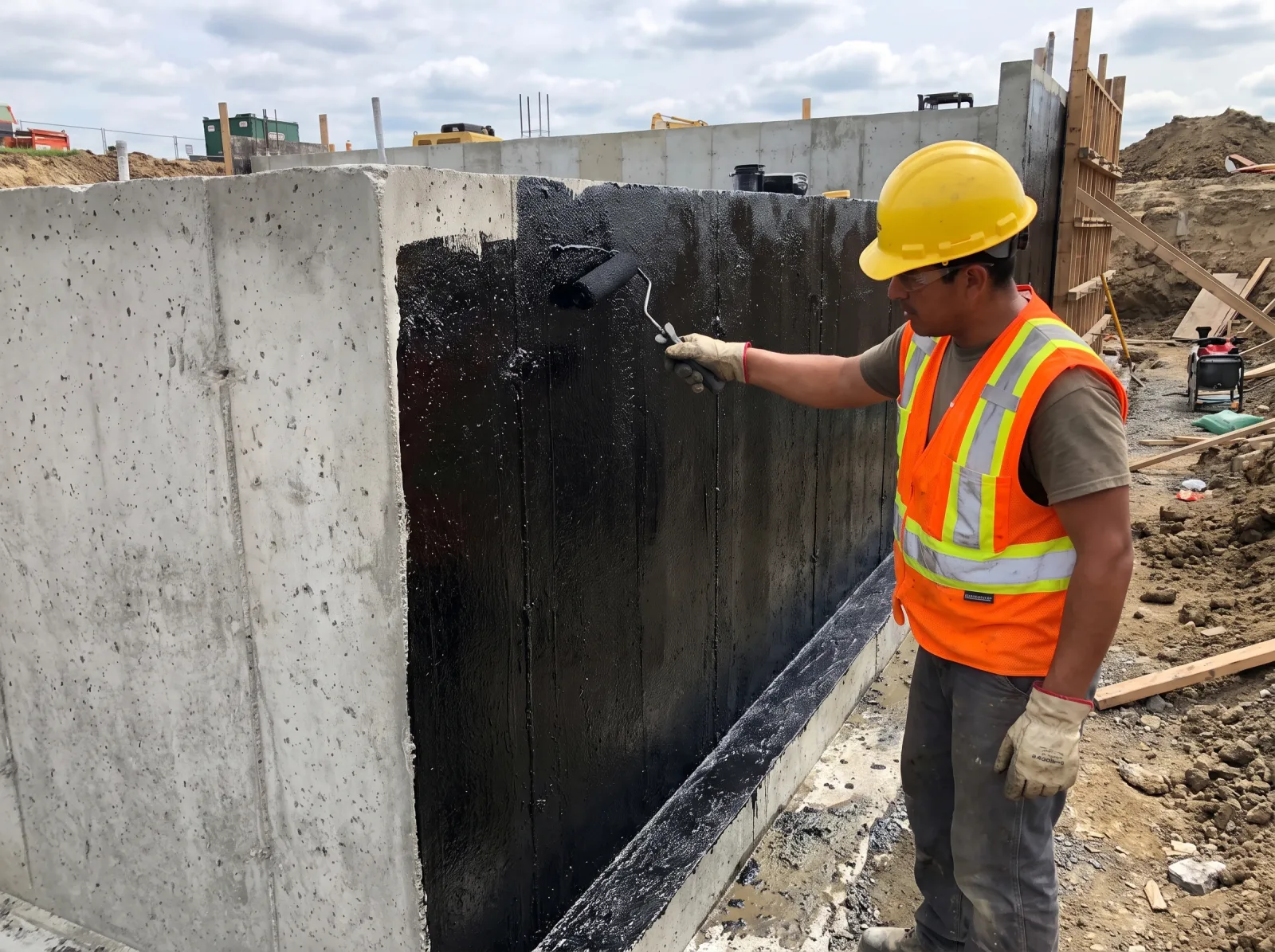
Exterior Waterproofing Coating & Membrane
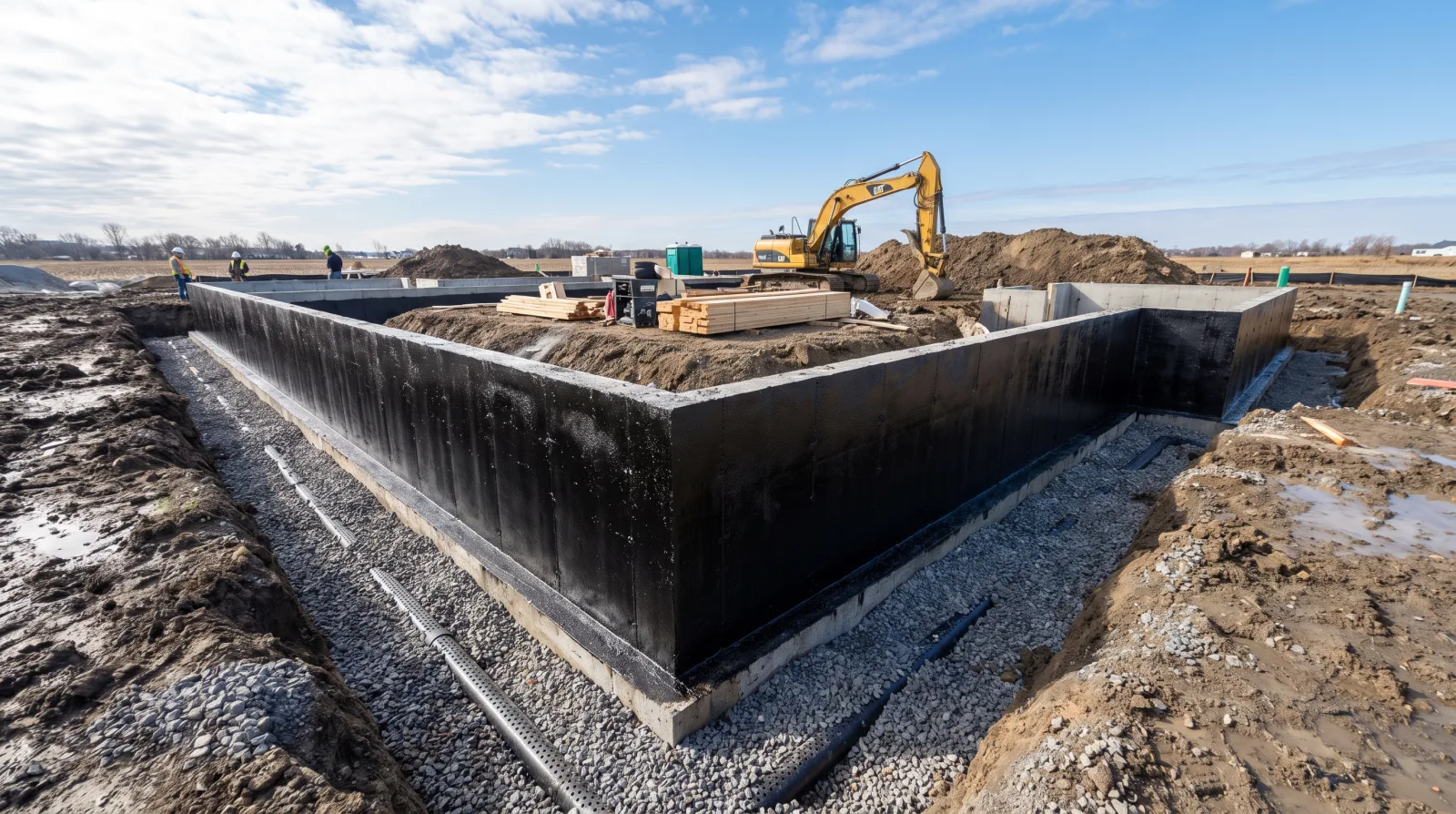
A spray-applied or rolled waterproofing system suitable for new concrete, applied directly to clean, cured foundation walls — full coverage below grade, including corners and cold joints where separate concrete pours meet.
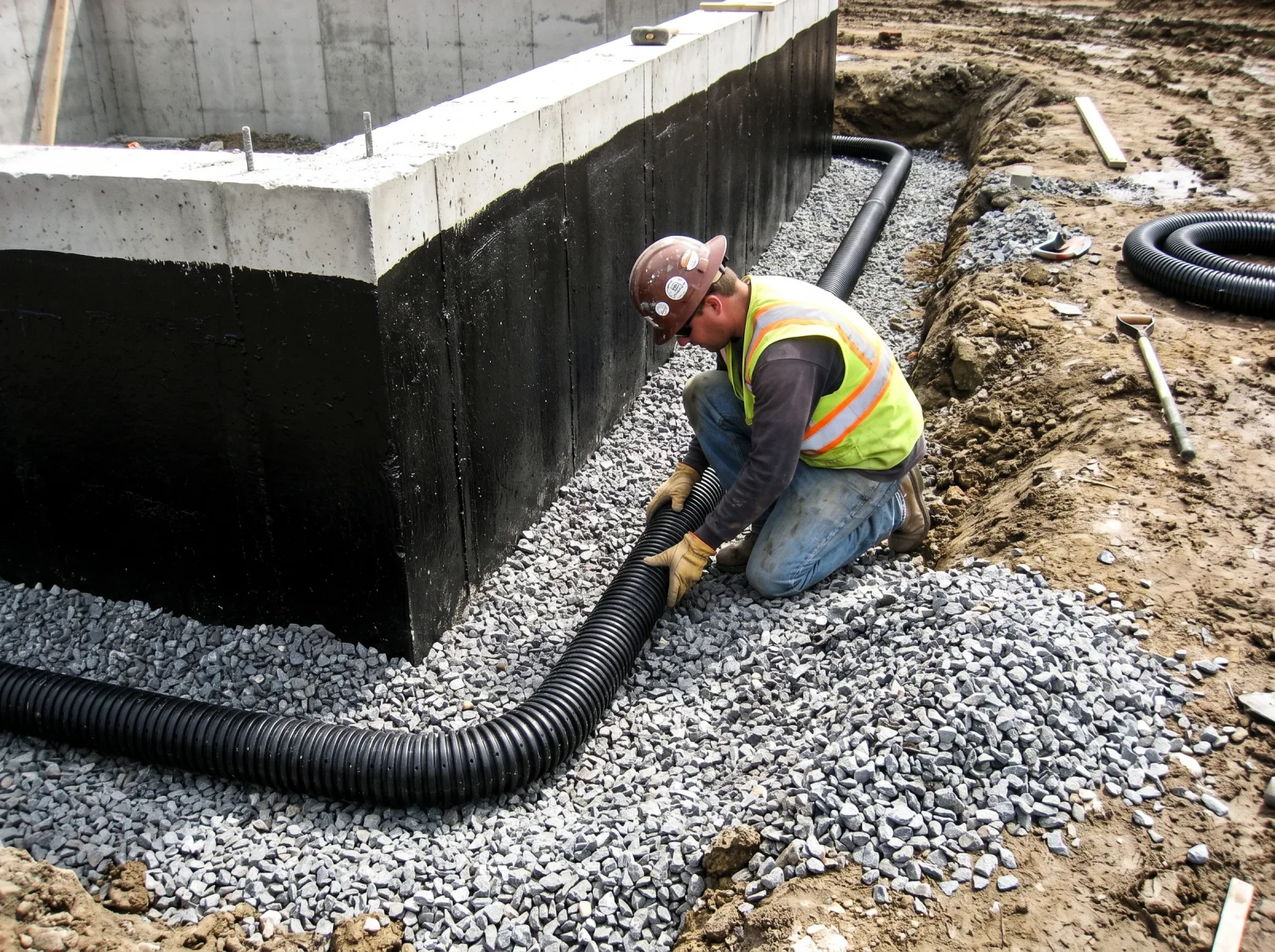
Footing Drain / Perimeter Drain System
A continuous drain pipe run along the full perimeter of the footing, tied into the foundation drainage system, giving groundwater a controlled path away from the wall instead of a path to build pressure against it.
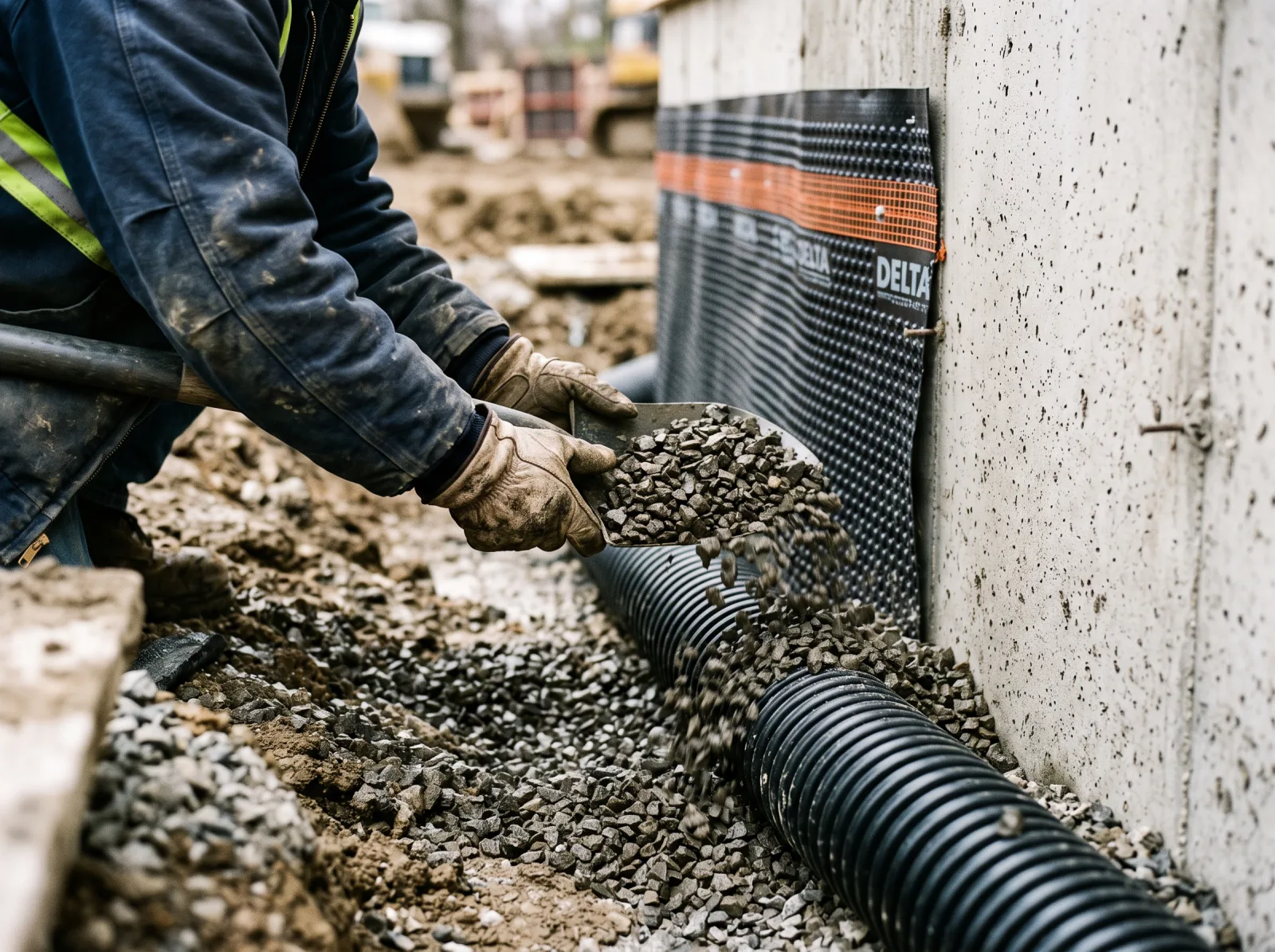
Proper Stone & Gravel Envelope
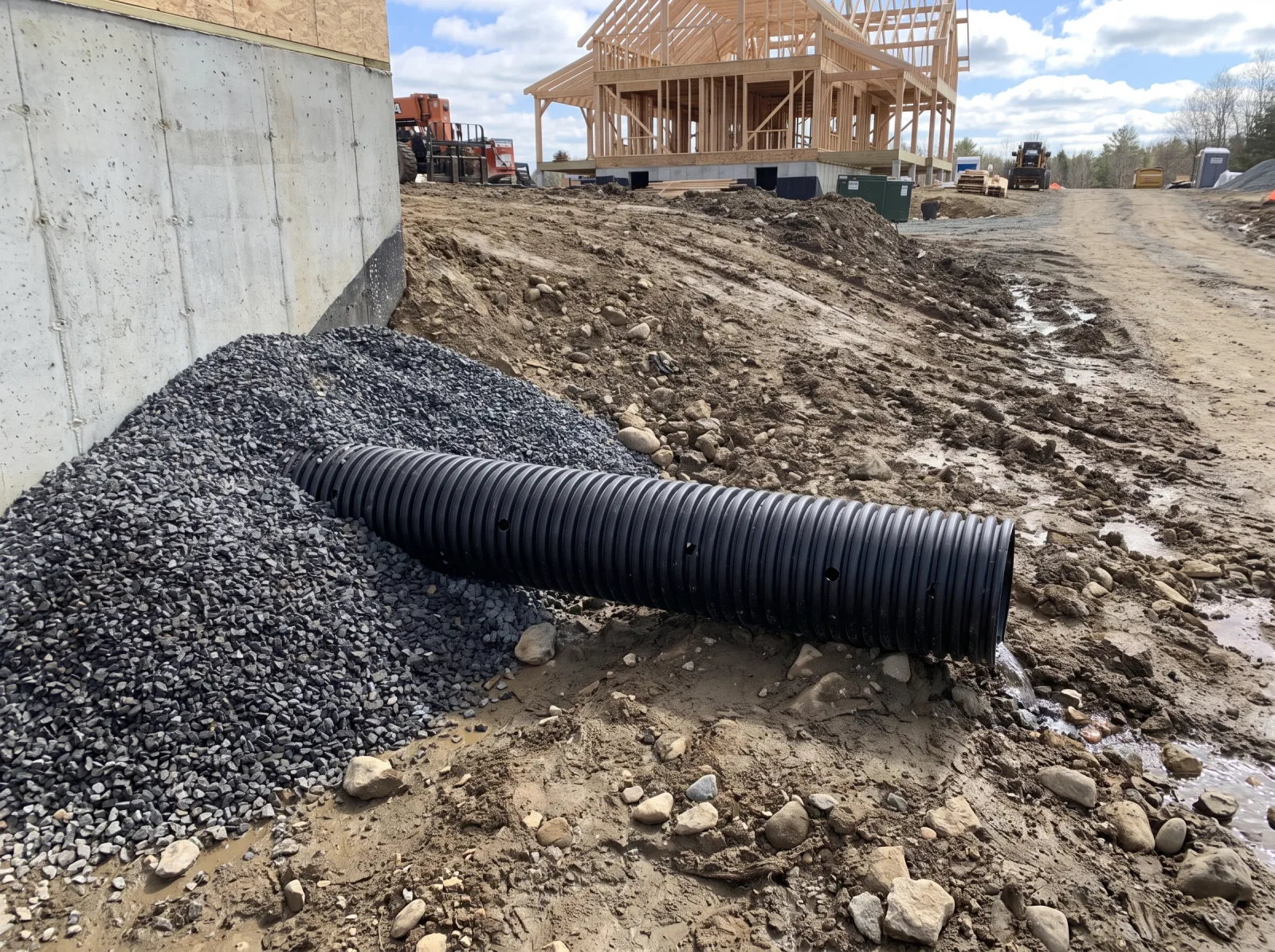
The drain pipe is bedded in a clean stone or gravel envelope, not raw clay — this is what keeps the pipe from silting in and losing its capacity to move water over time.
Discharge to Daylight, Storm, or Sump
The drain’s outlet is engineered to fit your site — running downhill to daylight where grade allows, tying into the storm sewer where the municipality permits it, or discharging into a sump pit and pump inside the foundation.
Clean, Coordinated Backfill Timing
We coordinate directly with the builder’s schedule so the membrane has cured and the drain is stoned and protected before a single scoop of soil goes back against the wall.
Documented, Warrantable Work
Photos and documentation of the completed system before backfill, so builders and homeowners have a record of exactly what’s in the ground — useful for buyers, inspectors, and warranty purposes down the road.
Why This Matters on New Foundations
New Concrete Still Needs Protection
Foundation walls shrink as they cure and settle, and hairline cracks and cold joints between separate pours develop naturally — exactly why an exterior membrane matters before the wall is ever tested by groundwater.
Michigan Soil Doesn’t Care If It’s New
Southeast Michigan’s clay-heavy soil holds water against a wall rather than draining away, and our freeze-thaw cycle expands and contracts that saturated soil against the foundation dozens of times each winter.
Doing It Now vs. Doing It Later
Waterproofing exposed foundation walls before backfill is straightforward construction work. Fixing a leak after the house is finished means excavating around a landscaped, occupied home for the same result.
Buyers & Inspectors Expect This Now
Documented exterior waterproofing and drainage is increasingly what buyers, home inspectors, and municipalities expect to see on a new build before they consider the foundation work complete.
New Construction Waterproofing & Drainage Work
Exterior membrane application and footing drain installation on new foundations before backfill
Ideal For
New Home Construction
Individual custom homes and standard new builds where the foundation is exposed and ready for waterproofing before the builder backfills.
Spec Homes
Builders constructing homes for future sale who want documented exterior waterproofing and drainage as part of the finished product buyers and inspectors will evaluate.
Custom Builds
Homeowners building a custom home who want to make sure this step is done properly and not shortcut by a builder managing a dozen other trades.
Foundation Contractors & Builders
General contractors and foundation crews who want a clean, warrantable waterproofing and drainage system installed on schedule, coordinated directly with their crews.
Additions With New Foundations
Home additions poured on their own new footing and foundation wall, where the new section needs the same protection as a full new build.
Anyone Who Wants to Do It Once
Property owners who understand that exterior waterproofing done during construction is a one-time job, not a maintenance item to revisit every few years.
How We Work With Your Builder’s Schedule
Coordinate the Window Before Backfill
We work directly with the builder or general contractor to confirm when the foundation walls will be formed, poured, and cured, and we schedule our crew to hit that window before backfill happens — the single most common reason this step gets missed or rushed.
Confirm the Wall Is Ready
The foundation has to be clean, cured, and free of form ties, debris, and standing water before coating goes on. We inspect the wall on site and address anything that would keep the membrane from bonding properly.
Apply the Exterior Membrane
The waterproofing coating or membrane is spray-applied or rolled onto the full below-grade wall, with particular attention to corners, cold joints, and any penetrations, and allowed to cure fully before backfill.
Install the Footing Drain
Perforated drain pipe is run continuously around the perimeter of the footing at the base of the wall, sloped to move water toward the discharge point rather than sitting stagnant.
Place the Stone Envelope
Clean stone or gravel is placed around and over the drain pipe to keep it from silting in with fine soil, preserving its capacity to move water for the life of the foundation.
Set the Discharge Path
The drain is routed to daylight, tied into the storm sewer, or connected to a sump pit and pump — whichever fits your site’s grade and your municipality’s requirements — and tested before it’s covered.
Document & Release for Backfill
We photograph the completed membrane and drain system, sign off with the builder, and clear the site for backfill — clean, professional, and on the record before the ground closes over it.
Why Builders and Homeowners Choose Us for New Construction
We Work Your Schedule
We coordinate directly with the builder so the crew is on site exactly when the walls are ready — not weeks early or after backfill has already started.
Membrane and Drain, Done Together
We install the coating and the footing drain as one coordinated system, because a membrane without drainage or a drain without a membrane is only half a solution.
Documented Before It’s Buried
Every job is photographed before backfill, so there’s a clean record of exactly what was installed — useful for the builder, the buyer, and any future inspection.
Licensed, Insured, and Experienced Underground
The same crew that handles complex exterior waterproofing retrofits on existing homes applies that experience to getting it right the first time on new construction.
New Construction vs. Retrofit Waterproofing
Both use waterproofing and drainage to keep a foundation dry, but the method, cost, and disruption are completely different depending on whether the house exists yet.
New Construction (This Page)
- Foundation walls are already exposed — no excavation required
- No lawn, landscaping, driveway, or hardscape to protect or restore
- Membrane and drain installed together as one coordinated system
- Scheduled around the builder’s pour and backfill timeline
- Prevents a leak from ever happening rather than responding to one
Retrofit on an Existing Home
- A wall is already leaking, damp, or showing efflorescence
- Requires excavating around a finished, landscaped, occupied home
- Interior drain tile is often the practical alternative to full exterior dig
- Triggered by a visible problem, not scheduled in advance
- Camera and moisture inspection usually comes first
Not Sure Which One Fits Your Project?
We will walk the site with you or your builder, confirm the grade and discharge option, and give you an itemized written estimate. No charge for the assessment.
Call (586) 345-7292