Twenty years, 137,000 new residents and a lot of same-age basements
The plants came first: Chrysler’s Warren Truck plant in 1938, the Detroit Arsenal tank plant in 1940 and the GM Technical Center, built from 1949 to 1956. Subdivisions followed the jobs. Warren grew from about 42,000 people in 1950 to 179,000 in 1970, doubling in each decade, and became a city in 1957.
The Census Bureau’s latest estimate puts the typical Warren home’s build year at 1964, and about six in ten went up in the 1950s or 1960s. Roughly three in four are single-family houses, close to 42,000 of them, so a lot of basements of the same age are wearing out together. Warren runs from 8 Mile, across from Detroit, up to 14 Mile, across from Sterling Heights, and it’s the largest city in our Macomb County service area.
Bungalows in the south end, brick ranches up north
Southeast Warren has many postwar bungalows, and north of Stephens Road a lot of houses were built after 1960 as brick ranches. Many basements from that era are concrete block. Block of that age lets water through opened mortar joints, and water that collects in the hollow cores weeps out along the bottom course, often leaving a white crust before there’s ever a puddle. The original footing tile, short lengths of clay pipe, tends to silt up over the decades.
Some houses from that era have no sump at all. The footing tile drains to the floor drain and on to the sewer, which works until the sewer is full and the water runs backward.
Wet ground under most of the city
USDA soil maps show slow-draining ground across most of Warren. Around 12 Mile and Van Dyke it’s Toledo silty clay loam, rated very poorly drained. Near 9 Mile and Hoover it’s Sims clay loam, rated poorly drained. Out east around Schoenherr and up near 14 Mile it’s Selfridge loamy sand, a sandy layer over tighter subsoil where groundwater can come up to about 9 inches below the lawn in the wettest months. In each case, water tends to sit against a Warren basement wall instead of draining away.
Why Warren basements back up in big storms
The city’s flood update after the August 1-2, 2024 storm said its infrastructure is about 70 years old and was designed for storms of 2 inches or less. That night the south end got about 2 inches in an hour and the north end at least 3. The city’s own stormwater plan has put its sewers at about half the capacity a 10-year storm calls for. On January 26, 2024, basement flooding was reported across the city while its storm and sewer basins sat full and its pump station ran at full capacity.
August 11, 2014 was worse: about 5.2 inches of rain, 18,047 damaged homes and $1.2 billion in damage by the mayor’s estimate, and more than 1,000 cars abandoned in floodwater. After the June 2021 storms, Macomb County wasn’t added to the federal disaster declaration for individual aid until late September.
When the sewer can’t keep up, a basement floor drain is often the lowest opening on the line, and that’s where the water comes in.
What the city has built, and what’s still yours
Warren treats its own sewage, at a plant first designed in 1957. Since 2012 it has laid miles of relief sewers, upgraded the 9 Mile pump station, added a 48-inch force main and built the Stephens Road Detention Basin between Gratiot and Groesbeck. The basin opened in February 2025 and holds 22 million gallons of wet-weather flow from the 9 Mile sanitary sewer service area. The program cost about $95 million.
That should help the south end. Still, when the basin opened, the mayor said Warren’s system was meant to take about 2 inches of rain over several hours, and that three storms in the year before had overwhelmed it. Your floor drain, your sump and the sewer line on your property are yours, and a backwater valve on the main is usually the first private step. On storm nights, hold the laundry and keep showers short, a tip Warren’s water department shares too.
Interior basement waterproofing in a Warren ranch
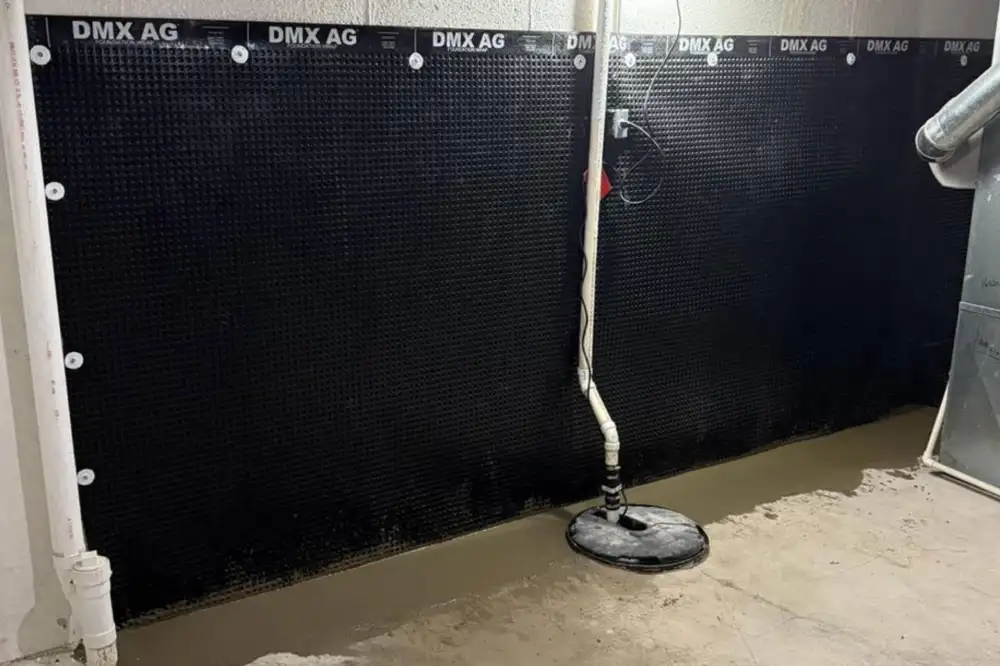
For water through block walls or up at the floor joint, the usual answer is interior basement waterproofing. We break out the floor along the walls, lay perforated drain tile at the footing in clean stone, weep the bottom row of block into it, put a membrane on the walls and run the system to a new sump pump in a lidded pit. We can add a battery or water-powered backup pump, because storms and power outages tend to arrive together.
Interior systems run approximately $2,000 to $35,000, and financing is available through Enhancify. Our workmanship on the system carries our 25-year transferable limited warranty; the sump pump and pit aren’t part of it. The cost guide shows what moves the price. Where a lot has room to dig, exterior waterproofing runs approximately $3,000 to $60,000: we excavate to the footing, put a membrane on the wall and lay new drain tile.
Cracks, bowing block and steel I-beams
Where Warren sits on clay, the soil swells when wet, shrinks in a dry August and freezes in winter, and basement walls take that push for decades. A vertical crack in a poured wall is usually a water problem. A crack running sideways along a block wall, especially with the middle bulging in, means the wall is moving.
- Leaking vertical cracks and tie-rod holes get crack injection, approximately $500 to $2,500 per crack.
- A wall that has just begun to move gets carbon fiber, approximately $1,500 to $2,500.
- A wall that’s bowed or leaning further gets steel I-beam braces, approximately $1,500 to $4,000, priced once we’ve measured it.
Braces and carbon fiber are there to stop a wall from moving further. They don’t dry out the clay behind it, so we check downspouts and grading on the same visit. More on foundation repair. Steel beam and carbon fiber reinforcement isn’t covered by our 25-year transferable limited warranty; any warranty on it is the one written in its own contract or invoice.
Sewer lines, jetting and the Warren permit trail
A 1960 Warren house often still has its 1960 sewer line, clay or cast iron, with roots at the joints and sometimes an old repair that never sat right. We run a camera down the line before anyone digs and clear main lines with a hydro-jetter. The Electric Eel only goes into small drains, like a sink or a tub. A sewer camera inspection is a flat-price service that includes locating the line, a saved video of the pipe and a written report; ask about the price when you call.
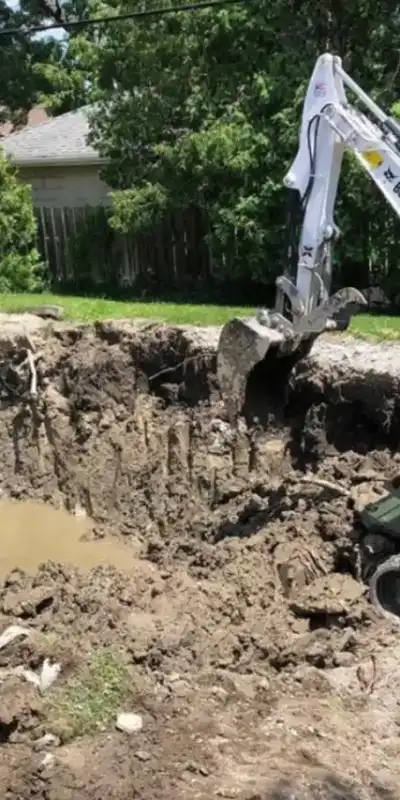
In September 2026 we worked on a Warren commercial property that had years of backups caused by another company’s bad repair on the main line. We dug down 11.5 feet, uncovered the failed section and rebuilt the line the right way. That’s our approach to sewer repair: find the break, then dig once.
Replacing a sewer line takes a permit. If the dig reaches the street, the sidewalk or a utility easement, Warren’s Engineering Division adds its own construction permit. That means a bond, insurance and a city inspector, and backfill under the road has to be compacted sand. We’ll tell you at the estimate whether your repair crosses the property line, because that changes the schedule.
What we’d check first in a Warren basement
Which water you have comes first. Seepage at the walls or floor joint is groundwater, smelly water from the floor drain is sewage, and a wet corner after a downpour is usually a downspout. From there we camera the sewer line, add a valve if sewage came up, sort out downspouts and grading (sometimes that’s the whole fix, and you don’t need us), drain leaking walls to a sump pump, and seal or brace the walls that need it.
If city sewage backed up into your basement, Michigan law gives you 45 days to get a written claim to the City of Warren. Photograph everything before cleanup, and report the backup to the Water Department. Our flood restoration crew handles water removal and drying.
Recent jobs in Warren
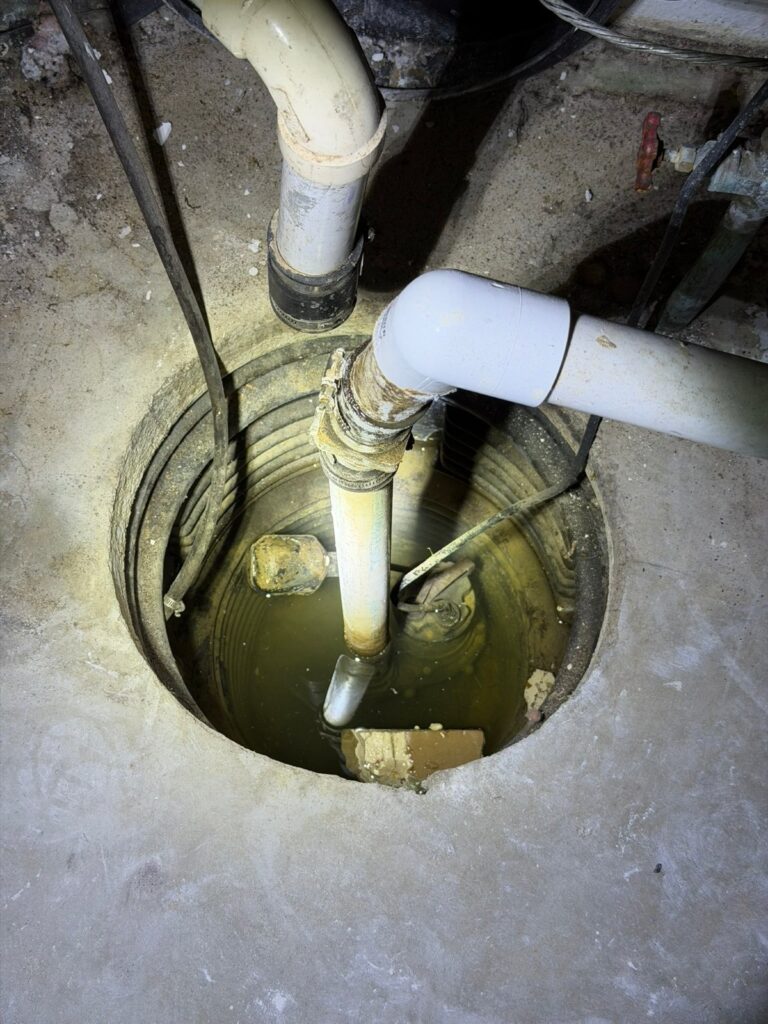
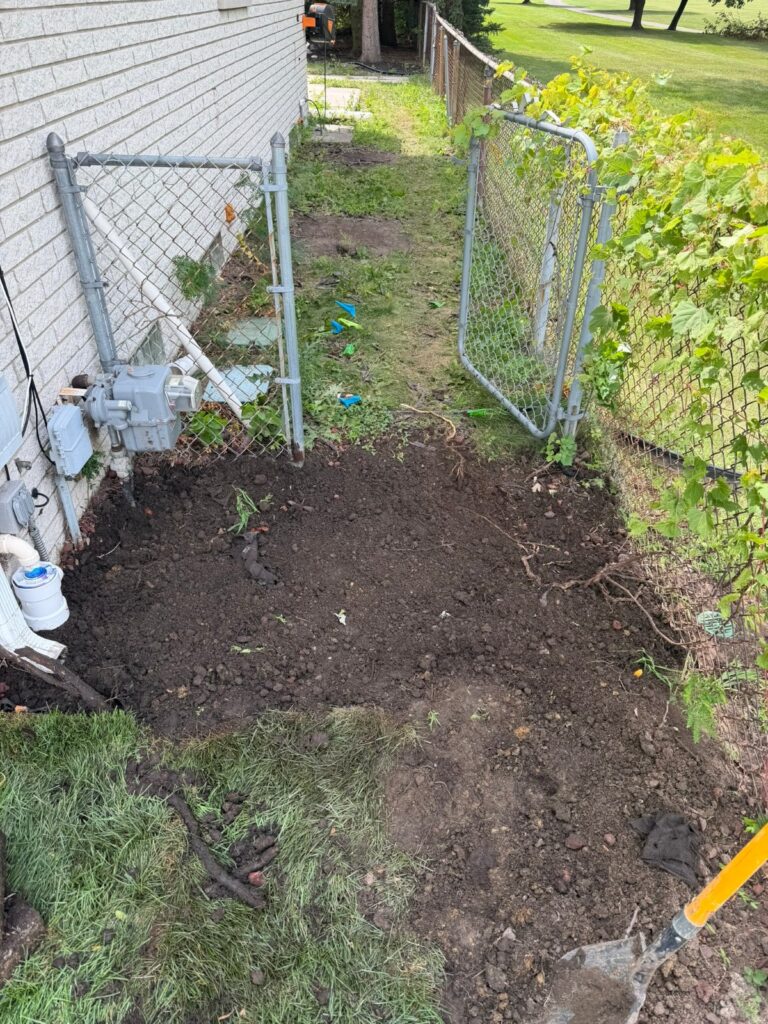
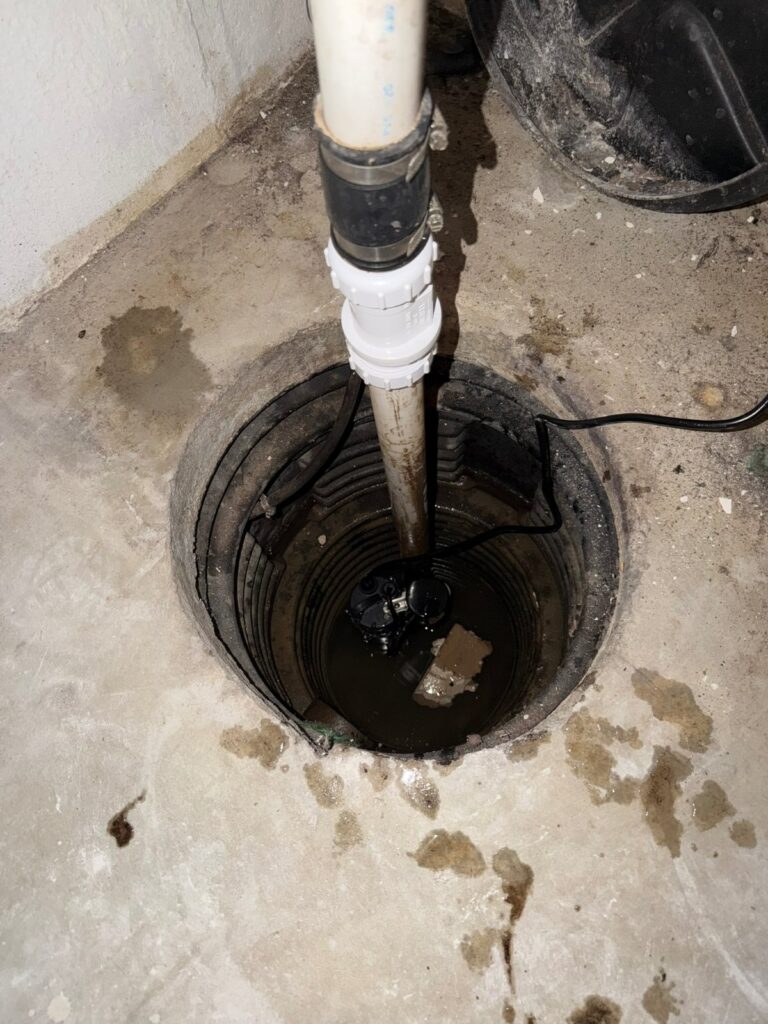
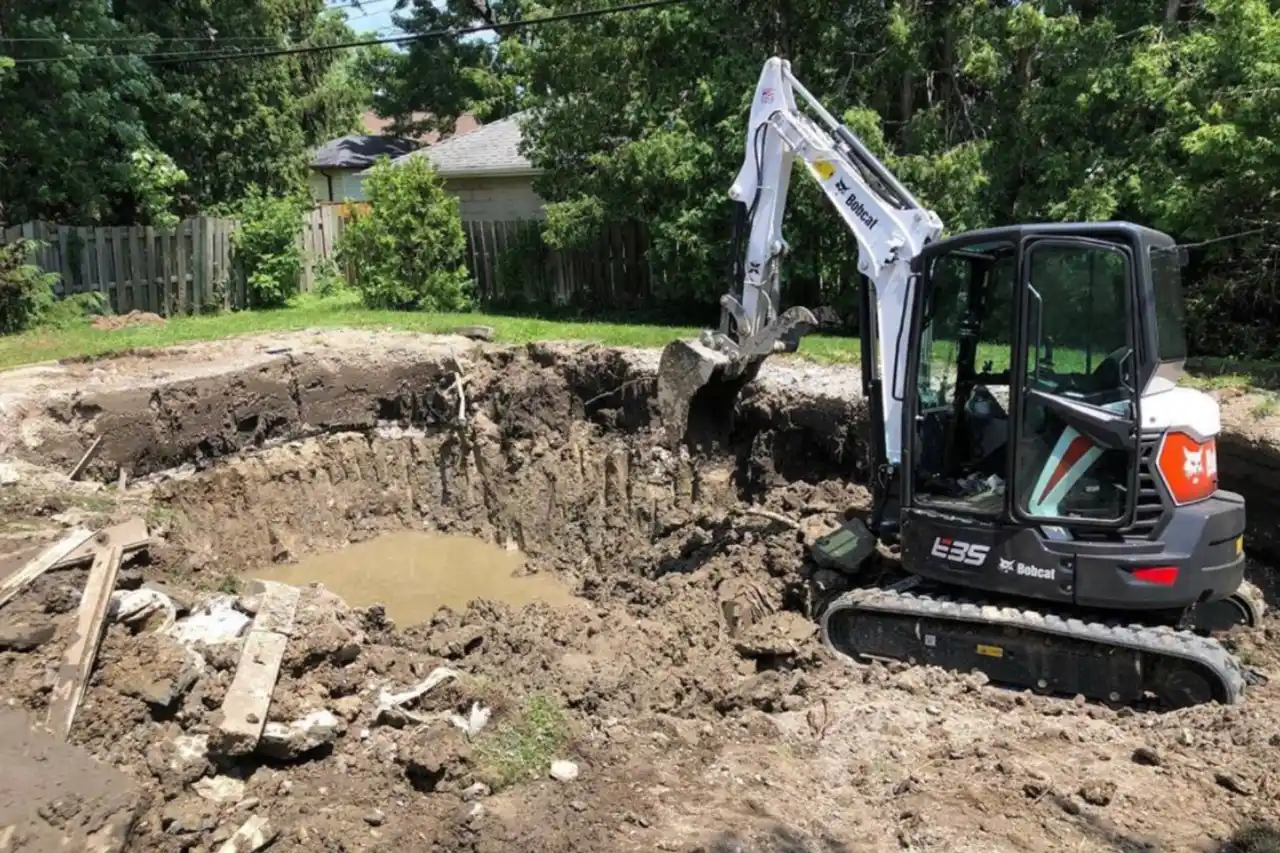
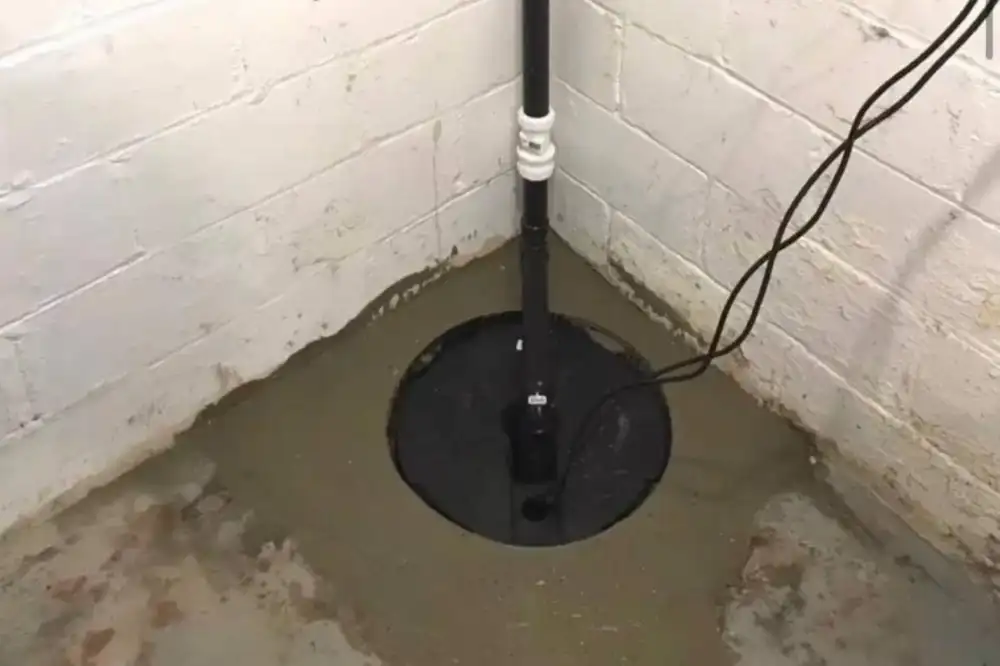
A few photos from our recent work in Warren, in the order they were taken.
Sump pump