


Complete New Sewer & Water Main Installation in Southeast Michigan
Mansour’s Innovations installs brand-new underground utilities, not just repairs to existing ones. If a property has never had a sanitary sewer lateral or a municipal water service, or if you are adding a structure that needs its own, this is the work: a new tap into the city main, a new full-depth run to the building, a permitted inspection, and a properly bedded and compacted trench that will not settle two winters from now.
We serve builders, developers, and homeowners across Oakland County, Macomb County, Wayne County, and the rest of Metro Detroit. Because we own and operate our own excavators, we control the schedule and the quality of the dig instead of waiting on a rented machine and an outside operator. That matters most on new construction, where the underground utilities have to land between the foundation pour and the backfill, and on deep sanitary laterals where grade and bedding decide whether the line runs clean for fifty years.
Sewer and water go in together, in one trench, with one contractor responsible for both. Already have a line in the ground that is failing? That is different work — see our sewer repair and replacement page for cracked, collapsed, or root-invaded laterals, our water main and service line replacement page for lead, galvanized, or leaking water services, and our excavation page for the heavy digging behind all of it.
What We Install
New Sanitary Sewer Laterals
Complete new sewer line installation from the building drain out to the municipal sanitary main, laid to a continuous fall in PVC SDR-35 or whatever material your community specifies, with cleanouts set where code requires them.
New Water Services From the City Main
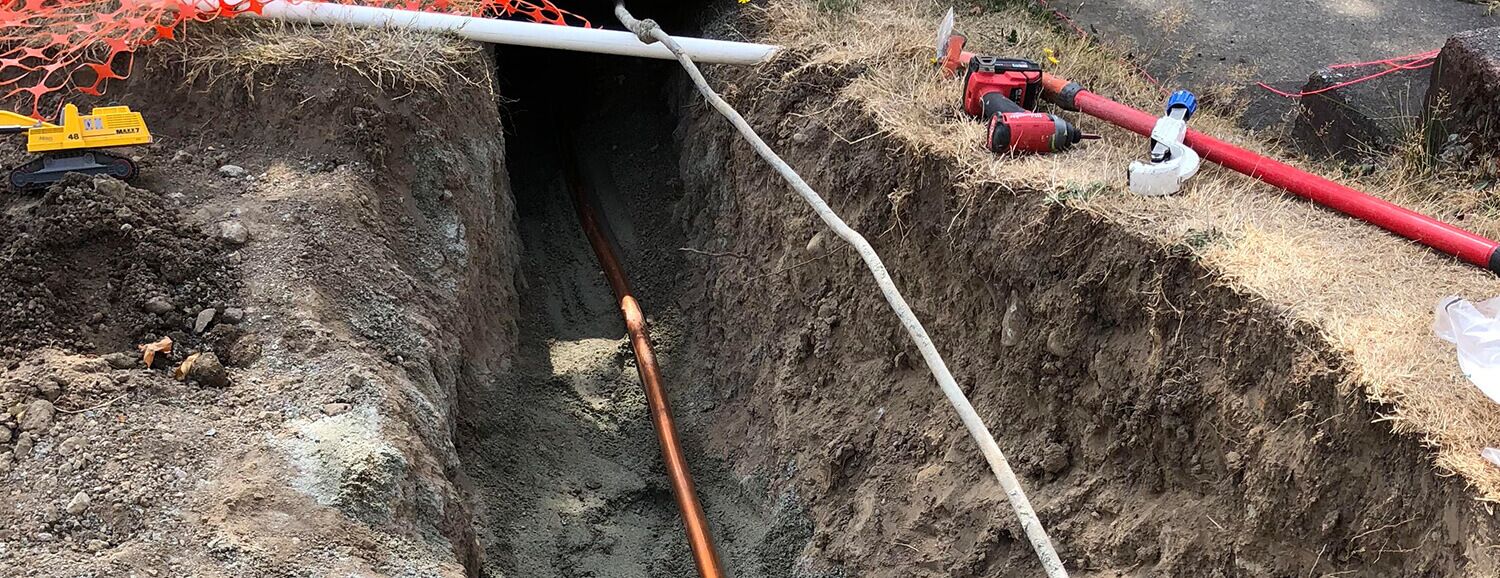
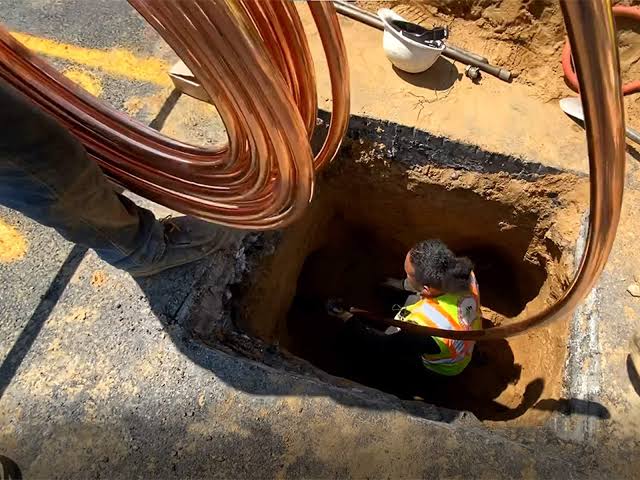
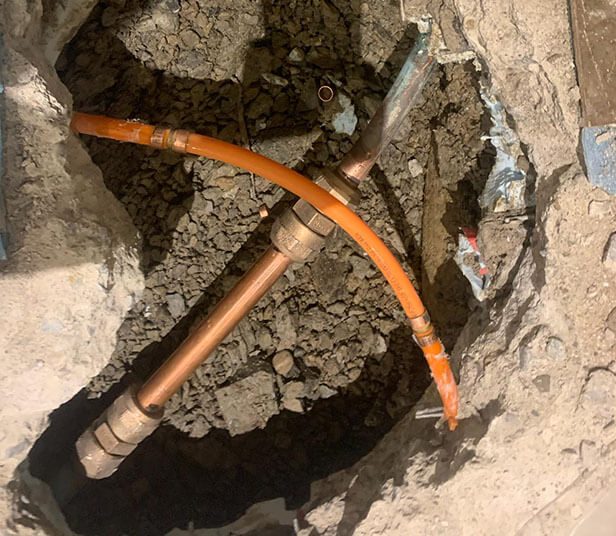
New water service installation from the corporation stop at the municipal main all the way to the meter setting inside the building, in Type K copper or municipality-approved HDPE, sized to the building’s demand.
Sewer Taps & Saddle Connections
Cutting in a new sewer tap on the city main – wye, tee, or saddle depending on the main’s material and the community’s standard detail – coordinated and inspected with the authority that owns the sewer.
Water Taps, Curb Stops & Meter Connections
Corporation stop, curb stop, and buffalo box set at the right depth and location for your municipality, plus exterior meter pits where the community requires the meter outside rather than in the basement.
Septic-to-Sewer Conversions
New sanitary lateral to the city main, re-plumbing of the building drain, and proper abandonment of the old septic tank and drain field to satisfy the county health department.
Combined Trench Utility Installs
Water and sewer hookups installed together in one trench on new builds, additions, and ADUs, sequenced with the builder’s foundation, backfill, and grading schedule so the underground work never holds up the site.
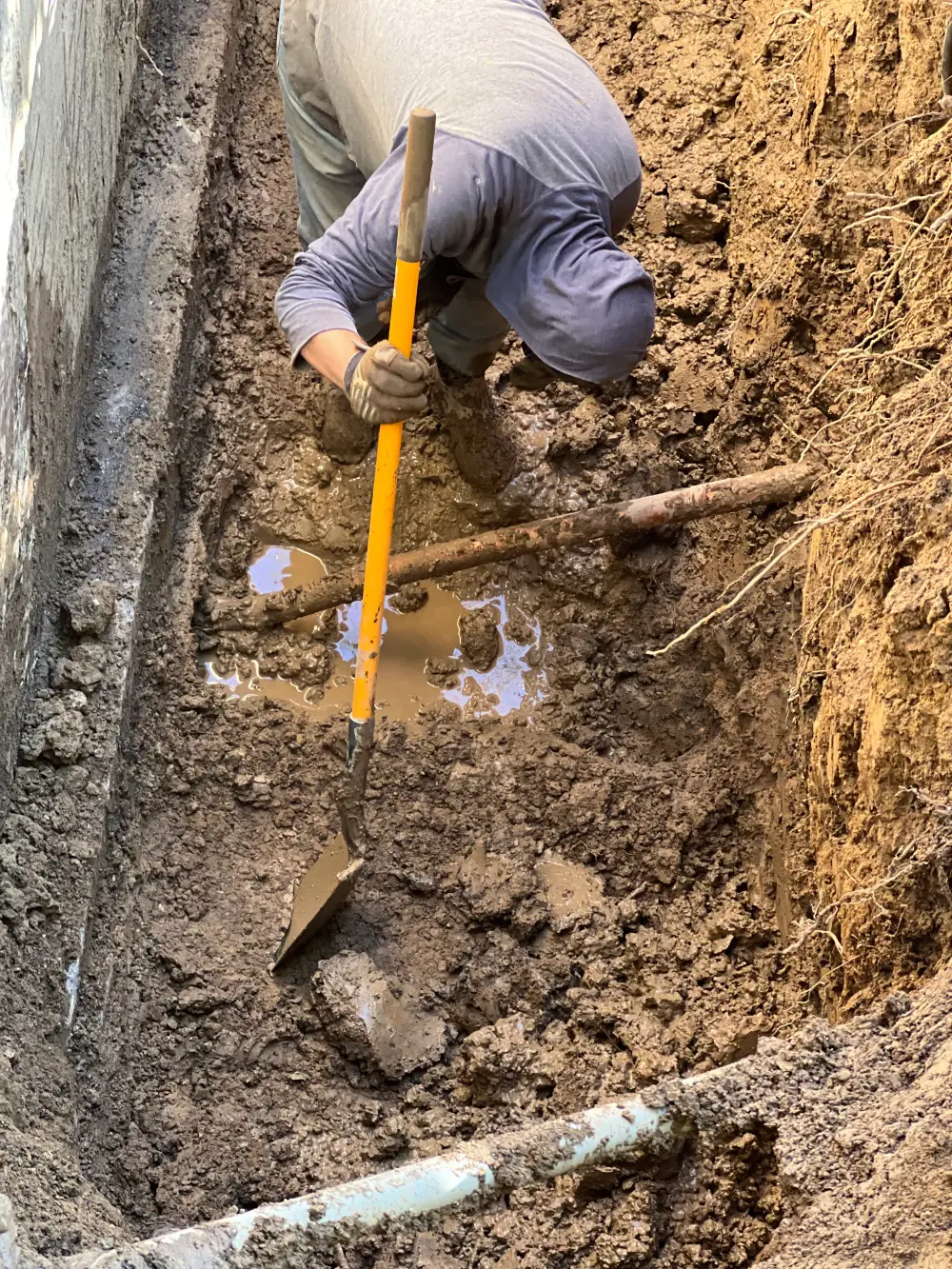
Our Sewer & Water Installation Work
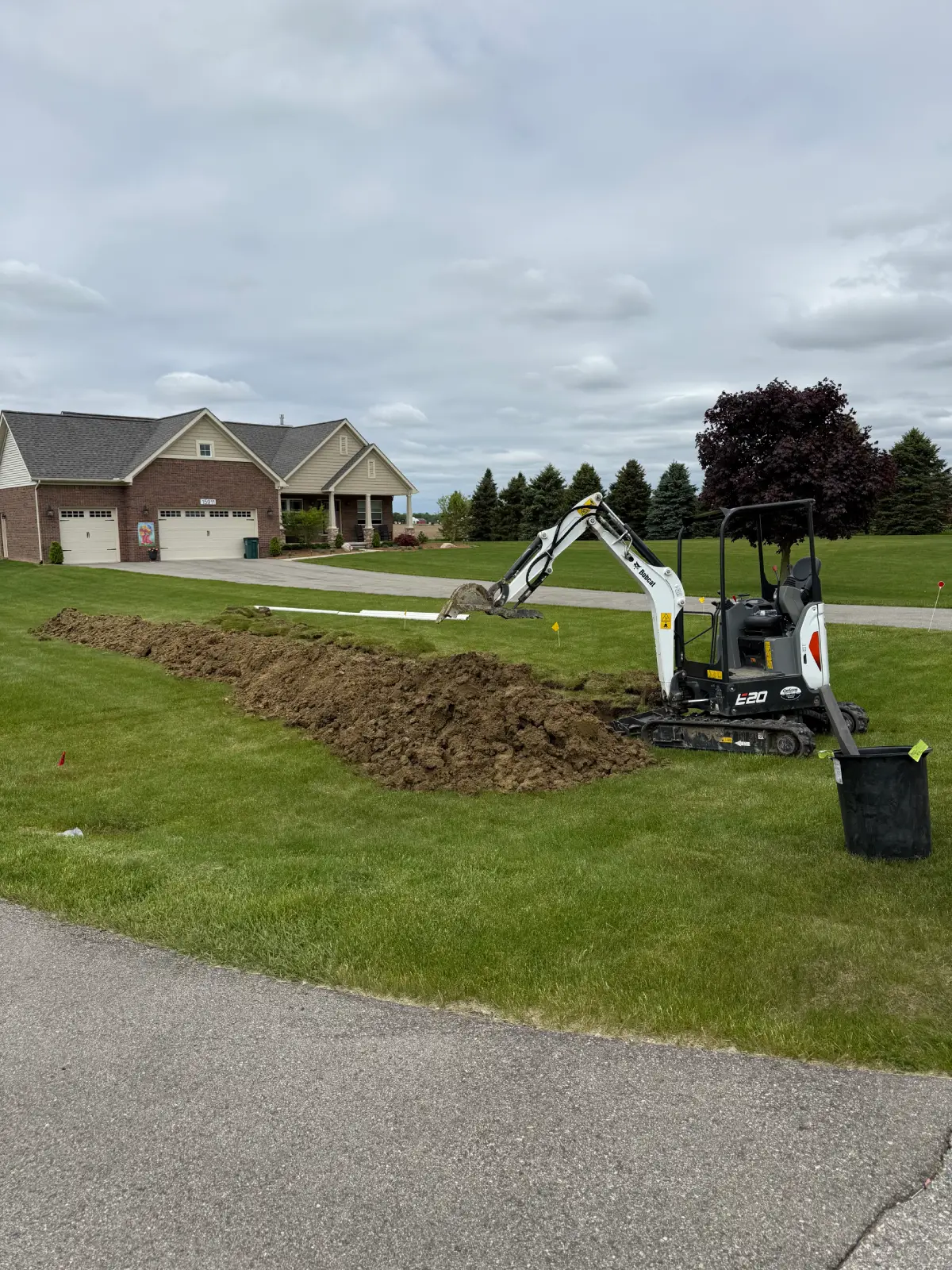
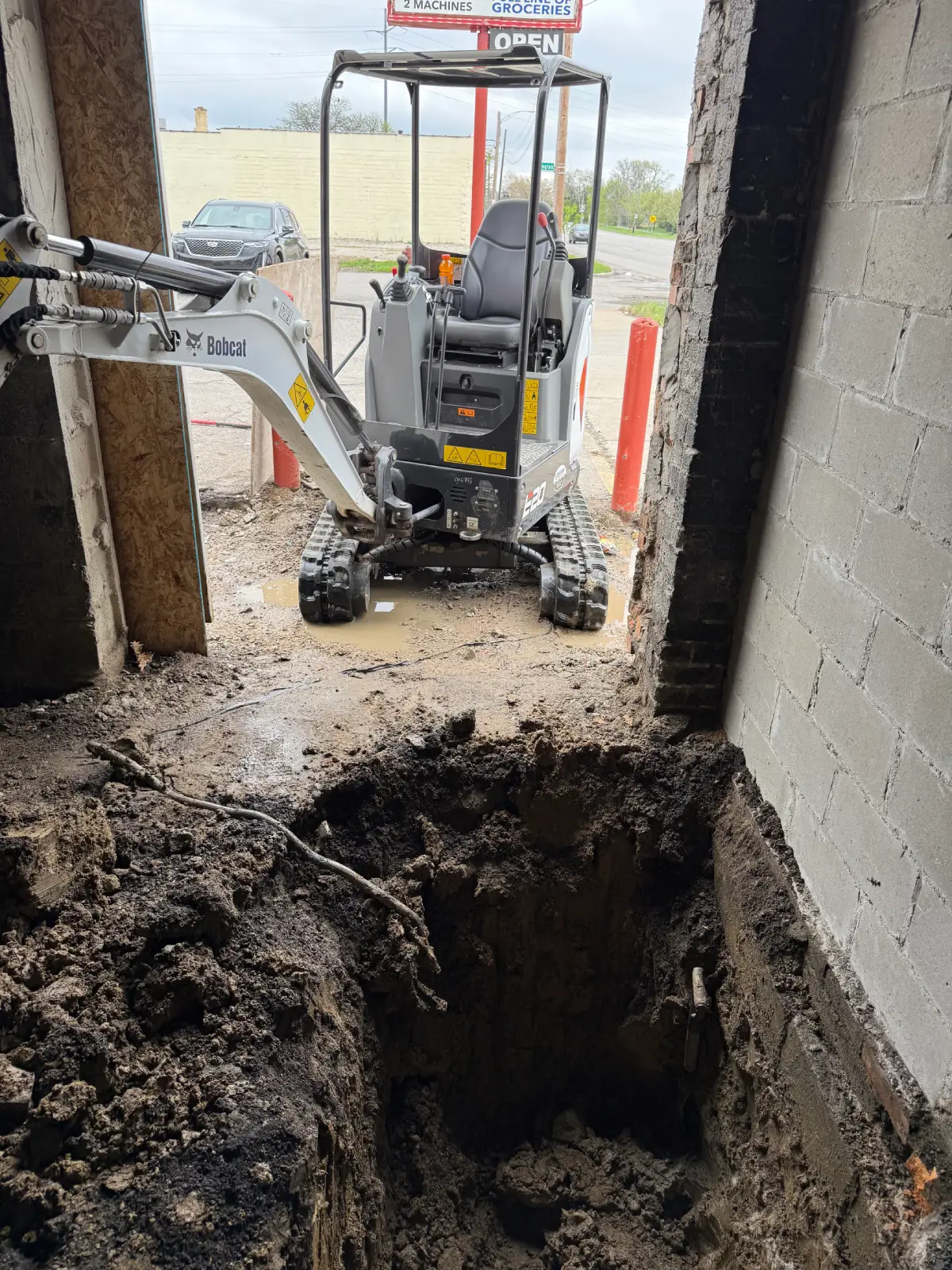
Full-depth excavation, bedding, and new utility connections across Metro Detroit
Our Installation Process
Site Evaluation & Route Planning
We walk the property, confirm where the municipal main runs and how deep it sits, and plan the route so the sewer lateral holds a continuous fall and the water service avoids driveways, mature trees, and other utilities wherever possible.
Permits, MISS DIG 811 & Municipal Coordination
We pull the permits with your city, township, or county authority, file the MISS DIG 811 ticket so every existing utility is located and marked, and schedule the tap and inspections with the department that owns the main.
Excavation Below the 42-Inch Frost Line
We open the trench with our own excavators and hand-dig around marked utilities. Water services go below the Michigan frost line – generally a minimum of 42 inches of cover, more where a community requires it – and sanitary laterals go as deep as the fall to the main demands, with shoring and spoil management on deep runs.
Tap & Connection at the Main
The new tap is cut into the municipal main to the community’s standard detail – corporation stop and curb stop on the water side, wye or saddle on the sewer side – coordinated with the water department’s crew where they perform the live tap themselves.
Bedding, Backfill & Compaction
Pipe is laid on a bedded sand or stone base rather than dropped on raw clay, sewer laterals are set to a continuous fall and checked with a laser or level, and the trench is backfilled in compacted lifts so it does not sink after the first freeze-thaw cycle.
Inspection, Testing & Restoration
The municipal inspector signs off on the open trench before we cover it, the water service is pressure tested, and we finish with grading, topsoil, and restoration of drives, walks, or lawn plus the final paperwork that puts the connection on record.
Why Choose Mansour’s for a New Installation?
We Own Our Excavation Equipment
Our excavators are ours, so the dig is scheduled around your build instead of around a rental yard, and the quality of the trench is on us.
Licensed & Insured
Fully licensed and insured for underground utility work, which is what most Michigan communities require before they will issue the tap permit.
Both Utilities, One Contractor
Sewer and water installed together in a single trench by one crew – one schedule, one restoration, no finger-pointing between trades.
Permit & Inspection Experience
We work with Oakland, Macomb, and Wayne County authorities regularly and handle the permits, MISS DIG locates, and inspection sign-offs for you.
New Installation vs. Replacement
New installation runs a line where none exists. Replacement swaps out a line that is already in the ground. Here is how to tell which job you actually have.
You Need a New Installation If…
- You are building on a new or undeveloped lot with no sewer lateral or water service at all
- You are adding an addition, detached garage, ADU, or in-law suite that needs its own service
- Your community has extended sanitary sewer to your street and you are converting off septic
- You are moving off a private well onto municipal water and need a service run from the main
- The property has never been connected to municipal water or sewer
- A builder needs both utilities stubbed in and inspected before backfill
You Probably Need Something Else If…
- Your existing sewer lateral is cracked, collapsed, root-invaded, or backing up – that is our sewer repair and replacement service
- Your existing water line is lead, galvanized, or leaking – that is our water main and service line replacement service
- Tap and connection fees are charged by your municipality, not by us, and they vary widely from one community to the next
- Permit review and tap approval can add days or weeks to the schedule before any digging starts
- Road, sidewalk, or driveway restoration may be scheduled separately by the city after the trench settles
Not Sure Which One You Need?
We will come out, look at what is actually in the ground, confirm depths and tap locations with your municipality, and give you an itemized written estimate. No charge for the assessment.
Call (586) 345-7292