
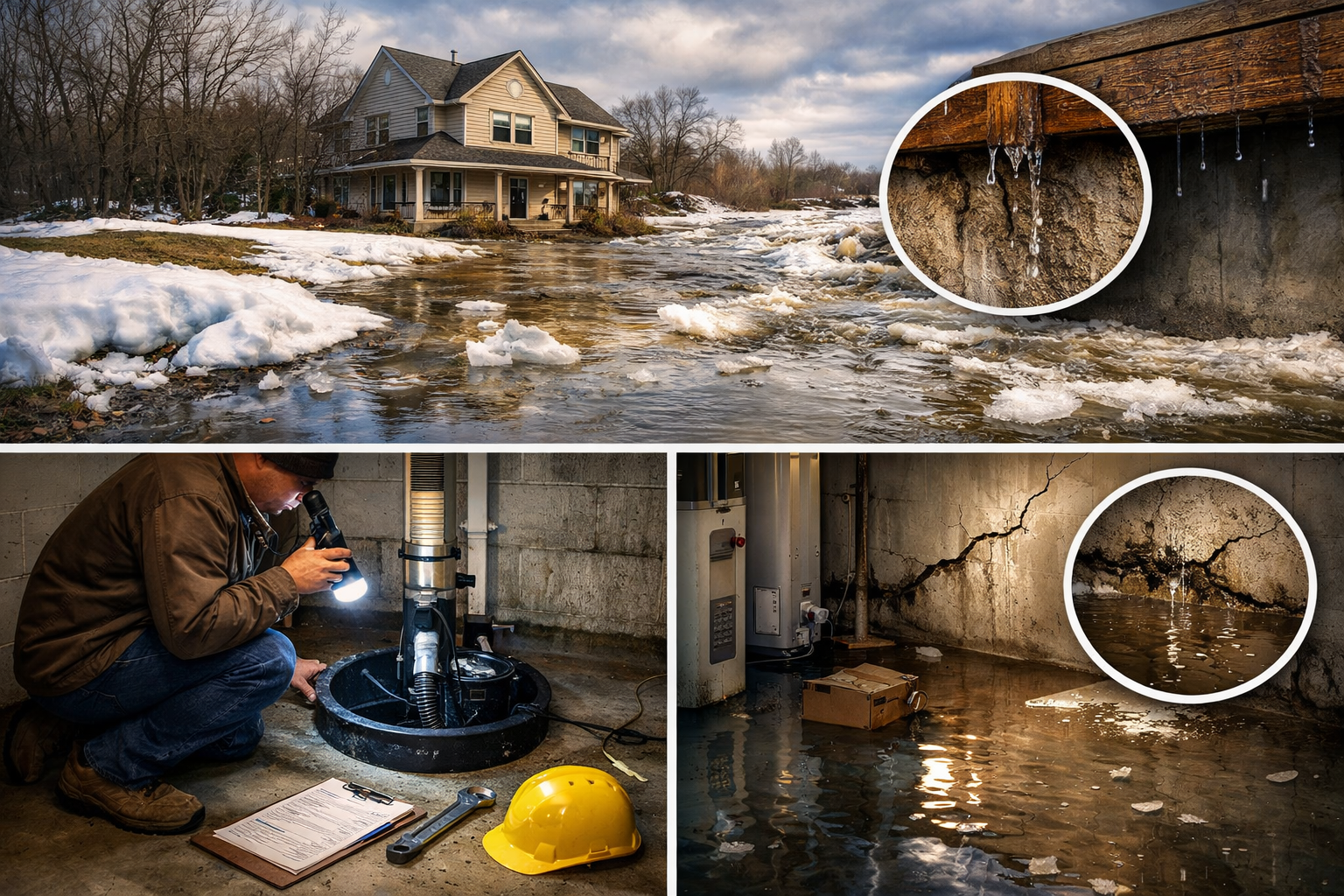
Why Spring Thaw Is Michigan's Highest-Risk Flooding Period
For Michigan homeowners, the transition from winter to spring represents the most dangerous time for basement flooding. As temperatures rise in late February through April, accumulated snow begins to melt while the ground remains partially frozen. This creates a perfect storm: massive amounts of water with nowhere to go but toward your foundation.
According to FEMA flood data, Southeast Michigan communities - including Clinton Township, Sterling Heights, Macomb Township, and Shelby Township - experience peak flood insurance claims during the spring thaw season. The good news? With proper preparation, you can significantly reduce your risk of basement water damage.
Understanding the Science: Why Spring Thaw Floods Basements
To protect your basement, it helps to understand why spring thaw is so problematic:
- Frozen ground acts as a barrier: When the top layer of soil thaws but deeper layers remain frozen, water cannot percolate downward as it normally would. Instead, it flows across the surface toward the lowest point - often your foundation.
- Snowmelt happens fast: A single inch of snow contains roughly 0.1 inches of water. After a typical Michigan winter with 40+ inches of snow accumulation, that's 4+ inches of water being released in a matter of weeks.
- Spring rains compound the problem: Michigan's March and April rainfall adds to the snowmelt, overwhelming drainage systems and saturating soil around foundations.
- Hydrostatic pressure increases: As water saturates the soil around your basement, it creates immense pressure against your foundation walls and floor, forcing water through any cracks or gaps.
Pre-Thaw Inspection Checklist: 6 Things to Check Now
Before the thaw begins in earnest, conduct a thorough inspection of your home's water defense systems. Here's what to examine:
1. Foundation Cracks
Walk around your basement and carefully inspect all walls and floors for cracks. Use a flashlight to check corners and areas behind storage. Mark any cracks you find with tape so you can monitor if they grow. Pay special attention to:
- Horizontal cracks (may indicate pressure from water-saturated soil)
- Vertical cracks near corners
- Floor cracks, especially where the floor meets walls
- Cracks around windows and pipes
If you find cracks larger than 1/8 inch or any horizontal cracks, consider professional foundation crack injection before the thaw.
2. Window Well Drainage
Basement window wells are common entry points for water. Check that:
- Wells are clear of leaves, debris, and snow
- Drain holes at the bottom are not clogged
- Window well covers are in place and not cracked
- The window seal is intact with no gaps
3. Gutters and Downspouts
Your roof drainage system is your first line of defense. Inspect and clean:
- All gutters - remove leaves, ice dams, and debris
- Downspouts - ensure they're securely attached and not leaking
- Downspout extensions - water should discharge at least 6 feet from your foundation
- Underground drain lines - test by running water to ensure they're not frozen or clogged
4. Sump Pump Testing
Your sump pump is critical during spring thaw. Test it now:
- Pour 5 gallons of water into the pit - the pump should activate
- Listen for unusual sounds (grinding, rattling)
- Check the discharge line for blockages or ice
- Test your battery backup system if you have one
- If your pump is over 7 years old, consider replacement before thaw season
5. Floor Drain Inspection
Basement floor drains prevent flooding but only if they work properly:
- Remove the drain cover and clear any debris
- Pour water down the drain to verify it flows freely
- Check for sewer odors (may indicate a dry trap or blockage)
- If you have a backwater valve, ensure it opens and closes properly
6. Exterior Grading Assessment
Walk around your home's exterior and assess the landscape:
- The ground should slope away from your foundation (6 inches drop over 10 feet)
- Look for areas where water pools near the foundation
- Check that mulch and soil haven't built up against siding
- Identify areas where snow accumulates against the house
Warning Signs to Watch During Thaw Season
Even with preparation, you should monitor your basement closely during the thaw period. Watch for these warning signs:
- New water stains: Yellow or brown marks appearing on walls or floors
- Musty odors: A damp smell indicates moisture even if you can't see water
- Efflorescence: White mineral deposits on concrete walls (sign of water migration)
- Sump pump running constantly: Normal during peak thaw, but could indicate a problem if it doesn't cycle
- Damp or wet carpets: Water may be seeping through the floor
- Condensation on windows: High humidity levels in the basement
When to Call Professionals
Some situations require expert intervention. Contact a professional waterproofing company immediately if you notice:
- Active water intrusion: Water flowing through walls or pooling on floors
- Sump pump failure: Pump not running, running constantly, or making strange noises
- New or expanding cracks: Especially horizontal cracks or cracks that have grown since your inspection
- Bowing or bulging walls: Sign of serious foundation pressure
- Sewer backup: Water or sewage coming up through floor drains
- Mold growth: Visible mold on walls, floors, or belongings
At Mansour's Innovations, we provide emergency response during spring thaw season. Our professional inspections can identify vulnerabilities before they become costly problems.
Long-Term Solutions for Spring Thaw Protection
If your home repeatedly experiences water issues during spring, consider these permanent solutions:
- Interior waterproofing systems with French drains to manage water that enters
- Exterior waterproofing to stop water before it reaches your foundation
- Exterior drainage improvements to redirect water away from your home
- Sewer backflow preventers to prevent sewer backups during heavy rain
- Upgraded sump pump systems with battery backup and water-powered backup
Free Spring Thaw Inspection
Don't wait for water damage to strike. Schedule a free pre-thaw inspection and ensure your basement is protected before the snow melts. Our experts will assess your home's vulnerabilities and recommend solutions tailored to your needs.