Mid-century houses, built fast
Southfield became a city on April 28, 1958, and for several years in the 1960s, by the city’s own account, it was the fastest-growing city in Michigan. Its population more than doubled that decade, from about 31,500 to 69,300. By Census estimates, half of Southfield’s homes were built in 1969 or earlier, and about seven in ten date from 1950 through 1979. A little under half are single-family houses, about 18,000 of them; the rest are apartments, condos and townhouses.
Two neighborhoods from that boom are on the National Register of Historic Places. Northland Gardens, between Southfield Road and the Lodge Freeway, was platted in 1956 and mostly built out by 1967: 117 houses, most of them brick mid-century ranches. Plumbrooke Estates, north of Nine Mile and west of Evergreen, opened its first model homes in 1961 and has 95 houses on six cul-de-sacs. Cranbrook Village and Washington Heights date from the same years.
At 55 to 70 years old, those basements tend to show the same things. Water seeps in at the floor joint or through the walls. The footing drains silted up long ago. The sump pump never got a backup. And the downspouts dump at the foundation or run underground into the footing drain.
Sand, clay and a high water table
The USDA soil survey rates the ground under several Southfield neighborhoods as somewhat poorly drained. Around Plumbrooke, and near Nine Mile and Lahser, it’s Tedrow loamy sand, where the water table can rise to about a foot and a half below the surface in a wet season. Northland Gardens sits on Avoca soil, a sand layer over loamier ground, with seasonal water about 30 inches down. Near Nine Mile and Greenfield and up at Twelve Mile and Evergreen, the survey maps built-over urban land mixed with Blount and Lenawee soils, clay-rich ground that drains slowly.
A basement floor sits well below those depths. In a wet spring, the water table can stand higher than the slab and push water in at the floor joint.
The mayor’s own list of why basements flood here
In April 2025, Mayor Ken Siver’s newsletter named the usual causes plainly. Footing drains connected to sanitary lines. Power outages that stop sump pumps. High water tables that push water through foundation walls where the footing drains work poorly. Downspouts buried and tied into footing drains, which is against city ordinance; they should discharge at grade, at least 5 feet from the foundation. And people lifting sanitary manhole covers to drain a flooded street.
His advice lines up with ours. Make sure the battery backup on the sump works. Use a stronger pump where conditions call for it. Extend the downspouts. And re-waterproof older foundation walls where needed.
Two watersheds, two sewer stories
Most of Southfield is in the Rouge River basin and, the mayor wrote, was built with separate storm and sanitary sewers. The Ten Mile and Greenfield area is the one part of the city in the Clinton River basin, and it had a combined sewer. In August 2014 that system was so overloaded that basements backed up from Lake St. Clair to Southfield.
To relieve flooding north and south of Ten Mile at Greenfield, the city built a separated system for $30.22 million and a pump station at Pierce Road and Ten Mile for $1.04 million, according to the same newsletter. That corner still drains east into the George W. Kuhn system, the old Twelve Towns Drain, which carries combined flow from 14 south Oakland communities, among them Royal Oak, Berkley and Huntington Woods, to a basin in Madison Heights.
The calls haven’t stopped entirely. After a storm on June 20, 2024, residents of Templar, Maryland, Harden, Pierce and nearby streets came to the city council about flooded basements, with 37 reports filed at the time. The city’s preliminary review found no sign its sanitary sewers had surcharged, and the mayor later wrote that some clear-water flooding had been traced to overworked or non-working sump pumps.
So the first question in Southfield is which water you had. Clear water points to a pump or drainage problem. Sewage from the floor drain points to the sewer. Paying for the wrong fix is the expensive mistake.
Living near the Rouge
The main branch of the Rouge winds through Southfield past Valley Woods Nature Preserve and Beech Woods Park, and the city’s natural-features map shows FEMA flood hazard areas along it and along the Franklin Branch, Pebble Creek and Evans Branch. If your lot backs up to one of them, check FEMA’s flood map before you finish the basement. We can drain groundwater and keep pumps ahead of a high water table, but no basement system stops a river over its banks.
Some Southfield storm manholes also have restricted openings on purpose, to slow rain into the storm sewer. Temporary ponding in the street after a storm can be that design at work.
Sump pump first, then the sewer, then the walls
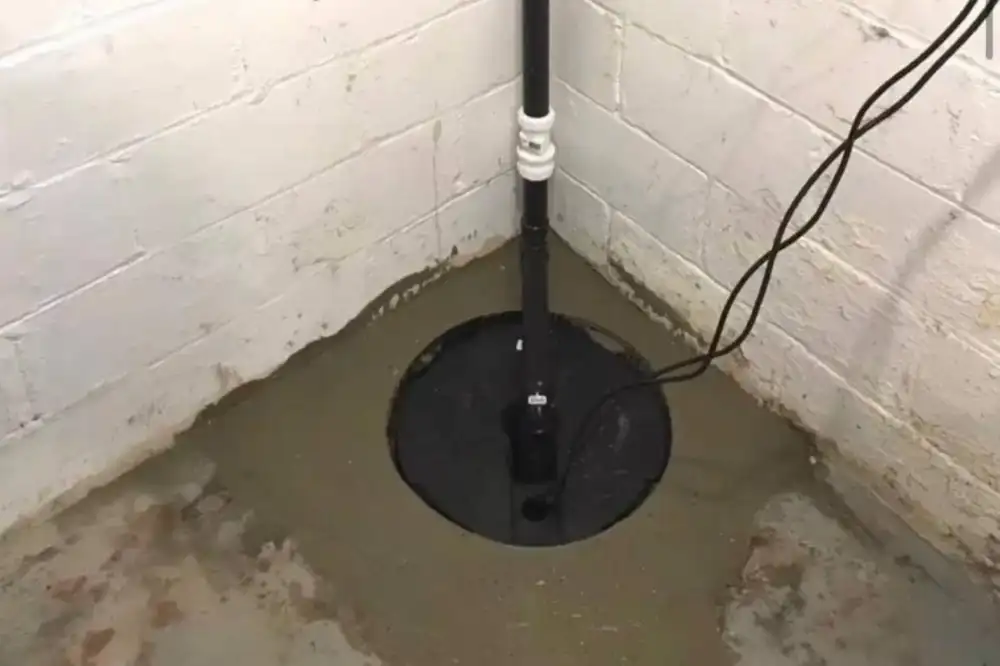
Since failed sump pumps are behind some of the flooding the city has looked into, we start with the pump: test it, inspect the check valve and discharge line, and see where the water ends up. Replacing a burned-out pump on a standard sump pump system runs approximately $600; a new standard system with basin, pump and discharge runs approximately $2,500 to $3,000. Add a battery or water-powered backup for the power outages that come with big storms.
If your pump empties onto a flat yard and the water soaks back toward the house, call Southfield’s Public Works Department before paying for a dry well or other exterior drainage. In 2024 the city’s public works director described a program that has been in place since 2017. It lets residents redirect gutter and sump-pump water to the front of the lot.
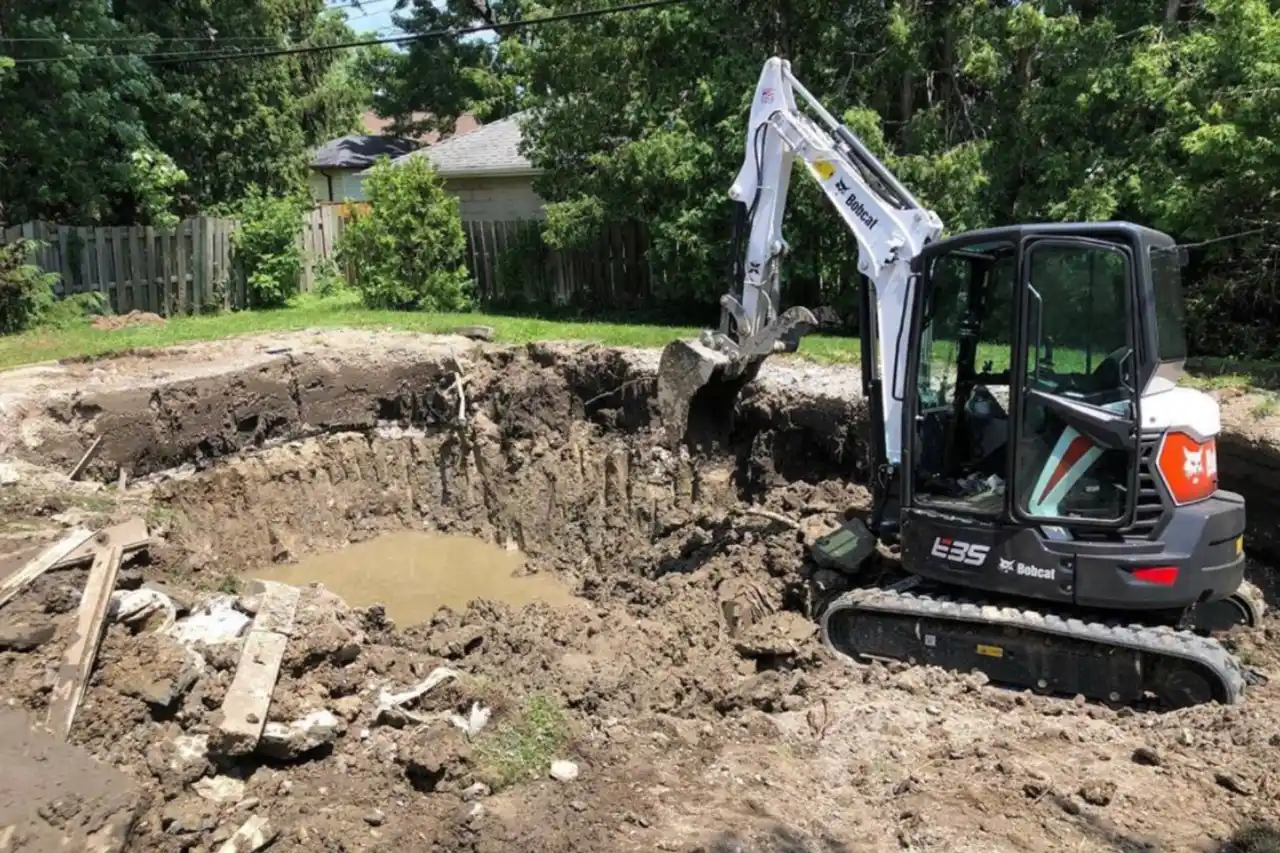
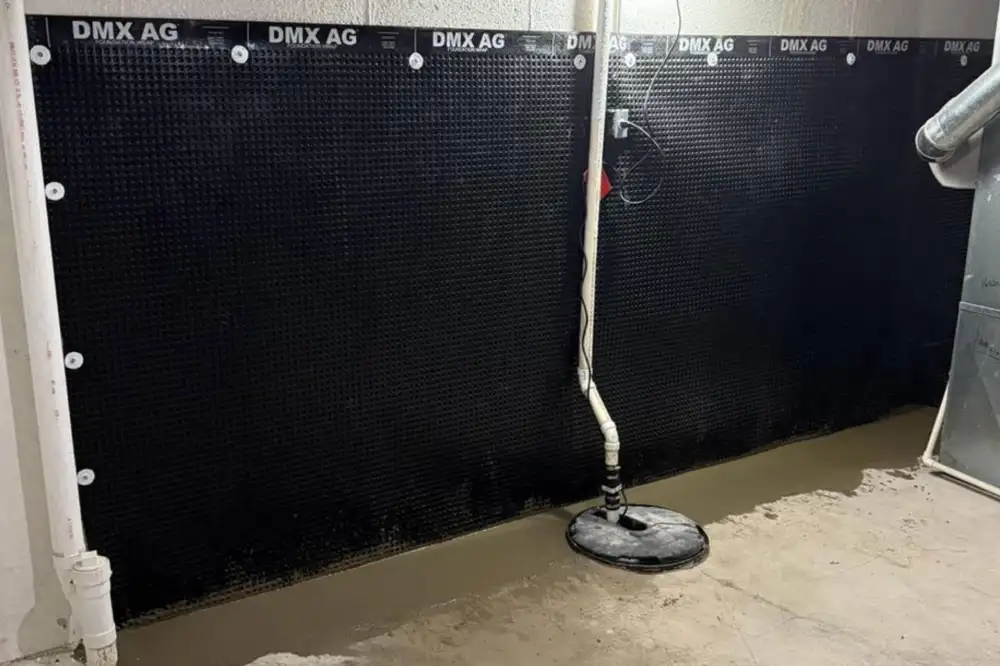
If sewage came up the floor drain, the usual fix is a backwater valve where the sewer leaves the house, after a camera inspection of your sewer lead. A sewer camera inspection is a flat-price service that includes locating the line, a saved video of the pipe and a written report; ask about the price when you call. If the walls themselves leak, interior drain tile to a new sump is the usual answer, approximately $2,000 to $35,000; a short run in an unfinished basement costs far less than a full perimeter behind finished walls. The cost guide explains what drives each number.
Claims and permits
For a backup caused by the city’s sewer, Southfield’s legal notice says to file a written claim within 45 days after you discover it. It goes by mail to the city’s Office of Management and Budget. A problem in your own plumbing or sewer lead is yours to fix. Southfield’s plumbing permit form has line items for sewer repair, sump pumps and basement waterproofing systems. Any digging in the right-of-way also needs an Engineering right-of-way permit.
Foundation repair: cracks, bowing walls, carbon fiber and steel
In Southfield’s clay pockets, the soil holds water against a wall after every storm, shrinks back in a dry summer and freezes in winter. Vertical cracks in poured walls usually mean water getting in. A long sideways crack in block, or a wall bulging in at mid-height, means the wall itself is moving.
- Foundation crack injection with polyurethane or epoxy: approximately $500 to $2,500 per crack.
- Carbon fiber strips for a wall that has only started to bow: approximately $1,500 to $2,500.
- Steel I-beam braces for a wall bowing or leaning further: approximately $1,500 to $4,000, priced after we measure.
See foundation repair for how each method works. Crack injection is covered by our 25-year transferable limited warranty, which covers workmanship only. Wall braces and carbon fiber aren’t; they carry only the warranty written on your contract or invoice, plus any manufacturer’s warranty. The estimate is free, and financing through Enhancify is available for homes and commercial properties.
Apartments, offices and commercial buildings
Nearly four in ten Southfield homes are in buildings with five or more units, and the city has a lot of office space. We work for owners and managers too: commercial waterproofing, hydro-jetting and camera work on main sewer lines, and new water service lines. Next door in Oak Park, on Coolidge Highway, we tapped a live water main and ran a new service into a commercial building without shutting the main down. After a flood, our flood restoration service handles water removal and drying.