Every spring somebody calls us after spending a weekend and a few hundred dollars rolling waterproofing paint on their basement walls, and the water came in anyway. So here is the honest answer, from a company that does not sell paint and would rather you not waste a weekend.
What waterproofing paint is
Drylok and the other masonry waterproofers are thick cement-based or latex coatings made to fill the pores in block and concrete. Applied to a clean, bare wall in two coats, they are rated to hold back a certain amount of water pressure from the other side. They are a “negative-side” coating: the paint is on the dry side, trying to hold water that is pushing toward it. Every real waterproofing membrane goes on the wet side, between the soil and the wall, for a reason.
When it works
- Damp block walls with no liquid water. A block wall that darkens after rain and gives off humidity, with no drips, no puddles and no efflorescence buildup, is the job this paint was made for. It cuts the vapor coming through the block and makes the basement feel drier.
- Above-grade or mostly dry walls that just need a sealed, paintable surface.
- As a finish after the real fix. Once drain tile and a membrane are handling the water, a coat of waterproofer on the upper wall is fine for looks.
When it fails
- Water under pressure. Hydrostatic pressure is the water table pushing against the wall and under the floor. Paint cannot hold that back for long. It blisters, bubbles and peels in sheets, and every sheet that lets go takes some of the wall’s surface with it. If you have ever seen a basement wall with paint hanging off it in curls, that was a waterproofer losing to pressure.
- The cove joint and the floor. Most Michigan basements leak where the floor meets the wall, or up through floor cracks. You cannot paint a seam shut. Read water coming up through the basement floor.
- Cracks and rod holes. Paint bridges nothing. A hairline crack that moves with the seasons opens the paint film right along with it. Those need injection, which takes about an hour per crack and lasts.
- Efflorescence. The salt crystals that come through a wet wall grow under the paint and push it off. Painting over white powder without stopping the water is going to peel. See what efflorescence means.
- Previously painted walls. Waterproofer needs bare masonry. Over old paint it bonds to the paint, not the wall, and comes off with it.
The problem nobody mentions: it hides the evidence
A fresh coat of white waterproofer makes a wall look fixed. The water is still coming through the block; now it is trapped inside the wall instead of evaporating off the face. Block walls that stay saturated deteriorate faster from freeze-thaw, and the next owner (or you, in five years) finds a wall that is worse than it looked. We would rather see honest staining than a painted wall that is wet inside.
What to do instead
- Dampness only: downspouts and grading away from the house, a dehumidifier, and then the paint if you want it. That order.
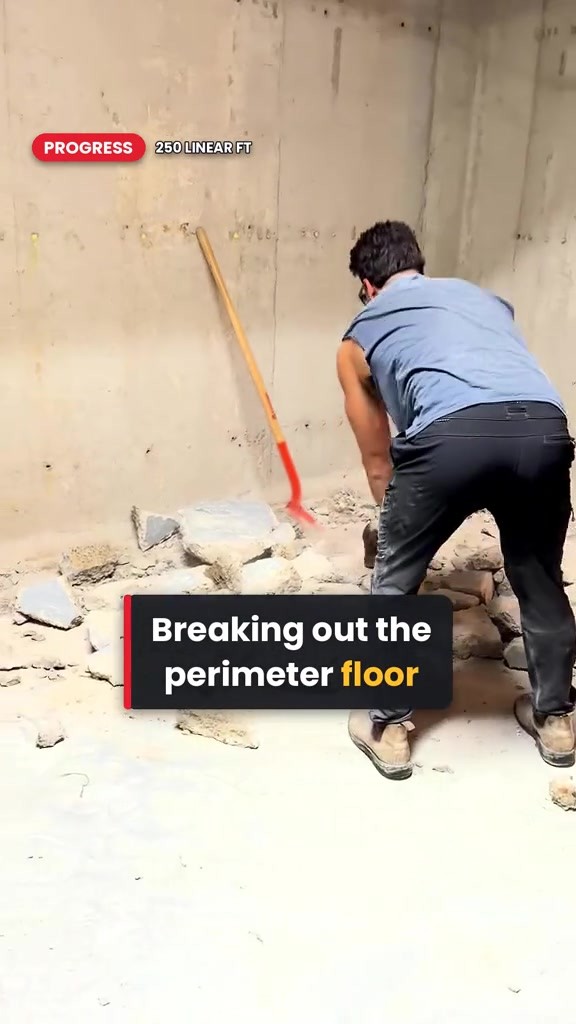
- Water at the base of the wall or through the floor: an interior drainage system: drain tile at the footing, a membrane on the lower wall that drains behind it, and a sump. This is the 250-foot system in Washington Township:
- Water through the wall face, or a finished basement you want kept dry at the wall: exterior waterproofing, which puts the membrane on the wet side where it belongs.
- Cracks and rod holes: injection.
Approximate costs for all of these are in our cost guide. A quality waterproofing paint job on an average basement costs a few hundred dollars in materials and a weekend; crack injection starts around $500 per crack; an interior drain tile system costs more. Crack injection and drain tile are waterproofing work we do, so both come with our 25-year transferable limited warranty.
Frequently asked questions
Does Drylok stop water from coming into the basement?
It reduces dampness coming through sound block walls. It does not stop water under pressure, water at the cove joint, floor seepage or cracks, and it peels when it is asked to.
Why is my Drylok peeling?
Water pressure or salt (efflorescence) behind the paint, or it was applied over old paint or a damp, dirty wall. Peeling waterproofer means there is a water problem the paint could not handle.
Can I use waterproofing paint on a poured concrete wall?
Yes, on a clean bare wall, for dampness. Poured walls usually leak at cracks and rod holes, which paint does not fix; those get injected.
Is Drylok a substitute for waterproofing?
No. It is a coating. Waterproofing is drainage (drain tile, sump) and a membrane on the soil side.
Will you still install a drainage system if my walls are painted?
Yes. The membrane and drain tile work regardless. We just will not promise the paint survives the job.
Mansour’s Innovations is a family-owned waterproofing, excavation and plumbing contractor in Shelby Township, Michigan, serving Macomb, Oakland and Wayne counties since 2014. Owner Imad “Matt” Mansour has 20+ years in the trade and the crew has completed 1,600+ projects. Our waterproofing work carries a 25-year transferable limited warranty. Call or text (586) 345-7292 for a free estimate.