
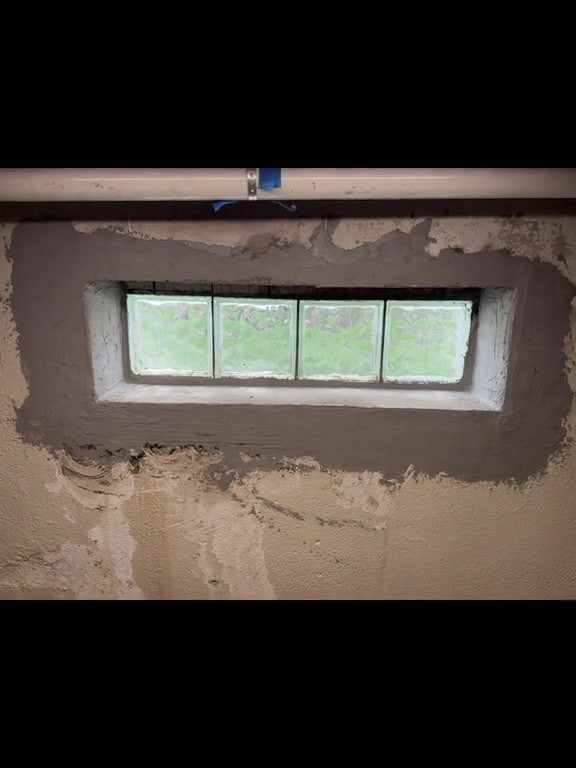
A leaking basement window is one of the few wet-basement problems you can usually see happen: it rains, and water runs down the wall under the window. The good news is that it is also one of the cheapest to fix properly. The bad news is that most of them get fixed wrong first, with a tube of caulk on the inside, which is like putting a bandage on the outside of a boot. Here is where the water is really coming from and what we do about it.
Watch: Egress Window Wells That Don’t Flood
Read the video transcript
Adding an egress window to your basement? Here’s how to build the window well, so it doesn’t flood. An egress window gives a basement bedroom a safe way out in an emergency. It needs a window well outside, big enough to climb out of. A well with no drainage turns into a bucket. Rain and snowmelt pile up against the glass, until water leaks in around the window. So at the bottom of the well, we set a drain tied into the drain tile at the footing, with clean stone on top. The well liner is anchored to the foundation, with a ladder or steps if it’s deeper than 44 inches. And the ground around it slopes away. A clear cover keeps out snow, leaves, and most of the rain, still lets the light in, and opens from inside.
Where basement windows leak from
- The window well fills up. A well with no drain at the bottom, or a drain plugged with leaves and mud, is a bucket. In a hard rain it fills, and water comes in over the sill or through the frame. Look in the well during a storm. If there is standing water, this is your leak.
- The concrete sill is cracked. The sill under the window is a ledge of concrete that has been through decades of freeze-thaw. Once it cracks, water runs through the crack into the wall and shows up inside below the window, sometimes a foot or two away from it.
- Mortar joints around glass block have failed. Glass block windows in 1940s to 1970s homes in Warren, Sterling Heights, Royal Oak and Rochester Hills were mortared into the old steel frame openings. The mortar shrinks, cracks and lets water through. The glass is fine; the joints are not.
- The frame-to-foundation seal is gone. On wood or vinyl replacement windows set into a block opening, the gap between the frame and the concrete was caulked once, years ago.
- Grading sends water to the window. A well set below a downspout, or in a low spot where the lawn drains toward the house, takes on more water than any drain can handle.
- It is not the window. Water that shows up under a window can also be coming through a rod hole or a crack beside it, or over the brick ledge above it. We check before we quote.
What does not fix it
- Caulk on the inside face of the window. The water is already in the wall by the time it reaches that caulk.
- A plastic bubble cover on a well that has no drain. It keeps leaves out, which helps, but water still runs down the foundation wall into the well.
- Painting the sill. Paint does not bridge a crack that opens and closes with the seasons.
What we do
Rebuild the sill and seal it. We cut out the cracked concrete, rebuild the sill so it slopes to the outside, and seal the repair with an epoxy or urethane system that stays bonded through freeze-thaw. This Rochester Hills glass block window leaked heavily every rain, so we rebuilt it.
Repoint or replace glass block. Failed mortar gets cut out and repointed with the right mix, or if the block is loose or the panel is sagging, we set a new panel. If you are already doing exterior waterproofing, we do the windows at the same time:
Drain the window well. A proper well has a drain at the bottom tied to the footing drain tile or to a dry well, and a few inches of stone over it. If your house has drain tile, we connect the well to it. If it has none, a dry well or, in heavy clay, a small pit and pump. Then a cover that lets light in and keeps leaves out.
Fix the grading and the downspouts. Nothing above the well should dump water into it. Downspouts get extended past the well, and the lawn is graded away from the house.
Egress windows. If the window is getting replaced anyway, an egress window with a code-size well and a drain is a chance to add a legal bedroom and a lot of light. We cover that in our egress window article.
What it costs
Approximately: sealing a cracked sill or repointing a glass block window is priced after we see it, depending on how much concrete has to be rebuilt. A new window well with a drain and cover is quoted with it. If the well needs to tie into new footing drains, that becomes part of an exterior waterproofing job. Estimates are free.
For approximate Southeast Michigan prices by type of job, see our basement waterproofing cost guide.
Frequently asked questions
Why does my basement window leak when it rains?
Most often the window well is filling because it has no working drain, or the concrete sill or mortar around the window has cracked. Check the well during a storm first.
How do I stop water from coming in my basement window well?
Clear or add a drain at the bottom of the well, keep downspouts from discharging near it, grade the lawn away from the house, and put a cover on it.
Can glass block basement windows leak?
Yes, through the mortar joints and the sill, not the glass. Repointing and sealing the sill fixes it.
Should I replace a leaking basement window?
Only if the frame itself is rotted or the glass is broken. Most leaks are the sill, the mortar or the well, and those are repaired without replacing the window.
Do you repair basement windows in Macomb and Oakland County?
Yes, including glass block, sills, wells and drains, and egress windows. Call or text (586) 345-7292.
Mansour’s Innovations is a family-owned waterproofing, excavation and plumbing contractor in Shelby Township, Michigan, serving Macomb, Oakland and Wayne counties since 2014. Owner Imad “Matt” Mansour has 20+ years in the trade and the crew has completed 1,600+ projects. Our waterproofing work carries a 25-year transferable limited warranty. Call or text (586) 345-7292 for a free estimate.