


Updated
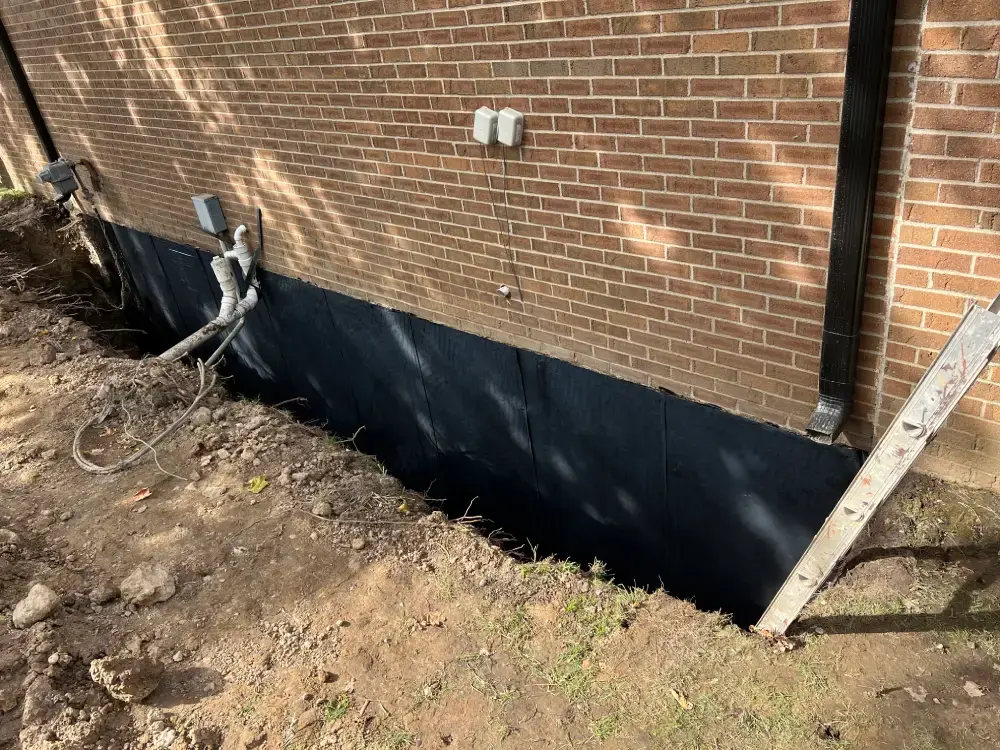
A buried downspout carries roof water from your gutters through an underground pipe to a pop-up emitter — a small valve that sits flush in the lawn and opens to let water out well away from the house. Keeping roof water away from the foundation is one of the cheapest, most effective ways to keep a basement dry, and we price it after we see the yard.
Why roof water matters
A single downspout can dump hundreds of gallons right next to the foundation in one storm. That water soaks into the clay against the wall and adds to everything the soil is already holding after rain and snowmelt. Moving it away is often the first thing we recommend, because the cheapest water to deal with is the water that never reaches the wall.
How a buried downspout and pop-up emitter work
We connect the downspout to a solid underground pipe, run it to a lower part of the yard, and finish it with a pop-up emitter. When water comes down the line, the emitter’s lid pops open and lets it out at the surface; the rest of the time it sits closed and flush with the grass, so you can mow right over it.
Pop-up emitter, dry well, or daylight outlet
- Pop-up emitter — when the yard has a lower spot the water can run to.
- Dry well — a buried gravel-and-tank pit that holds the water and lets it soak away when there’s nowhere to send it on the surface.
- Daylight outlet — an open pipe end on a slope or at a ditch, when the grade allows it.
We pick the one that fits your yard and where the water can actually go.
When it helps, and when it isn’t enough
Buried downspouts and emitters handle roof and surface water. If water is coming in through the foundation wall or up through the floor, that’s groundwater, and it needs drain tile, crack repair or a sump pump — moving the downspouts won’t fix that on its own. We’ll tell you which problem you actually have.
Freezing and upkeep
In a Michigan winter an underground line can freeze if it holds standing water, so we slope it to drain and set the emitter where it can clear. A line that’s buried and pitched right needs very little upkeep.
What it costs
We price yard drainage after we see the yard, because it depends on the length of the run and where the water can go. The estimate is free. Contact us for accurate pricing. We have to inspect the job before we can give you a price.
We’re Mansour’s Innovations, a waterproofing, excavation and plumbing contractor in Shelby Township, in business since 2014 and working across Macomb and Oakland counties. Call (586) 345-7292 for a free estimate. We answer calls from 8 a.m. to 8 p.m., seven days a week.
Frequently Asked Questions
1. Where should my downspouts drain?
Well away from the foundation — to a lower part of the yard, a dry well, or a daylight outlet. A buried downspout tied to a pop-up emitter does that neatly, without an open pipe lying across the lawn.
2. Do pop-up emitters freeze in winter?
They can if the line holds standing water. We slope the pipe so it drains after each storm and set the emitter where it can clear, which keeps it working through a Michigan winter.
3. Will burying my downspouts fix a wet basement?
It helps when the problem is roof and surface water pooling against the house. If water is coming through the wall or up through the floor, that’s groundwater and needs drain tile, crack repair or a sump pump. We’ll tell you which one you have.
4. How much does buried downspout drainage cost?
We price it after we see the yard, since it depends on the length of the run and where the water can drain. The estimate is free. Contact us for accurate pricing. We have to inspect the job before we can give you a price.