
Updated
Water that shows up along the bottom of the basement wall, right where it meets the floor, is coming through the cove joint. It is one of the most common basement leaks in Macomb and Oakland County. The fix that lasts is a drainage system that relieves the water pressure under and around the house, not caulk or sealer on the seam.
Why water comes in where the wall meets the floor
Most Michigan basements are poured in two steps: the footing and walls first, then the floor slab. The seam between them, the cove joint, is not sealed or bonded.
When the soil around the house fills with water after rain or snowmelt, that water presses on the wall and the footing. This is called hydrostatic pressure. Water takes the easiest path, and the cove joint is the easiest path.
Clay soil makes it worse. Clay holds water against the foundation for days, so the pressure stays up long after the rain stops.
Signs it is the cove joint
- A wet line or puddles along the base of one or more walls
- White, chalky deposits (efflorescence) at the bottom of the wall
- Leaks that start a few hours after heavy rain and dry up later
- Wet carpet or baseboards along the outside walls of a finished basement
If water comes up through cracks in the middle of the floor instead, read water coming up through the basement floor. If it runs down a crack in the wall, see foundation crack repair.
Why sealers and caulk do not fix it
Sealing the cove joint from inside traps the water under the slab. The pressure is still there, so the water finds the next weak spot, often a nearby crack or the floor itself. Waterproofing paint on the wall does not stop it either; see does Drylok work.
The fix: interior drain tile and a sump pump
We break out a strip of the floor along the leaking walls, lay perforated drain tile in clean stone at the footing, and run it to a sump pump. Water that reaches the cove joint now drains into the tile and gets pumped out before it can come up on the floor.
Then we pour new concrete over the trench. See our interior basement waterproofing page for the full system.
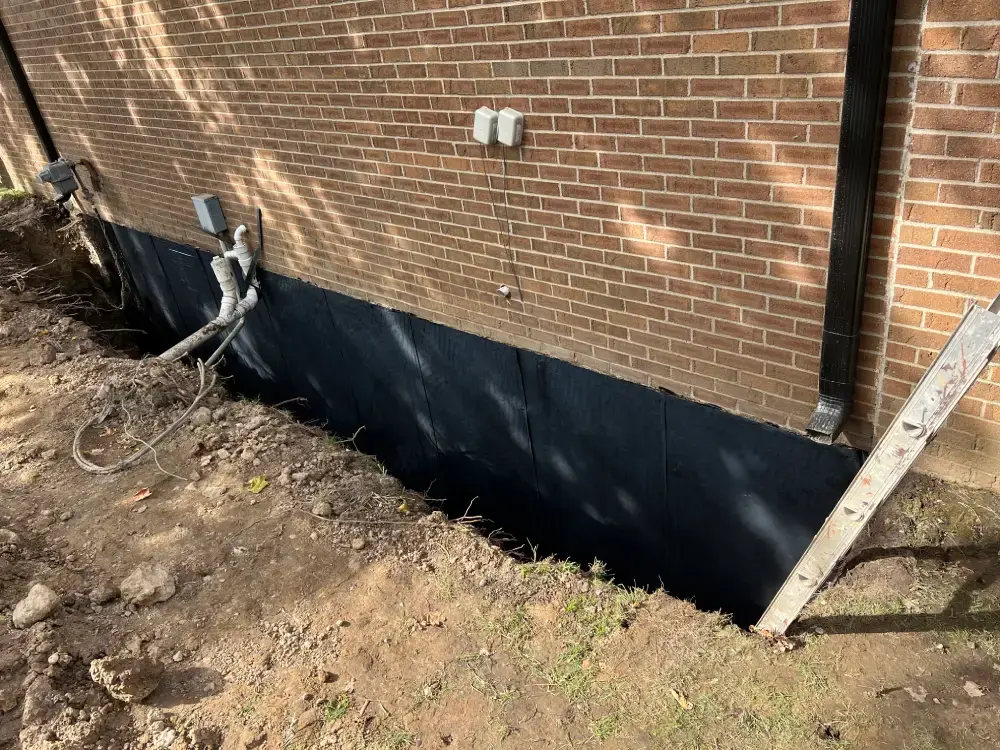
If water comes through the walls themselves, or the basement is finished and you do not want the floor opened, exterior waterproofing stops the water from the outside.
What it costs
Interior waterproofing is approximately $4,500 to $8,000 for about 40 linear feet of wall, not including the sump. A sump pump system adds approximately $2,500 to $3,000. Contact us for accurate pricing. We have to inspect the job before we can give you a price.
Our waterproofing work carries a 25-year transferable limited warranty. The sump pump and pit are not part of it.
Questions about cove joint leaks
Is water at the bottom of the basement wall serious?
It is not an emergency, but it does not go away. Each wet season adds moisture, musty smells and damage to anything stored or finished down there.
Can I seal the cove joint myself?
You can, but it rarely holds. The water pressure is still there, so it comes in somewhere else.
Does a dehumidifier fix it?
A dehumidifier helps with damp air. It does not stop liquid water coming through the joint.
Will my homeowners insurance cover it?
Usually not for slow seepage. Read does homeowners insurance cover basement waterproofing.