


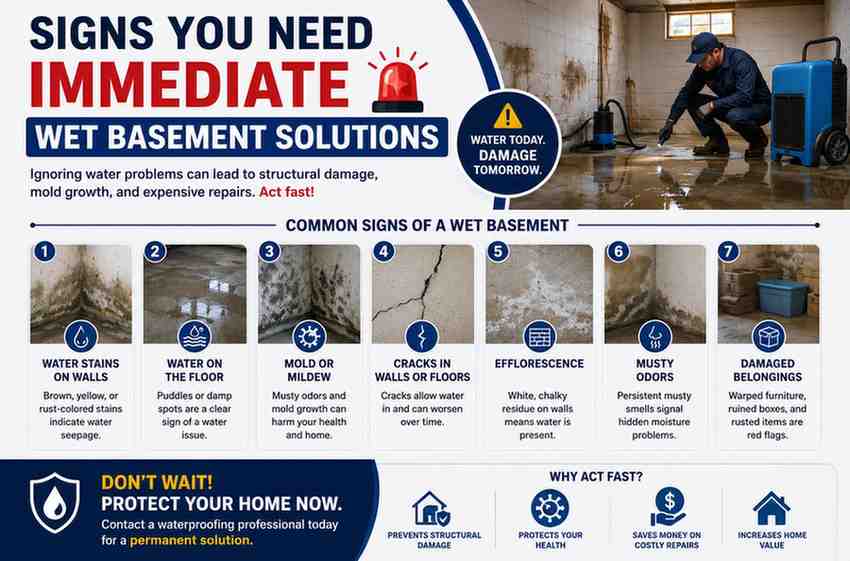
A damp basement rarely develops without warning. Small signs often appear long before serious water damage affects the foundation or interior spaces. Ignoring these early indicators can lead to mold growth, weakened structural components, damaged belongings, and expensive repairs. Recognizing moisture problems at the earliest stage allows property owners to apply effective solutions before conditions worsen. Timely action protects the basement while preserving the safety, value, and long-term durability of the entire home.
Why Does Early Detection Matter?
Water intrusion rarely resolves without intervention. Even minor dampness can spread through concrete, wood, insulation, and finished surfaces over time.
Moreover, moisture encourages biological growth while weakening structural materials. Consequently, addressing warning signs immediately helps reduce repair costs and prevents avoidable damage throughout the property.
Early inspections also simplify repairs by identifying problems before they become widespread.
Small Problems Can Become Major Repairs
Hairline cracks and isolated damp spots may appear insignificant.
However, continuous exposure to moisture enlarges these defects and allows greater water intrusion. As pressure increases around the foundation, basement conditions often deteriorate rapidly.
Prompt action protects both structural stability and indoor comfort.
Persistent Damp Walls
Basement walls should remain dry under normal conditions.
Continuous dampness often indicates groundwater infiltration or ineffective waterproofing that requires immediate attention.
Visible Moisture on Concrete Surfaces
Dark patches or wet streaks along basement walls suggest water movement through porous concrete.
Even without standing water, persistent moisture signals underlying drainage or foundation issues that deserve professional evaluation before additional deterioration occurs.
Recurring Moisture After Rainfall
Walls that become damp after every storm indicate water pressure around the foundation.
Several conditions may contribute to this problem:
- Poor grading
- Clogged gutters
- Foundation cracks
- Hydrostatic pressure
- Damaged drainage systems
- Surface runoff
- Saturated soil
- Failing waterproof barriers
Correcting these issues reduces long-term moisture exposure.
Musty Odors Throughout the Basement
Unpleasant odors often represent one of the earliest indicators of hidden moisture.
Persistent musty smells usually develop when damp materials support mold or mildew growth behind walls or beneath flooring.
Hidden Moisture Encourages Mold Growth
Mold thrives where humidity remains elevated for extended periods.
Even when visible water is absent, concealed moisture inside wall cavities or beneath stored items creates favorable conditions for biological growth that affects indoor air quality.
Odors That Return After Cleaning
Cleaning surfaces may temporarily reduce unpleasant smells.
However, recurring odors generally indicate active moisture problems rather than simple surface contamination. Eliminating the water source remains essential for permanent improvement.
Efflorescence on Basement Walls
White powdery deposits frequently appear on concrete and masonry surfaces exposed to moisture.
Although harmless by themselves, these deposits indicate that water has moved through the wall.
Mineral Deposits Reveal Water Movement
Groundwater carries dissolved minerals through porous concrete.
As moisture evaporates, minerals remain on the surface, creating visible white residue known as efflorescence.
Repeated deposits suggest ongoing moisture infiltration requiring prompt correction.
Surface Cleaning Does Not Solve the Problem
Removing efflorescence improves appearance but fails to stop water movement.
Permanent solutions address groundwater intrusion, drainage deficiencies, or structural weaknesses responsible for moisture migration.
Foundation Cracks Continue to Grow
Small cracks often expand gradually through seasonal movement and moisture pressure.
Ignoring crack development increases the likelihood of structural damage and basement leaks.
Vertical Cracks and Settlement
Settlement commonly produces narrow vertical cracks.
While some remain stable, others allow groundwater penetration that damages interior finishes and increases basement humidity.
Monitoring crack width helps identify changing structural conditions.
Horizontal Cracks Demand Immediate Attention
Horizontal cracks may indicate significant soil pressure against basement walls.
Professional evaluation becomes important because structural movement combined with water intrusion can create serious long-term stability concerns.
Standing Water on Basement Floors
Visible water accumulation represents one of the clearest signs that immediate action is necessary.
Even shallow pooling damages flooring, encourages mold growth, and affects nearby building materials.
Water Appears After Heavy Rainfall
Basements that flood after storms often suffer from drainage failures or excessive hydrostatic pressure.
Improving exterior water management frequently reduces recurring flooding problems while protecting structural components.
Localized Water Puddles
Standing water near walls, floor joints, or utility penetrations may indicate specific entry points.
Common causes include:
- Floor cracks
- Wall joints
- Plumbing leaks
- Window wells
- Drain failures
- Foundation openings
- Condensation
- Pipe penetrations
Identifying the source allows more effective repairs.
Peeling Paint and Damaged Finishes
Moisture gradually separates paint and finishes from basement walls.
These cosmetic problems frequently indicate hidden water movement beneath the surface.
Paint Bubbling and Flaking
Water trapped behind painted concrete pushes coatings away from the wall.
Repeated bubbling or peeling suggests continuous moisture migration that requires waterproofing rather than repainting.
Wallpaper and Panel Damage
Finished basement walls may swell, stain, or separate when moisture enters hidden cavities.
Early correction prevents more extensive restoration work later.
Warped Flooring and Damaged Materials
Flooring materials absorb moisture and change shape when exposed to damp conditions.
Consequently, basement floors often provide valuable warning signs before visible flooding develops.
Wood and Laminate Expansion
Wood flooring expands as moisture content increases.
Buckling, gaps, or uneven surfaces indicate excessive humidity or direct water exposure beneath finished materials.
Soft Carpeting and Padding
Damp carpet padding retains moisture long after surface drying occurs.
Many homeowners researching waterproofing basement walls in Michigan also inspect flooring damage because hidden moisture beneath finished surfaces often reveals broader waterproofing concerns requiring immediate attention.
Higher Indoor Humidity Levels
Excess humidity frequently accompanies basement moisture problems.
Even without standing water, elevated humidity affects comfort and encourages mold development throughout the home.
Condensation on Pipes and Windows
Warm indoor air contacting cooler surfaces creates visible condensation.
Persistent moisture droplets indicate humidity levels that deserve attention before biological growth begins.
Mold Growth on Walls and Stored Items
Visible mold should never be ignored because it often signals an ongoing moisture problem rather than an isolated surface issue. Quick action limits further spread and protects structural materials from deterioration.
Addressing the water source remains the priority.
Common Locations for Mold Development
Mold frequently appears in hidden or poorly ventilated spaces where humidity remains high.
Typical locations include:
- Behind drywall
- Under carpeting
- Around the floor joists
- Near foundation walls
- Behind storage boxes
- Around plumbing lines
- Inside utility rooms
- Along the window frames
Regular inspections help identify these areas before extensive contamination develops.
Health and Property Concerns
Mold damages drywall, wood framing, insulation, and stored belongings while creating unpleasant odors throughout the home.
Moreover, prolonged moisture exposure reduces material strength and increases restoration costs, making immediate corrective action especially important.
Insect Activity and Pest Problems
Excess moisture attracts insects that thrive in damp environments. Unexpected pest activity often indicates hidden water intrusion requiring prompt investigation.
Dry conditions discourage many moisture-dependent pests from settling inside basement spaces.
Wood-Destroying Insects
Termites and carpenter ants seek damp wood because moisture softens structural materials.
Early waterproofing helps preserve framing components while reducing conditions favorable for destructive insect activity.
Rodents and Damp Storage Areas
Standing water and elevated humidity attract rodents searching for shelter and reliable moisture sources.
Maintaining a dry basement supports overall pest control efforts while protecting stored belongings from contamination and damage.
Effective Wet Basement Solutions
Successful repairs begin with identifying the actual source of water intrusion instead of treating visible symptoms alone.
Long-term protection depends on combining several waterproofing strategies.
Exterior Waterproofing Measures
Exterior improvements stop groundwater before it reaches foundation walls.
Common solutions include:
- Waterproof membranes
- Drainage boards
- French drains
- Surface grading
- Foundation coatings
- Downspout extensions
- Gravel backfill
- Drain tile systems
Together, these systems reduce hydrostatic pressure and improve moisture control around the home.
Interior Moisture Management
Interior drainage channels, vapor barriers, crack injections, and sump pumps provide additional protection when exterior conditions remain challenging.
Layered waterproofing systems generally produce more dependable long-term performance than isolated repairs.
Preventive Maintenance Reduces Future Risks
Routine maintenance helps identify developing moisture problems before expensive structural damage occurs.
Preventive action remains one of the most effective methods for protecting basement spaces.
Regular Inspection Checklist
Property owners should inspect:
- Basement walls
- Floor cracks
- Window wells
- Gutters
- Downspouts
- Drainage outlets
- Sump pumps
- Foundation surfaces
Consistent inspections allow early intervention and reduce repair costs.
Seasonal Maintenance Practices
Cleaning drainage systems, maintaining proper grading, removing standing water, and monitoring humidity levels strengthen waterproofing performance throughout changing weather conditions.
Small maintenance efforts often prevent significant restoration expenses later.
FAQs
1. What is the first sign of a wet basement?
Persistent dampness on walls or floors often appears before major leaks develop. Musty odors, white mineral deposits, and elevated humidity also indicate moisture problems that deserve prompt attention to prevent structural damage.
2. Why does my basement smell musty even without visible water?
Hidden moisture behind walls or beneath flooring encourages mold and mildew growth. These conditions create unpleasant odors that return repeatedly until the underlying water source receives proper correction.
3. Can foundation cracks cause basement leaks?
Yes. Even narrow cracks allow groundwater to enter under pressure. Over time, moisture enlarges these openings while damaging structural materials and increasing indoor humidity throughout the basement.
4. What causes white powder on basement walls?
White residue called efflorescence forms when groundwater carries dissolved minerals through concrete. Although the deposits themselves are harmless, they indicate active moisture movement requiring investigation and repair.
5. Is peeling paint a sign of basement water damage?
Peeling or bubbling paint frequently indicates moisture trapped behind finished surfaces. Repainting alone does not solve the issue because water intrusion continues beneath the coating unless the source is corrected.
6. How do drainage problems contribute to wet basements?
Poor grading, clogged gutters, and ineffective drainage systems allow water to accumulate around foundations. Increased hydrostatic pressure then forces moisture through cracks and porous concrete into basement spaces.
7. Can high humidity damage a basement without flooding?
Yes. Excess humidity encourages condensation, mold growth, wood deterioration, and material damage even when standing water remains absent. Controlling humidity protects both structural components and stored belongings.
8. Why should standing water receive immediate attention?
Standing water damages flooring, drywall, insulation, furniture, and electrical systems while creating favorable conditions for mold growth. Immediate removal and moisture source correction reduce long-term restoration costs.
9. Does a sump pump help prevent basement flooding?
A sump pump removes collected groundwater before flooding occurs. Combined with proper drainage and waterproofing measures, it provides reliable protection during periods of heavy rainfall or rising groundwater levels.
10. How often should homeowners inspect their basements for moisture?
Seasonal inspections and evaluations after heavy storms help identify cracks, drainage failures, humidity changes, and equipment problems before significant water damage develops, allowing timely repairs that preserve structural integrity.