Short answer: efflorescence is the white, chalky, sometimes fuzzy deposit you see on basement block and poured concrete walls. It is mineral salt. Water moves through the wall from the soil side, dissolves salts out of the concrete, mortar or soil, and when it evaporates on the inside face it leaves the salt behind. The powder itself is harmless. What it tells you is not: water is moving through that wall, and the heavier the deposit, the more water.
How to tell efflorescence from mold
- Color and texture. Efflorescence is white to light gray and powdery or crystalline. Mold is usually black, green, brown or fuzzy white, and it sits on the surface.
- The water test. Spray a little water on it. Efflorescence dissolves and disappears. Mold does not.
- The rub test. Efflorescence crumbles to dust between your fingers. Mold smears.
- Where it is. Efflorescence follows the water: along mortar joints, at the base of the wall, around rod holes and cracks, under windows. Mold likes organic material: drywall paper, wood, cardboard, carpet.
If you have both, the efflorescence is showing you the water path, and the mold is growing on whatever that water keeps damp.
What efflorescence tells you about the wall
- A light, even haze across a block wall in an unfinished basement is normal moisture vapor through porous block. A dehumidifier and keeping storage off the wall usually handles it.
- Heavy deposits along the bottom course or the cove joint mean the water table is reaching the footing and water is wicking up. In Michigan clay that is hydrostatic pressure; read water coming up through the basement floor.
- A streak below a rod hole, a crack or a window means that spot leaks when it rains, even if you have never seen a drip. These are the easy ones: crack and rod hole injection or a window repair.
- Deposits plus flaking, spalling or soft mortar mean the wall has been wet for years. Freeze-thaw and salt crystals growing inside the block break it apart from the inside. That wall needs the water stopped from the outside before it gets structural. If you also see a horizontal crack, see bowing basement walls.
Cleaning it off
A stiff brush and water handles light deposits. For heavier buildup, a mild acid cleaner made for masonry (follow the label, ventilate, wear gloves and eye protection) works, or diluted white vinegar. Painting over efflorescence does not work; the salt pushes the paint off, which is why so many “waterproof” paint jobs in basements are peeling. Clean it, fix the water, then paint if you want to. And know that cleaning is cosmetic. If the water keeps moving through the wall, the powder comes back in a season.
Fixing the water
Efflorescence is the wall telling you which fix you need:
- Vapor through block, no liquid water: dehumidifier, grading and downspouts away from the house. Cheap.
- Water at the base and the cove joint: an interior drainage system to drop the water table at the footing and catch wall seepage behind a membrane.
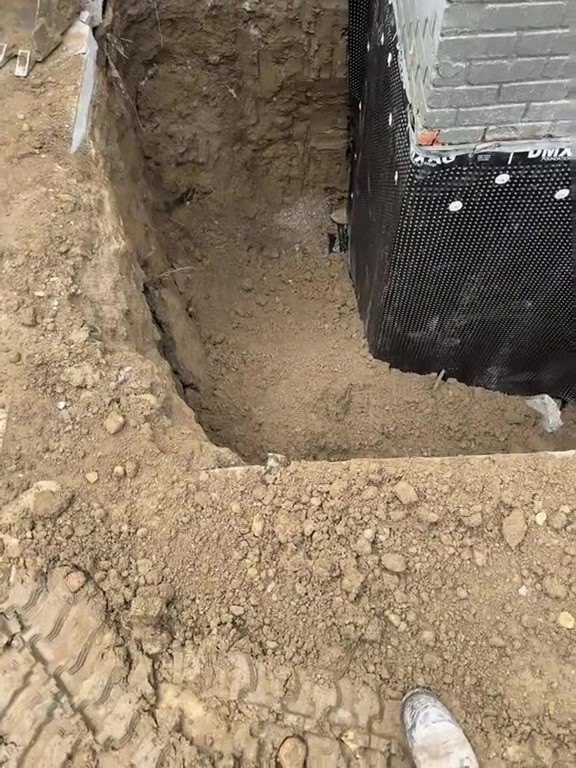
- Water through the wall face, a finished basement, or a wall that is deteriorating: exterior waterproofing. We excavate to the footing, clean and repair the wall, apply membrane, install a new footing drain and backfill with stone. The wall stays dry instead of just draining. This Michigan home with glass block windows shows the whole process:
Approximate costs for each are in our cost guide. The waterproofing work we do carries our 25-year transferable limited warranty.
Frequently asked questions
Is efflorescence in the basement a problem?
The powder is harmless. The water that causes it is the problem, and heavy or growing deposits mean the wall is getting wet regularly.
Does efflorescence mean mold?
No, but the two often go together because the same water feeds both. Spray it with water: efflorescence dissolves, mold does not.
Will Drylok stop efflorescence?
Waterproofing paint can hold back light vapor on a sound, clean wall, but under real water pressure the salts push the coating off. Fix the water first. More in does Drylok actually work.
Why is there white powder on my basement floor?
Same cause: water rising through the slab and evaporating, usually along the cove joint or floor cracks. That is hydrostatic pressure and the usual fix is interior drain tile.
Can you inspect the wall and tell me which fix I need?
Yes. We do free estimates across Macomb, Oakland and Wayne counties: (586) 345-7292.
Mansour’s Innovations is a family-owned waterproofing, excavation and plumbing contractor in Shelby Township, Michigan, serving Macomb, Oakland and Wayne counties since 2014. Owner Imad “Matt” Mansour has 20+ years in the trade and the crew has completed 1,600+ projects. Our waterproofing work carries a 25-year transferable limited warranty. Call or text (586) 345-7292 for a free estimate.