Why Dearborn basements back up
Dearborn grew up on both banks of the Rouge River, and the river’s Upper, Middle and Lower branches all meet inside the city. The city describes itself as the furthest downstream community in the Rouge watershed. It also sits just west of the region’s main sewage treatment plant in southwest Detroit, so hundreds of millions of gallons from upstream communities pass through every day.
Dearborn’s sewers are a combined system, which means rainwater and sewage share the same pipes. The city says the system was built to handle about three inches of rain in 24 hours. When a storm brings more than that, the pipes fill, and the water goes wherever it can, including back up through basement floor drains.
2014 and 2021
The city puts the August 2014 storm at about 5.8 inches and the June 2021 storm at about 7.5, and it says the 2021 storm flooded some 20,000 homes in under 24 hours. Michigan Public reported that some parts of town got around 7 inches in an hour or two that June, that about two-thirds of Dearborn homes got sewage in their basements, and that storms like that now seem to come about every ten years rather than once in a generation. As the mayor has said, for many Dearborn families the basement is living space.
What the city is building, and what it can’t do for your house
By September 2025, the city said it had put more than $25 million into flood work. Crews pulled more than 50 log jams out of the Rouge. That lowered the river by more than a foot and moves water out of town about 70% faster. The city also cleared the 12-foot-wide Colson-Palmer storm line, which restored millions of gallons of capacity, and it keeps a four-person crew on catch basins.
The city’s September 2025 fact sheet also lists two new pumps in East Dearborn that force water into the river. They protect more than 12,600 homes. Four flap gates and two more pumps, paid for with a federal grant, cut the sanitary sewers off from the combined system during heavy rain. That protects roughly 13,600 residents. In July 2026, FEMA approved $8.1 million for the second phase of a hazard-mitigation grant. It pays for flap gates and about 6,200 feet of new storm sewer between Chase Road and Greenfield Avenue, covering about 3,000 homes, with completion expected in 2027. Longer term, the city’s study found that separating the sewers is the most cost-effective fix. The total need has been put at about $700 million over 15 to 20 years.
The mayor described a flap gate as a backflow preventer for a whole neighborhood. The house-sized version is a backwater valve on your own sewer line. It lets wastewater leave and closes when the sewer pushes back. The city’s own flood-preparedness guidance says homes on flood-prone sewers should have one, installed by a professional plumber. It also says battery-backup sump pumps keep working when the power goes out.
Backwater valves and drain cleaning in older Dearborn houses
About three-quarters of Dearborn’s homes were built before 1970, and about a quarter before 1940. Sewer lines from those decades were commonly clay tile or cast iron, and after 60 to 100 years many have roots, cracked joints or sags. A valve is only as good as the pipe it sits in, so the order of work matters:
- Clear the line. Main sewer lines get hydro-jetting. Our Electric Eel only goes into small fixture drains like sinks and tubs.
- Look at it. A camera run shows breaks, offsets and roots, and where they are.
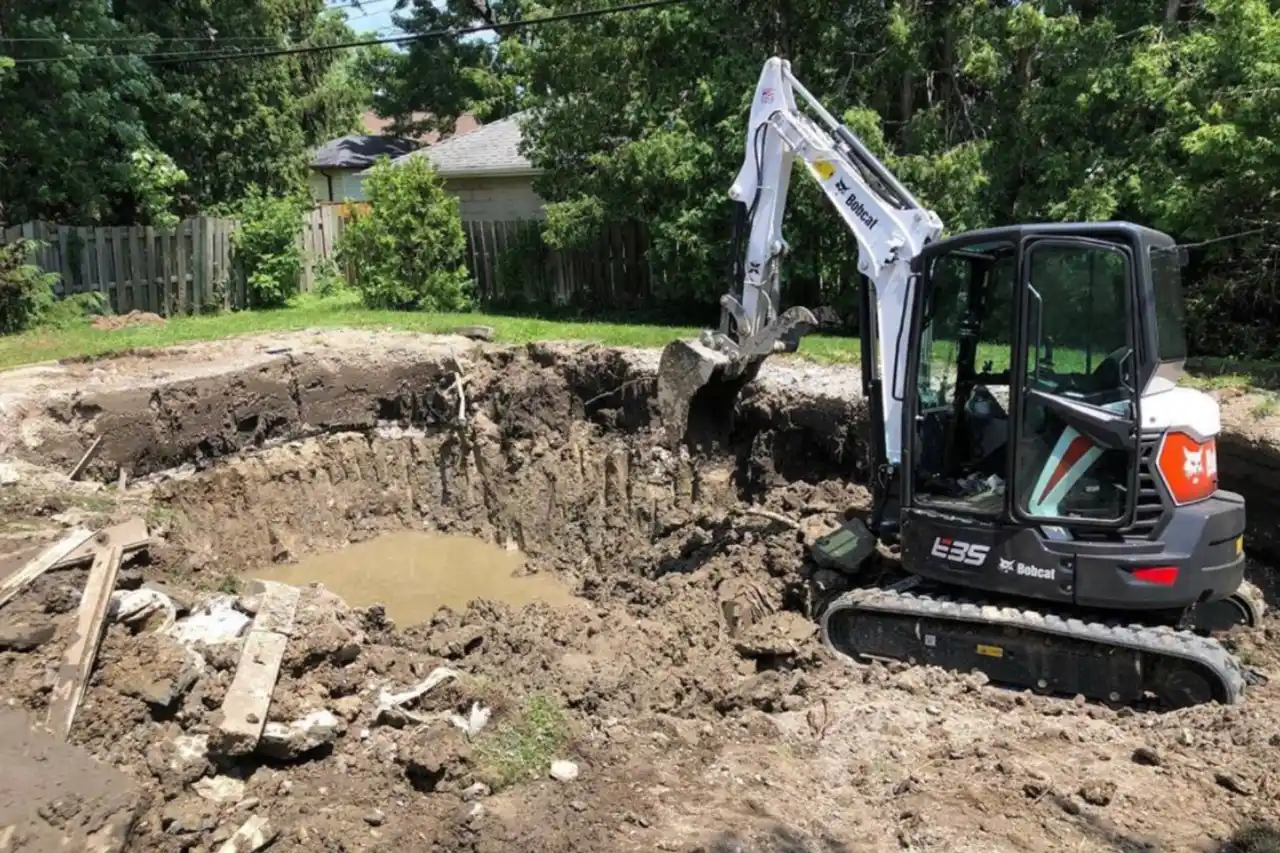
- Fix what’s broken. We repair or replace the bad section, digging only where the camera points.
- Install the valve on the main line where it can be reached for cleaning, because a backwater valve needs occasional maintenance to keep sealing.
- Basement bathroom or laundry below the sewer? Those drains may need an ejector pump to lift the water out instead of relying on gravity.
A sewer camera inspection is a flat-price service that includes locating the line, a saved video of the pipe and a written report; ask about the price when you call. For backwater valves, jetting and sewer repairs, contact us for accurate pricing. We have to inspect the job before we can give you a price.
Groundwater is a different problem
Not every wet Dearborn basement is a sewer backup. Water that seeps through the walls or comes up where the wall meets the floor is groundwater, and a backwater valve does nothing for it.
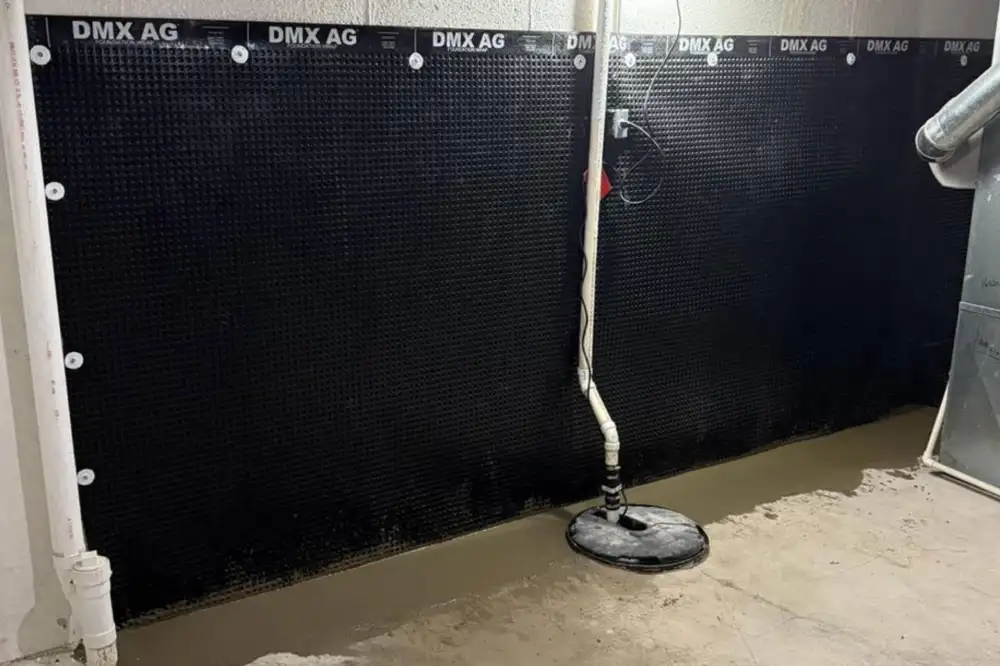
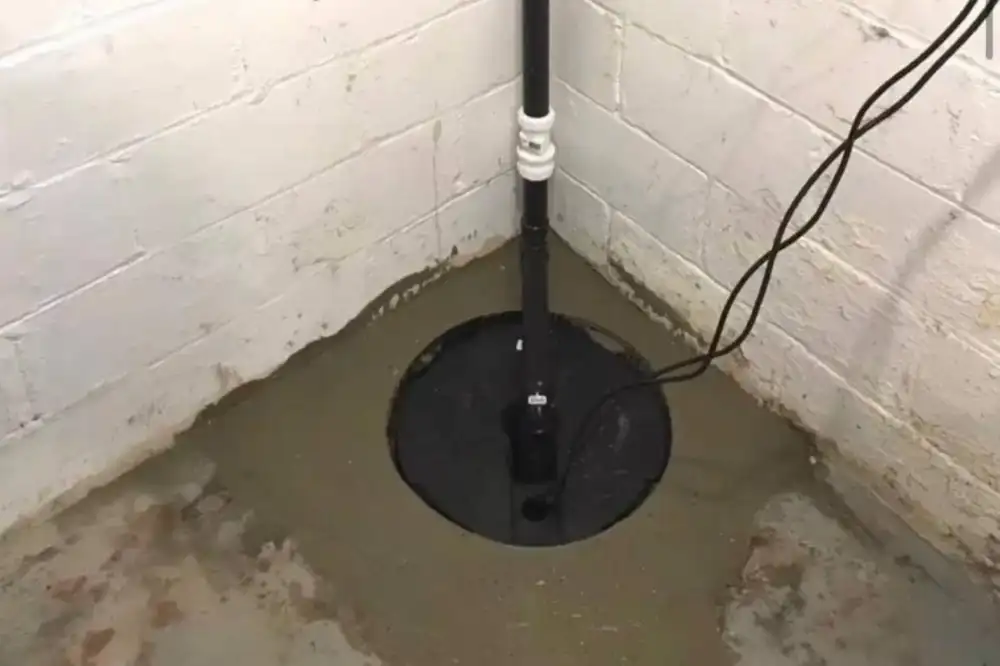
- Interior drain tile along the footing, run to a sump pump, handles seepage through the walls and at the floor joint. About $2,000 to $35,000, depending mostly on how much wall is involved. A new standard sump system on its own is about $2,500 to $3,000. A battery backup pump is added separately; contact us for accurate pricing.
- A single leaking crack is a crack injection job, about $500 to $2,500 per crack. Next door in Detroit, we sealed a foundation crack and a wide cove-joint gap with two-part epoxy. The city’s guidance says to have cracks about a quarter-inch wide checked by a structural engineer, and we’ll tell you when that’s the right first step.
- A wall that’s bowing in needs bracing: steel I-beams or carbon fiber, about $1,500 to $4,000 for steel braces and $1,500 to $2,500 for carbon fiber.
- A finished basement you don’t want to open up can sometimes be done from outside with exterior waterproofing, about $3,000 to $60,000.
Our cost guide explains what moves those prices. Waterproofing work, including crack injection, carries our 25-year transferable limited warranty, which covers our workmanship only. It doesn’t cover plumbing and sewer work such as backwater valves, wall bracing, or the sump pit and pump. Financing is available through Enhancify.
Permits in Dearborn
Plumbing and sewer permits in Dearborn go through the Permit Services Division, part of the city’s Economic Development Department. The Plumbing Division inspects the work. Backwater valves, sumps and ejectors, and subsoil drains for interior waterproofing are all line items on the city’s plumbing permit. Sewer laterals take a separate sewer permit. Work in the public right-of-way can need a second permit from Engineering.
If it happens again
If sewage comes up in your basement, keep people out of standing water while the power is on, and photograph everything before cleanup. If you believe the public sewer caused the damage, Michigan law (MCL 691.1419) requires written notice to the city within 45 days of discovering it. Then call your insurer; many policies only cover sewer backup if you added it. We handle flood cleanup around the clock, and once the basement is dry we can talk about keeping it that way.
Dearborn is 45 minutes to an hour from our base in Shelby Township, depending on traffic. Estimates are free, emergency calls are answered 24/7, and we typically reply within 2 hours. For the rest of the county, see our Wayne County service area. Next door, our Detroit page covers that city’s sewer rules and backup programs, and Livonia sits upstream on the Rouge. Ferndale and Grosse Pointe Park are each about 25 minutes from Dearborn without traffic.