


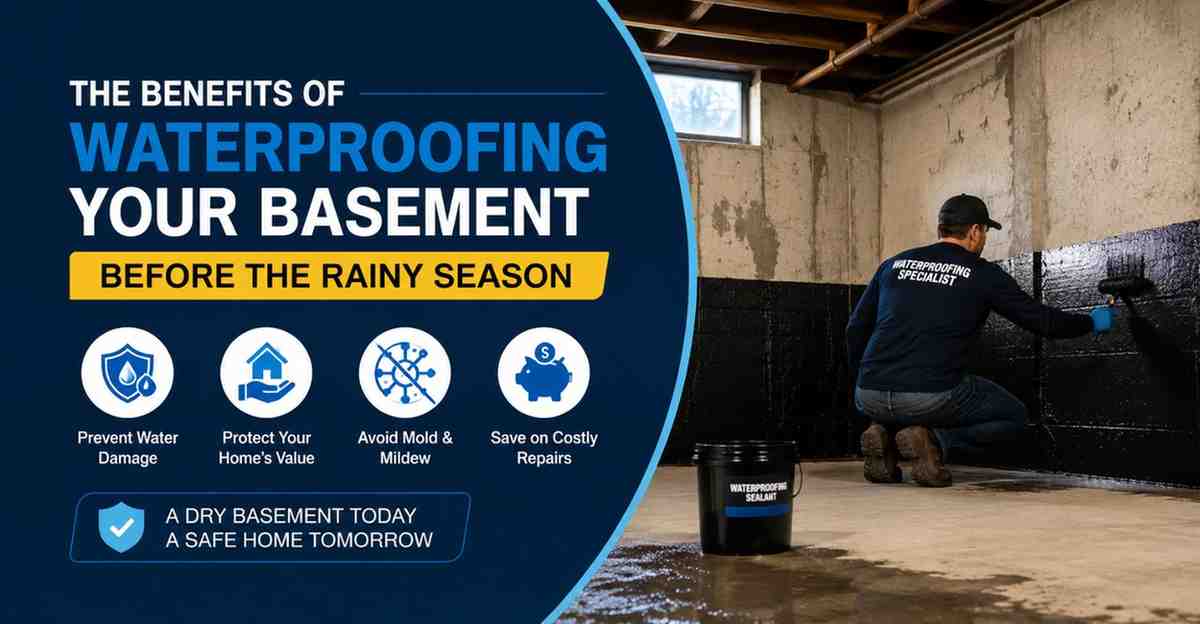
Water can enter a basement through tiny cracks, porous concrete, or poor drainage, creating problems that affect the entire home. Moisture weakens structural components, encourages mold growth, and damages valuable belongings when left untreated. Preparing a basement before periods of heavy rainfall reduces these risks while improving comfort and long-term durability. Professional waterproofing solutions create reliable protection against water intrusion and help homeowners avoid unexpected repairs caused by seasonal storms and excessive groundwater.
Why Does Basement Waterproofing Deserve Early Attention?
Waiting until water appears inside the basement often leads to greater repair costs. Preventive waterproofing strengthens vulnerable areas before heavy rainfall places additional pressure on the foundation.
Moreover, early intervention allows contractors to identify hidden weaknesses that could worsen under wet conditions. Consequently, homeowners gain stronger protection and greater confidence throughout periods of frequent precipitation.
Planning also minimizes emergency repairs that disrupt daily routines and increase maintenance expenses.
Moisture Problems Often Begin Out of Sight
Many basement issues develop gradually beneath finished surfaces or behind walls.
Small foundation cracks, poor drainage, and deteriorating seals allow moisture to enter unnoticed. However, continuous exposure eventually creates visible damage that requires significant restoration.
Addressing these concerns before seasonal rainfall limits structural deterioration and preserves interior finishes.
How Rainfall Affects Basement Structures
Heavy rain increases groundwater levels around foundations, creating hydrostatic pressure against basement walls.
Without adequate waterproofing, this pressure forces moisture through concrete pores and expansion joints, leading to dampness or flooding.
Hydrostatic Pressure Creates Hidden Risks
Water naturally seeks paths of least resistance.
When saturated soil surrounds a foundation, pressure pushes groundwater toward weak points within basement walls and floors. Consequently, even solid concrete may allow moisture penetration over time.
Professional waterproofing systems reduce this pressure through drainage improvements and protective barriers.
Poor Drainage Increases Water Intrusion
Improper grading often directs water toward the home instead of away from it.
Several drainage issues contribute to basement moisture:
- Clogged gutters
- Short downspouts
- Negative grading
- Standing water
- Blocked drains
- Compact soil
- Overflowing window wells
- Damaged drainage pipes
Correcting these conditions strengthens waterproofing performance and protects structural components.
Structural Benefits of Basement Waterproofing
Waterproofing preserves the integrity of concrete foundations by limiting long-term exposure to moisture.
Dry foundations experience less deterioration and maintain greater structural stability over time.
Protection Against Foundation Cracks
Concrete naturally expands and contracts as temperatures change.
Repeated moisture infiltration accelerates cracking by increasing freeze-thaw stress and internal deterioration. Moreover, water entering existing cracks widens openings through continuous pressure.
Professional repairs combined with waterproof barriers reduce future damage significantly.
Preserving Load-Bearing Components
Foundation walls support the weight of the entire structure.
Keeping these elements dry minimizes corrosion of reinforcing steel while protecting concrete from gradual weakening. Consequently, the home’s structural framework remains stronger throughout changing weather conditions.
Reducing Mold and Mildew Growth
Moisture creates ideal conditions for mold development.
Even slight dampness beneath flooring or behind walls allows spores to multiply rapidly, affecting indoor air quality and building materials.
Creating a Healthier Living Environment
Lower humidity discourages biological growth that contributes to unpleasant odors and airborne contaminants.
Waterproofing helps maintain balanced indoor moisture levels by reducing water intrusion before mold colonies become established.
Improved air quality benefits every occupied area connected to the basement through shared ventilation.
Protecting Interior Finishes
Finished basements contain drywall, insulation, flooring, furniture, and personal belongings that absorb moisture quickly.
Effective waterproofing helps protect:
- Wood framing
- Carpeting
- Drywall
- Storage boxes
- Electronics
- Furniture
- Paint finishes
- Decorative materials
Preserving these items reduces replacement costs while extending their useful lifespan.
Financial Advantages of Preventive Waterproofing
Preventive maintenance generally costs less than repairing extensive water damage after flooding occurs.
Moreover, waterproofing protects multiple building systems simultaneously, creating long-term financial value.
Lower Repair Expenses
Water damage frequently affects electrical systems, insulation, flooring, framing, and personal property.
Addressing moisture before structural damage develops limits restoration work and reduces emergency repair expenses.
Early waterproofing also decreases the likelihood of insurance disputes involving gradual water intrusion.
Improved Property Value
Potential buyers often view basement moisture as a major concern.
A dry basement reflects responsible maintenance while increasing buyer confidence during property inspections. Consequently, waterproofed homes often maintain stronger market appeal and resale potential.
Creating Additional Usable Living Space
Many homeowners convert basements into offices, recreation rooms, guest suites, or storage areas.
Reliable waterproofing provides the protection necessary for these investments to remain safe and functional.
Supporting Basement Renovations
Finishing a basement before correcting moisture problems creates unnecessary risk.
Professional waterproofing protects renovation investments by reducing the possibility of future water damage affecting walls, flooring, or furnishings.
Planning waterproofing first establishes a stronger foundation for remodeling projects.
Increasing Everyday Comfort
Dry basements feel warmer, cleaner, and more inviting throughout the year.
Reduced humidity improves comfort while limiting unpleasant odors associated with damp environments.
Consequently, homeowners gain valuable living space that supports changing household needs.
Energy Efficiency Benefits
Moisture reduces insulation performance and increases indoor humidity.
Heating and cooling systems often work harder when damp conditions persist, raising energy consumption.
Improved Insulation Performance
Dry insulation retains its designed thermal resistance more effectively than moisture-saturated materials.
Maintaining dry walls and floors supports consistent indoor temperatures while reducing unnecessary energy loss.
This improvement contributes to lower utility costs throughout the year.
Reduced HVAC Workload
Lower humidity creates a more balanced indoor environment.
Consequently, air conditioning systems require less effort to remove excess moisture, improving operational efficiency and extending equipment lifespan.
Professional Waterproofing Solutions
Contractors select waterproofing methods based on soil conditions, structural design, and moisture sources.
Combining multiple techniques often provides stronger long-term protection than relying on a single solution.
Exterior Waterproofing Systems
Exterior protection blocks groundwater before it reaches foundation walls.
Common techniques include:
- Waterproof membranes
- Drainage boards
- Foundation coatings
- French drains
- Gravel backfill
- Surface grading
- Downspout extensions
- Drain tile systems
Together, these measures reduce hydrostatic pressure and improve moisture control.
Interior Moisture Management
Interior waterproofing controls water that enters through unavoidable pathways.
Many homeowners evaluating basement waterproofing systems in Michigan compare interior drainage channels, sump pump installations, vapor barriers, and crack repair methods to create layered protection suited to local environmental conditions.
The Importance of Sump Pump Systems
A sump pump provides an additional layer of protection by removing collected groundwater before flooding occurs. Proper installation and maintenance allow the system to operate automatically during periods of heavy rainfall.
This equipment plays a critical role in many waterproofing strategies.
How Sump Pumps Protect Basements
Groundwater enters specially designed collection pits before automatic pumps discharge it safely away from the home.
Modern systems often include:
- Battery backup power
- High-capacity motors
- Automatic activation
- Water level alarms
- Durable discharge piping
- Protective covers
These features improve reliability during severe weather and unexpected power interruptions.
Routine Maintenance Supports Performance
Regular testing confirms that sump pumps activate correctly when needed.
Cleaning debris from pits, inspecting discharge lines, and checking backup batteries reduce the risk of mechanical failure during intense rainfall events. Preventive maintenance helps preserve dependable operation throughout the year.
The Value of Vapor Barriers
Liquid water represents only one source of basement moisture. Water vapor also moves through concrete surfaces and exposed soil, raising indoor humidity levels and creating favorable conditions for mold.
Installing vapor barriers helps control this hidden moisture movement.
Managing Humidity Effectively
Heavy-duty vapor barriers reduce moisture migration through basement walls and crawl spaces.
Consequently, indoor humidity remains more stable, helping protect insulation, wood framing, flooring, and stored belongings from gradual deterioration caused by excessive dampness.
Supporting Overall Waterproofing Systems
Vapor barriers work most effectively when combined with drainage improvements and foundation waterproofing.
Layered protection reduces both liquid water intrusion and airborne moisture, creating a stronger defense against basement-related problems while improving long-term building performance.
Preparing Before Heavy Rainfall Arrives
Seasonal preparation reduces stress on waterproofing systems and identifies maintenance issues before severe weather develops.
Taking preventive action improves performance during periods of intense precipitation.
Essential Maintenance Steps
Homeowners should complete several important tasks before rainy conditions begin.
Recommended actions include:
- Clean gutters thoroughly
- Extend downspouts away from foundations
- Remove landscape debris
- Check grading slopes
- Test sump pumps
- Inspect foundation cracks
- Clear drainage outlets
- Monitor basement humidity
Routine attention strengthens existing waterproofing measures and reduces avoidable water intrusion.
Scheduling Professional Inspections
Professional evaluations identify hidden weaknesses that routine visual inspections may overlook.
Contractors assess drainage performance, structural movement, waterproof membranes, and moisture levels while recommending repairs that improve overall protection before demanding weather conditions arrive.
Common Basement Waterproofing Mistakes
Even quality materials produce disappointing results when installation or maintenance errors occur.
Avoiding common mistakes increases waterproofing effectiveness and extends system lifespan.
Relying on Paint Alone
Waterproof paint improves surface resistance but cannot withstand significant hydrostatic pressure without supporting drainage improvements.
Moisture eventually bypasses cosmetic coatings when underlying water problems remain unresolved.
Professional waterproofing addresses root causes rather than masking symptoms.
Ignoring Small Cracks
Minor foundation cracks frequently appear harmless.
However, groundwater gradually enlarges these openings through repeated pressure and seasonal movement. Repairing small defects early reduces structural deterioration while preserving waterproof barriers.
Long-Term Protection for Valuable Investments
Basements often contain expensive mechanical equipment, electrical systems, appliances, furniture, and irreplaceable personal belongings.
Protecting these assets from water damage preserves both financial value and daily convenience.
Safeguarding Home Systems
Water intrusion can damage furnaces, water heaters, electrical panels, and utility connections located within basement spaces.
Reliable waterproofing minimizes exposure to moisture while reducing repair and replacement costs associated with equipment failure.
Supporting Future Home Improvements
Dry basements provide flexibility for future remodeling projects without requiring extensive moisture correction beforehand.
A waterproofed foundation creates confidence when planning finished living areas, storage spaces, fitness rooms, or entertainment areas designed for long-term use.
FAQs
1. Why should basement waterproofing happen before the rainy season?
Waterproofing before heavy rainfall strengthens vulnerable areas before groundwater pressure increases. Early preparation reduces flooding risks, limits structural damage, and allows contractors to complete repairs under favorable working conditions rather than during emergencies.
2. What causes basement moisture problems during rainy weather?
Heavy rainfall raises groundwater levels around foundations while poor drainage directs surface water toward basement walls. Cracks, porous concrete, and damaged waterproof barriers allow moisture to enter, creating dampness or flooding if protective systems remain inadequate.
3. Does waterproofing help prevent mold growth?
Yes. Waterproofing reduces the moisture levels that mold requires for growth. Lower humidity and reduced water intrusion create healthier indoor conditions while protecting walls, flooring, insulation, and stored belongings from biological damage.
4. How long does basement waterproofing typically last?
System lifespan depends on installation quality, materials, environmental conditions, and maintenance practices. Professionally installed waterproofing often provides many years of reliable protection when homeowners inspect and maintain drainage systems regularly.
5. Can waterproofing increase property value?
A dry basement improves buyer confidence by reducing concerns about structural damage and moisture problems. Proper waterproofing also protects finished living spaces, making homes more attractive within competitive real estate markets.
6. Are interior waterproofing systems enough by themselves?
Interior systems effectively manage incoming water but often perform best when combined with exterior drainage improvements and foundation protection. Layered waterproofing strategies generally provide stronger and longer-lasting moisture control.
7. How often should homeowners inspect basement waterproofing systems?
Annual inspections identify developing cracks, drainage issues, and equipment failures before significant damage occurs. Additional evaluations after severe storms help confirm that waterproofing components continue operating effectively.
8. Can small foundation cracks allow significant water intrusion?
Yes. Even narrow cracks create pathways for groundwater under pressure. Early repair prevents cracks from expanding while reducing the likelihood of flooding and long-term structural deterioration.
9. Does proper landscaping support basement waterproofing?
Correct grading directs water away from foundations instead of allowing accumulation near basement walls. Effective landscaping complements waterproofing systems by reducing soil saturation and hydrostatic pressure around the structure.
10. Is basement waterproofing only necessary for older homes?
No. Homes of every age benefit from moisture protection because drainage conditions, soil movement, and weather exposure affect both new and existing structures. Preventive waterproofing helps preserve long-term durability regardless of construction date.