
Updated
Damp proofing and waterproofing sound like the same thing, but they are not. Damp proofing is a thin coating that slows moisture soaking through a foundation wall. Waterproofing is a thick, flexible barrier, usually paired with drainage, that stops liquid water under pressure. Most Michigan homes were built with damp proofing only, which is a big reason so many basements in Macomb and Oakland County leak once the soil gets saturated.
Damp proofing vs waterproofing at a glance
| Damp proofing | Waterproofing | |
|---|---|---|
| What it is | A thin sprayed or rolled-on coating, often asphalt-based | A thick membrane or coating system, often with a drainage layer |
| What it stops | Moisture vapor and dampness soaking through the concrete | Liquid water pushed against the wall by the soil (hydrostatic pressure) |
| Handles wet clay and a high water table | No | Yes, when paired with working drain tile |
| Bridges cracks | No, it cracks when the wall cracks | Flexible membranes can stretch over small cracks |
| Where you usually find it | Most new homes, because building codes generally require only damp proofing | Basements that have leaked, wet lots and homes built to a higher standard |
Why most basements only have damp proofing
Residential building codes generally require damp proofing on basement walls and call for true waterproofing only where a high water table or severe soil water conditions are expected. That means many builders spray a black asphalt coating on the outside of the wall, backfill, and move on. It meets code, but it isn’t designed to hold back water that sits against the wall for days after heavy rain or snowmelt. Michigan clay soil drains slowly, so that is exactly what happens around a lot of homes here.
Damp proofing also breaks down. After years in the ground it can crack, flake off or simply wear thin, and once the wall itself cracks, the coating cracks with it. If your basement was dry for years and started leaking later, that is often part of the story.
What real waterproofing looks like
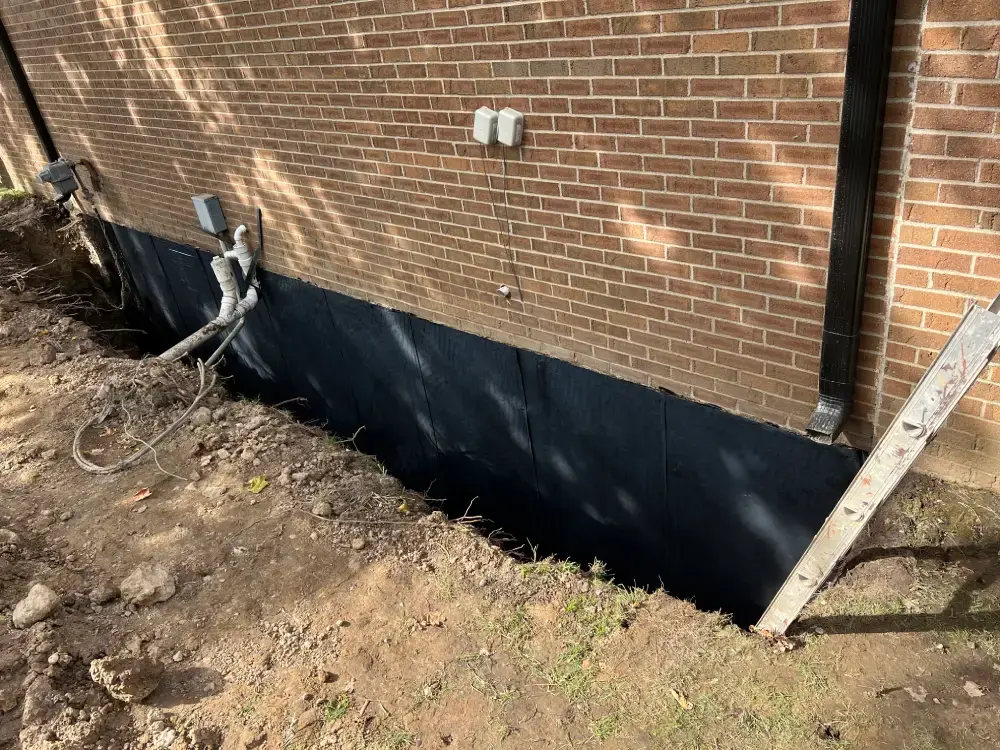
When Mansour’s Innovations waterproofs a foundation from the outside, we dig along the wall down to the footing, clean and repair the wall, and apply a foundation coating that seals and bonds, a 60-mil rubber waterproofing membrane over it and a dimpled foundation wrap on top so water can’t sit against the wall. New drain tile at the footing carries the water away. That combination is what stops water under pressure, not a single coat of tar. See exterior basement waterproofing for the full process.
Exterior waterproofing is approximately $6,000–$12,000 for about 40 linear feet, and a large full basement can run up to approximately $60,000. Contact us for accurate pricing. We have to inspect the job before we can give you a price.
Is damp proofing ever enough?
For a basement that has never leaked, on a lot with good drainage and soil that slopes away from the house, the original damp proofing may be doing its job. If you only have a little dampness, musty air or white powder on the walls and no running water, start with gutters, downspout extensions and grading before paying for a waterproofing system.
Once water actually comes in, through cracks, at the joint where the wall meets the floor or across the floor after rain, damp proofing is no longer enough. Painting the inside of the wall won’t fix it either. Here is why waterproofing paint rarely stops a Michigan leak.
Building new? Ask for waterproofing
If you are building a house or an addition, upgrading from code-minimum damp proofing to a full waterproofing system costs far less during construction, while the walls are open, than digging them back out later. Ask your builder exactly what is going on the walls, and see new foundation waterproofing.
Not sure what you have?
Mansour’s Innovations is a family-owned waterproofing, excavation and plumbing contractor based in Shelby Township, serving Macomb and Oakland counties. We can look at the wall, tell you what is on it now and whether interior or exterior waterproofing fits your situation. Estimates are free. Call (586) 345-7292, 8 AM to 8 PM, 7 days a week, or request an estimate online.
Frequently Asked Questions
1. What is the difference between damp proofing and waterproofing?
Damp proofing is a thin coating, often asphalt-based, that slows moisture soaking through a foundation wall. Waterproofing is a thicker, flexible barrier, usually combined with drainage, that stops liquid water pushed against the wall by saturated soil.
2. Is damp proofing the same as waterproofing?
No. Damp proofing only resists dampness and moisture vapor. It is not designed to stop water under pressure, so a basement with only damp proofing can still leak when the soil around it is saturated.
3. Does building code require basement waterproofing?
Residential codes generally require only damp proofing on basement walls, and call for waterproofing where a high water table or severe soil water conditions are expected. Many homes meet code with damp proofing and still leak in wet clay soil.
4. How do I know if my foundation has damp proofing or waterproofing?
Look at the top of the foundation wall outside, just above the soil. A thin black or gray coating is usually damp proofing. A thick rubbery membrane or a dimpled plastic sheet means a waterproofing system was installed.
5. How much does exterior waterproofing cost?
Exterior waterproofing is approximately $6,000–$12,000 for about 40 linear feet. Contact us for accurate pricing. We have to inspect the job before we can give you a price.