
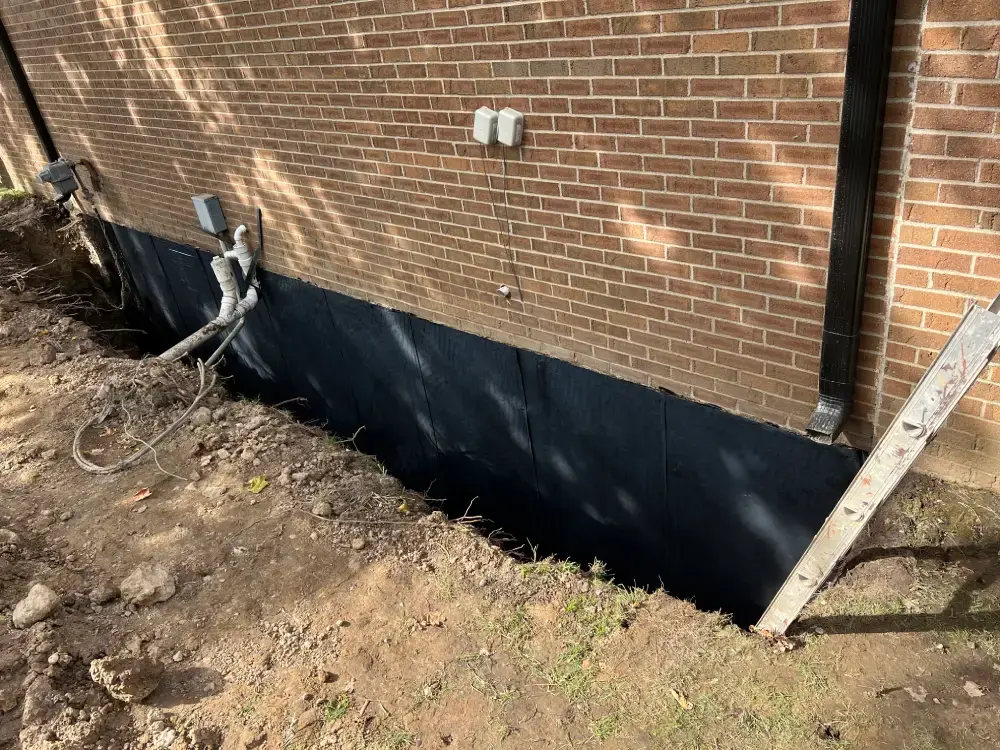
Interior basement waterproofing for Fraser homes: drain tile under the floor along the leaking walls, a membrane on the wall and a sump pump, about 20 minutes from our base in Shelby Township.
Why Fraser basements leak
For a Fraser basement, the ground matters more than the map. MSU Extension in Macomb County, working from the county soil survey, describes the southern part of the county as almost all poorly drained soil, mostly clay. Clay holds rainwater against a foundation for days, and it swells when it is wet.
More than nine in ten Fraser homes were built between 1940 and 1999, so most basements here have been holding back wet clay for decades. How they leak depends on the wall. Concrete block leaks at the mortar joints and the floor line, and its hollow cores fill with water. Poured concrete leaks at particular spots: a shrinkage crack, a tie-rod hole or the place where a pipe passes through.
Sealers and paint on the inside do not hold against that pressure. Read more on why basements leak where the wall meets the floor.
What to check first in a Fraser basement
First work out which water you have. Seepage at the walls or the floor joint is groundwater. Water that comes up through the floor drain, especially if it smells, is coming from the sewer. Those need different fixes, and you should know which one you have before anyone quotes anything.
In older block houses the original clay drain tile around the footing tends to silt up over the decades, and some never had a sump at all. That is where new interior drain tile and a sump come in. A poured wall that leaks at one crack or tie-rod hole usually needs only that spot sealed.
What goes into the system
We break out a strip of the floor along the leaking walls, lay perforated drain tile in clean stone at the footing, and run it to a sump pump. A dimpled membrane on the wall sends any water coming through the wall down into the drain. Then we pour new concrete over the trench. Most interior jobs take two to four days, depending on how many walls get the drain.
If water runs down the face of the walls, or a finished basement can’t be opened, exterior waterproofing may fit better. We tell you which one at the estimate.
What interior waterproofing costs in Fraser
Interior waterproofing is approximately $4,500 to $8,000 for about 40 linear feet of wall, not including the sump. A sump pump system adds approximately $2,500 to $3,000. A large full basement, about 250 linear feet, can run up to approximately $35,000. Contact us for accurate pricing. We have to inspect the job before we can give you a price.
Our waterproofing work carries a 25-year transferable limited warranty. The sump pump and pit are not part of it.
Interior waterproofing jobs near Fraser
- Interior Waterproofing Finished in Sterling Heights, MI
- 108 Feet of Drain Tile and a New Sump Pump System in a Mount Clemens Basement
More services in Fraser
- Foundation crack and rod hole repair in Fraser
- Exterior basement waterproofing in Fraser
- Sump pump installation in Fraser
- French drain and yard drainage in Fraser
- Foundation repair in Fraser
See everything we do on our Fraser basement waterproofing page, or our Macomb County page.
Fraser interior waterproofing questions
Why do Fraser basements stay damp for days after rain?
The southern part of Macomb County is almost all poorly drained soil, mostly clay. Clay holds rainwater against a foundation for days and swells when it is wet.
My Fraser house has block walls and no sump. What does it need?
If water seeps in at the walls or the floor line, it needs new drain tile at the footing and a sump to carry the water out. In older houses the original clay tile has usually silted up.
Is one wet spot on a poured wall a waterproofing job?
Usually not. Poured concrete leaks at particular spots, like a shrinkage crack, a tie-rod hole or a pipe penetration. Those are sealed from inside.
Do I need a sump pump?
Yes. The drain tile carries the water to a sump pit, and the pump sends it outside.
Can it be done in a finished basement?
Usually yes. We take off only what we have to, usually the bottom two feet of drywall along the walls we work on, and leave a clean edge for your drywall person to patch. If you do not want the finished space opened at all, exterior waterproofing is the usual step.
What does the warranty cover?
Our 25-year transferable limited warranty covers the waterproofing work. The sump pump and pit are not included.