


Interior basement waterproofing for White Lake Township homes: drain tile at the footing, a membrane on the wall and a sump pump sized for a lot of water, with a backup. Close to a lake, it is usually the right call.
Why White Lake Township basements leak
White Lake Township is lake country: dozens of lakes, from White Lake and Pontiac Lake to a long list of smaller ones. The glacial ground under it is mostly sand and gravel with bands of clay. Sand drains fast, but the water has to go somewhere, and here it moves through the ground toward the nearest lake, passing under and around basements on the way.
Where a clay layer sits under the sand, water perches on top of it and pushes sideways against a foundation. Near a lake, the water table can rise to within a few feet of the surface after a wet stretch, and a basement dug into that is dug into the water.
Sealers and paint on the inside do not hold against that pressure. Read more on why basements leak where the wall meets the floor.
What to check first in a White Lake Township basement
On lake ground the first question is the water table and the sump: how close is the water, is the pump keeping up, and is the pit sized for it. Because so much of the township is on septic, a wet basement here is almost always groundwater, not a sewer backup.
The age of the house tells you the rest. Older lake homes, many of them former cottages on block walls or shallow foundations, leak because the foundation sits low and close to the water. Newer homes on the higher ground leak when the sump system that was handling the groundwater wears out.
What goes into the system
We break out a strip of the floor along the leaking walls, lay perforated drain tile in clean stone at the footing, and run it to a sump pump. A dimpled membrane on the wall sends any water coming through the wall down into the drain. Then we pour new concrete over the trench. Most interior jobs take two to four days, depending on how many walls get the drain.
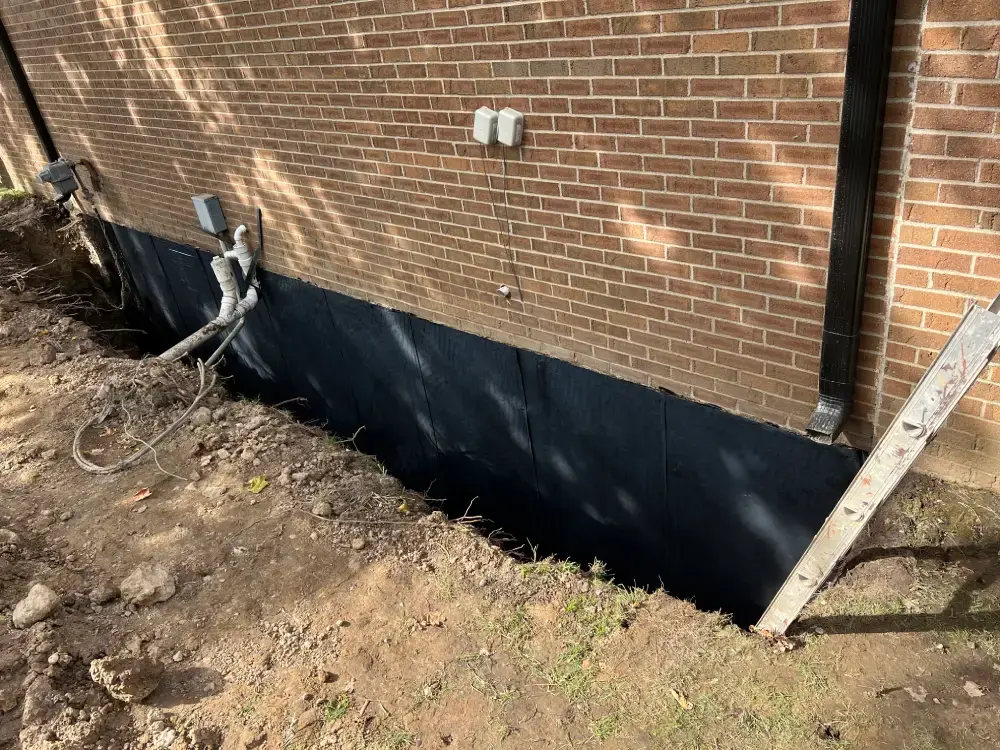
If water runs down the face of the walls, or a finished basement can’t be opened, exterior waterproofing may fit better. We tell you which one at the estimate.
What interior waterproofing costs in White Lake Township
Interior waterproofing is approximately $4,500 to $8,000 for about 40 linear feet of wall, not including the sump. A sump pump system adds approximately $2,500 to $3,000. A large full basement, about 250 linear feet, can run up to approximately $35,000. Contact us for accurate pricing. We have to inspect the job before we can give you a price.
Our waterproofing work carries a 25-year transferable limited warranty. The sump pump and pit are not part of it.
Interior waterproofing jobs we have done
- 30 Feet of Interior Drain, a New Sump Pump Motor and a Re-Piped Discharge in Rochester Hills
- Full Interior Basement Waterproofing, Start to Finish (Michigan)
More services in White Lake Township
- Foundation crack and rod hole repair in White Lake Township
- Exterior basement waterproofing in White Lake Township
- Sump pump installation in White Lake Township
- French drain and yard drainage in White Lake Township
See everything we do on our White Lake Township basement waterproofing page, or our Oakland County page.
White Lake Township interior waterproofing questions
Can a basement near a lake be kept dry?
Yes. Close to a lake, interior waterproofing is usually the right call: drain tile at the footing catches the groundwater and runs it to a sump pump sized for a lot of water, with a backup. We can’t lower the lake, but we can keep that water out of the basement.
I am on septic. Is my wet basement a sewer problem?
Almost never. On septic there is no municipal sewer to back up, so a wet White Lake basement is almost always groundwater. The drain line to the tank can still clog or fail, and we check that separately.
Why does sandy soil still give me a wet basement?
Sand drains fast, but the water moves through it toward the nearest lake. Where a clay layer sits under the sand, water perches on it and pushes sideways against the foundation.
Do I need a sump pump?
Yes. The drain tile carries the water to a sump pit, and the pump sends it outside.
Can it be done in a finished basement?
Usually yes. We take off only what we have to, usually the bottom two feet of drywall along the walls we work on, and leave a clean edge for your drywall person to patch. If you do not want the finished space opened at all, exterior waterproofing is the usual step.
What does the warranty cover?
Our 25-year transferable limited warranty covers the waterproofing work. The sump pump and pit are not included.