


“Wet basement” covers a lot of ground. It can mean a musty smell and a damp carpet, a stripe of water along one wall after a storm, or six inches of water around the furnace. Those aren’t the same problem, and they don’t cost the same to fix. The first job is figuring out which one you have.
We’re Mansour’s Innovations, based in Shelby Township. We’ve dried out basements across Macomb and Oakland counties since 2014, and we’ll tell you when the fix is smaller than you’re expecting.
Damp, wet or flooded?
Damp: musty smell, no visible water
Often this is humidity, not a leak. Michigan summers are humid, and when that air hits a cool foundation wall, it condenses. Tape a square of plastic to the wall for a couple of days. If water forms on the outside of the plastic, it’s condensation from the room. If it forms underneath, it’s coming through the wall. Condensation usually calls for a dehumidifier and better air movement, not waterproofing.
Wet: water comes in after rain or snowmelt
That’s groundwater. The clay around the house fills up and water pushes in through cracks, tie-rod holes or the joint where the wall meets the floor. This is where crack repair, drain tile and sump systems come in.
Flooded: standing water
Standing water usually means something failed: a sump pump that quit, a power outage with no backup, a sewer backing up through the floor drain, or a burst pipe. Fix the failure first, then deal with the cleanup and whatever let it happen.
The solutions, smallest to biggest
- Downspouts and grading. Carry roof water away from the house and slope the soil away from the wall. It solves more wet basements than people expect.
- Dehumidifier and ventilation for condensation and dampness.
- Crack and tie-rod injection when the water comes in at specific spots.
- Window well repair when the water shows up at a basement window.
- Backwater valve when the water comes up the floor drain from the sewer.
- Sump pump repair, replacement or a backup when the pump is the weak link.
- Interior drainage system when water comes in along the bottom of the walls.
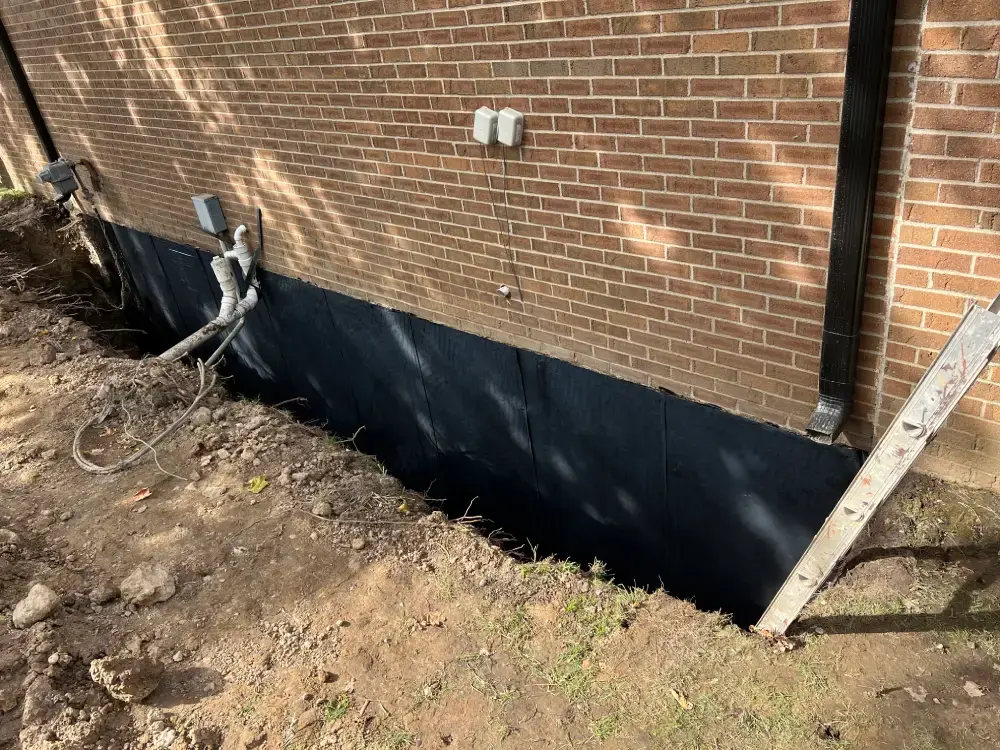
- Exterior waterproofing when water comes through the walls in many places, or when you want to stop it before it reaches the wall at all.
After the water: cleanup
If the basement has already flooded, wet drywall, carpet and insulation have to come out quickly, before mold sets in. We do flood restoration, and we fix the cause while we’re there so you’re not cleaning up the same mess next spring.
Where we work
For more on what we see in your area, see our wet basement pages for Macomb and Oakland County.
Questions we get about wet basements
Is a little water after a big storm normal?
Some dampness after a hard rain is common around here. Water running across the floor isn’t, and it tends to get worse, not better.
Can I finish a basement that gets wet?
Fix the water first. Drywall and carpet over a wall that leaks turns a waterproofing job into a waterproofing job plus a demolition job.
What will it cost?
It depends on the cause, which is why the look is free. As rough ranges: sealing a leaking crack is approximately $500 to $600, a full-height crack approximately $1,500, and tie-rod holes approximately $150 each. An interior drain tile system is approximately $4,500 to $8,000 for about 40 linear feet of wall, not including the sump, and a sump pump system adds approximately $2,500 to $3,000. Exterior waterproofing is approximately $6,000 to $12,000 for about 40 linear feet of wall, and a full basement is priced by its total linear footage. Contact us for accurate pricing. We have to inspect the job before we can give you a price.
Call (586) 345-7292 for a free estimate. We book from 8 a.m. to 8 p.m. every day, emergencies included.