
Updated
Michigan’s Seller Disclosure Statement asks two questions that matter here: “Basement/crawl space: Has there been evidence of water?” and whether there are “Settling, flooding, drainage, structural, or grading problems?” A yes gets explained on the form. Fixing the problem before you list, and keeping the invoice and any transferable warranty, gives buyers a clear answer instead of a question mark.
What the Michigan form actually asks
The form comes from the Seller Disclosure Act, MCL 565.957. These are the lines a basement or foundation problem touches:
- Basement/crawl space: “Has there been evidence of water?” followed by “If yes, please explain.”
- Other Items: “Settling, flooding, drainage, structural, or grading problems?”
- Other Items: “Major damage to the property from fire, wind, floods, or landslides?”
- Flood insurance: “Do you have flood insurance on the property?”
- The systems checklist also asks about the sump pump and the city sewer system.
Notice the wording. It asks whether there has been evidence of water, not only whether the basement leaks today. The form also says it is not a warranty and tells buyers to get professional advice and inspections. So the buyer’s inspector is going to look either way.
What “evidence of water” can look like
- Water stains or tide lines on the walls or the bottom of the drywall.
- White, chalky powder on the concrete. That’s efflorescence, and it only forms where water has come through.
- Rust or wet spots in a straight row at the same height on a poured wall. Those are tie-rod holes.
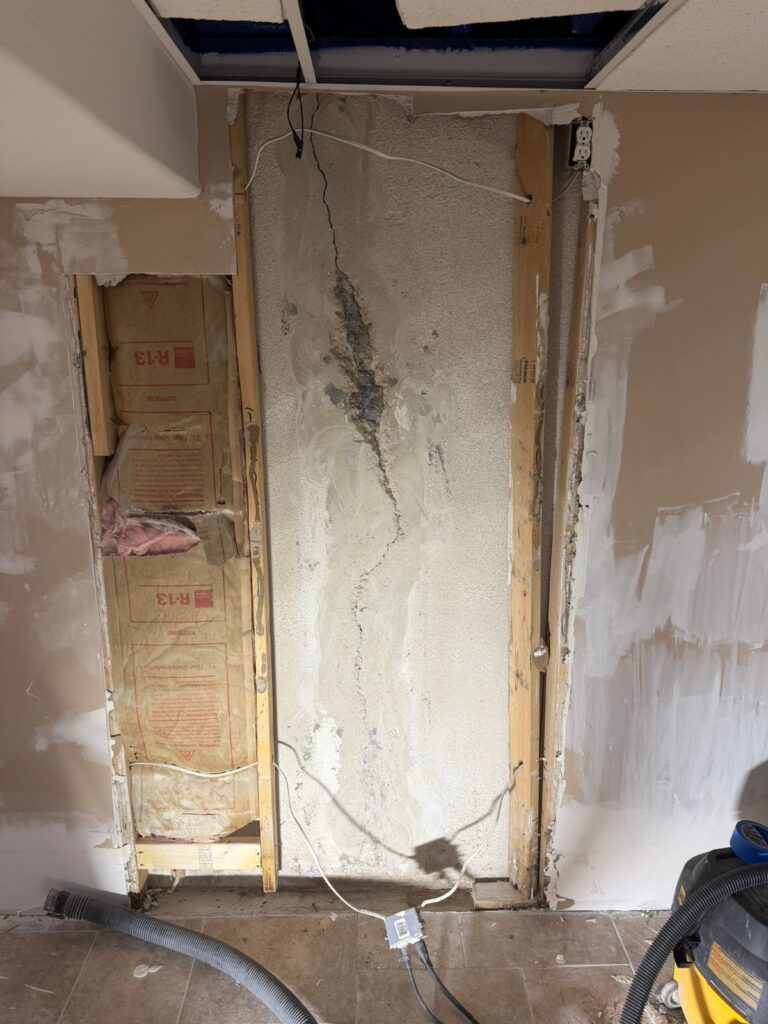
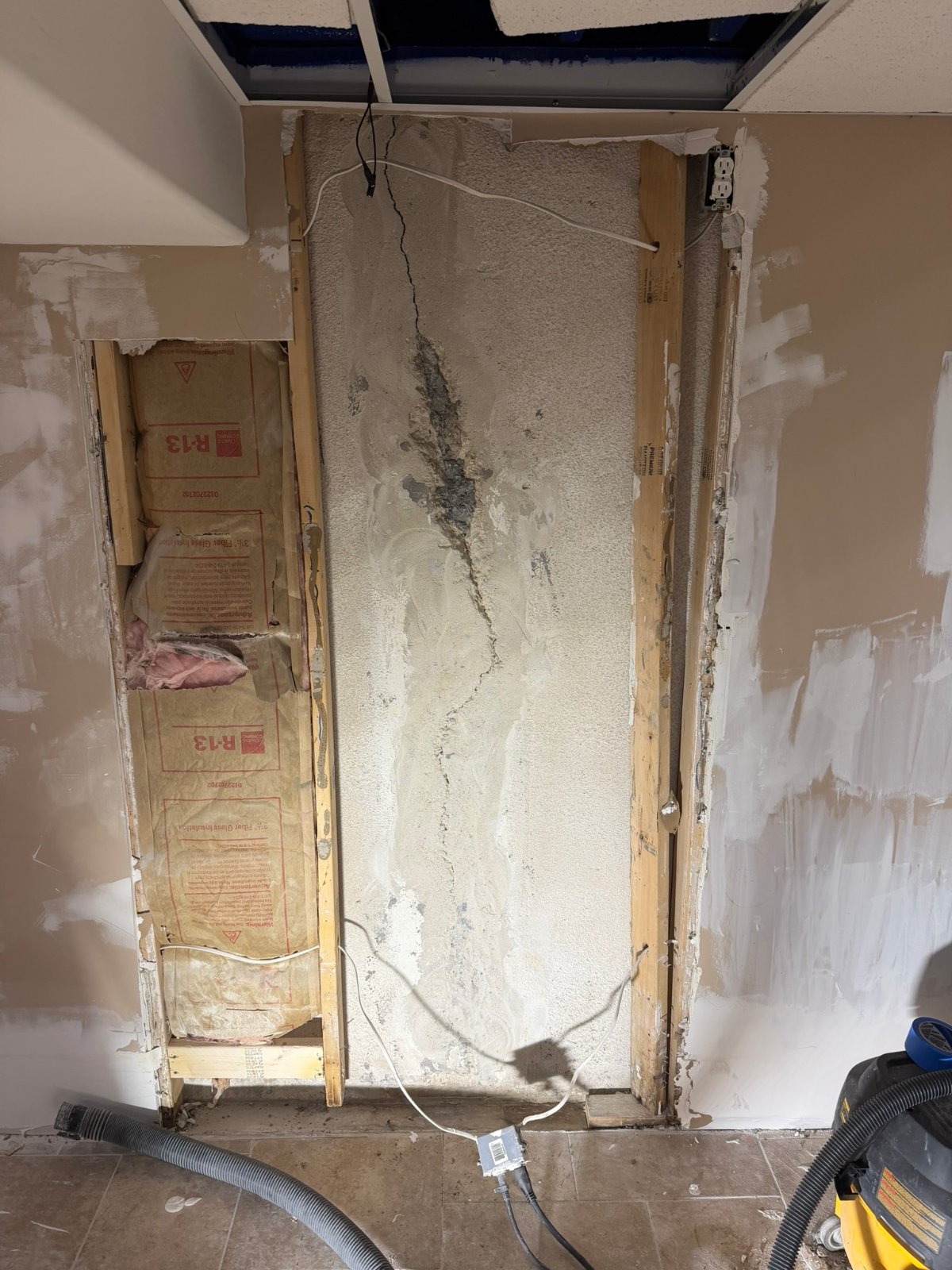
- A crack with dark staining down from it, or a damp line where the wall meets the floor.
- A sump pump that runs a lot after rain.
Why fixing it before you list helps
A buyer who finds a stained crack during inspection doesn’t know if it’s a $500 problem or a $50,000 one. People in that spot either ask for a big price cut or walk. A crack that’s already sealed, with an invoice that says what was done and when, reads very differently.
Most of the leaks we see on houses going to market are small, fixed in a day, and cost far less than a buyer would knock off for them. Our approximate prices:
- Small crack: approximately $500–$600 each.
- Full-height vertical crack, sealed with epoxy injection: approximately $1,500, or $2,000 if it was previously filled or repaired.
- Tie-rod holes: approximately $150 each, less per hole when there are several.
- Bowing wall: steel I-beam braces, approximately $1,500 to $4,000 per brace. Contact us for accurate pricing. We have to inspect the job before we can give you a price.
If water is coming in along the whole wall rather than one crack, that’s a drainage job, and we’ll tell you so after we look. The estimate is free.
Keep the paperwork
Put these in the folder you hand your agent:
- The invoice, with what was repaired, where in the basement, and the date.
- Before and after photos.
- Any warranty. Our 25-year transferable limited warranty covers waterproofing work (drain tile and membrane) and goes with the house to the next owner. It doesn’t cover sump pumps, plumbing or excavation.
What a buyer’s inspector looks for
- Cracks, and which way they run. Vertical and horizontal cracks mean different things.
- Rod hole stains, efflorescence and damp spots.
- Walls that lean or bow in.
- The sump pit: pump age, whether there’s a backup, and where the discharge goes.
- Grading and downspouts that dump water against the foundation.
This is general information from a contractor, not legal advice. How to answer your disclosure form is a question for your real estate agent or attorney.
Frequently Asked Questions
1. Do I have to disclose a basement leak that was already fixed when selling in Michigan?
Michigan’s seller disclosure form asks whether there “has been evidence of water,” not only whether the basement leaks now, so many sellers explain the history and the repair. How to answer is a question for your agent or attorney. We can give you the invoice and a description of the work we did.
2. Should I fix a foundation crack before selling my house?
Often it costs less than the price cut a buyer would ask for. A full-height vertical crack sealed with epoxy runs approximately $1,500, and tie-rod holes approximately $150 each. A repaired crack with an invoice gives buyers a clear answer. The estimate is free.
3. Does your warranty transfer to the buyer?
Yes. Our 25-year transferable limited warranty on waterproofing work (drain tile and membrane) goes with the house to the next owner. It does not cover sump pumps, plumbing or excavation. The warranty page lists the terms.
We’re Mansour’s Innovations, a waterproofing, excavation and plumbing contractor based in Shelby Township, in business since 2014 and serving Macomb and Oakland counties. Book a free estimate.