


Updated
Macomb County’s stormwater projects add storage to the public sewer system so it overflows into Lake St. Clair less often and is less likely to back up during big storms. They help the system. They don’t seal a leaking crack, a rod hole or the joint where your wall meets the floor, and they can’t stop every sewer backup into one house.
Here’s what the county and state have announced, in plain words, and what’s still up to each homeowner. We aren’t involved in these public projects. This is our read of the public reports, with links to each one.
What the county and state are doing
- The 2022 state infrastructure package. Michigan passed a $4.7 billion infrastructure plan, and Macomb County was set to receive an additional $72 million from it, for projects including a pump replacement at the Chapaton station, the Martin Drain improvement and repairs tied to the Fraser sinkhole. (WXYZ)
- The Chapaton projects in St. Clair Shores (announced August 2023). A $27 million canal rehabilitation at the Chapaton Pump Station and Retention Treatment Basin adds 13 million gallons of storage and is expected to cut combined sewer overflows by about 38 percent. A separate $16 million electrical upgrade adds backup generators so the station doesn’t fail, which the county says would back sewage up into basements. (Macomb County Board of Commissioners, ClickOnDetroit)
- In-system storage for Eastpointe and St. Clair Shores. A $10 million project puts an inflatable bladder inside a large interceptor pipe so combined sewer flow can be held upstream and released later, to cut overflows into the lake. The county says it does this without raising the risk of basement flooding. (Macomb County Public Works)
Even the people pushing the funding say it isn’t a cure-all. As State Rep. Kevin Hertel told WXYZ in 2022, “We’re not going to end every basement flood” with one bill.
What these projects help with
They’re about the public pipes, pump stations and basins. More storage and backup power mean the system has more room in a big storm and is less likely to fail. That lowers the chance of sewage overflowing into Lake St. Clair, and of the public system backing up into homes during an extreme rain.
What they don’t fix
- Groundwater coming through your walls. Most of Macomb County is clay. After heavy rain or the spring thaw, water sits against your foundation and pushes through cracks, tie rod holes and the cove joint. That water never goes near the sewer system.
- Your own sump pump. If it fails or the power goes out during a storm, the pit overflows, no matter how big the county’s basins are.
- Your own sewer line. The pipe from your house to the street belongs to you. Roots, cracks and sags in it cause backups the county can’t see.
- A floor drain below street sewer level. In a very large storm the street sewer can still fill up, and water looks for the lowest opening. Often that’s a basement floor drain.
What a homeowner can do
- Find out where the water comes from. Clear water at a crack or along the floor edge is groundwater. Dirty water from a floor drain is a sewer problem. The fixes are different.
- Seal cracks and rod holes. We inject leaking cracks with epoxy: approximately $500–$600 for a small crack and approximately $1,500 for a full-height vertical crack. Rod holes are approximately $150 each, less when there are several. See crack injection.
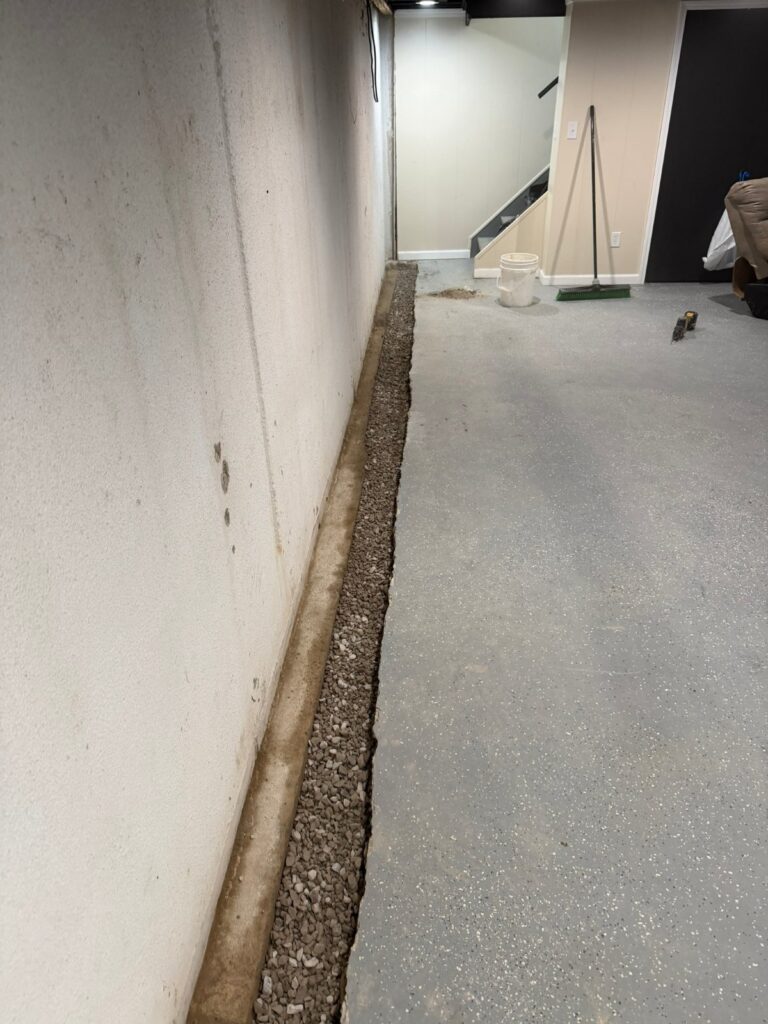
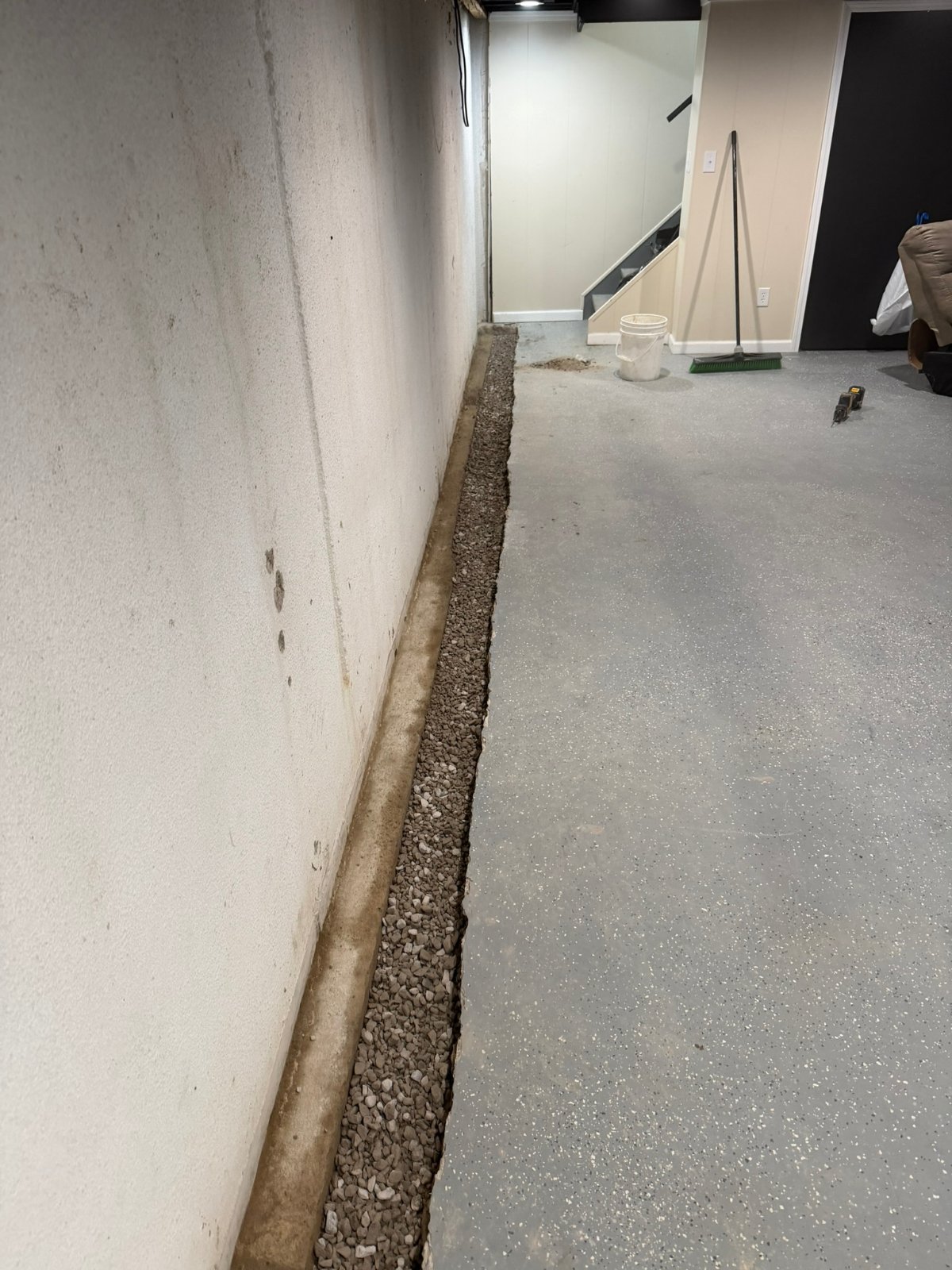
- Interior drain tile and a sump for water at the floor joint. Approximately $4,500–$8,000 for about 40 linear feet of wall, not including the sump. A sump pump system adds approximately $2,500 to $3,000. A full basement done from the inside is priced by its total linear footage; a large one (about 250 linear feet, with one or two sump systems) can run up to approximately $35,000. Contact us for accurate pricing. We have to inspect the job before we can give you a price. See interior waterproofing.
- Back up the sump. A battery or water-powered backup pump is approximately $1,500. See sump pumps.
- Camera the sewer line first, then consider a backwater valve. A sewer camera inspection is approximately $350 and shows what’s going on in your line. Contact us for accurate pricing. We have to inspect the job before we can give you a price. A backwater valve lets wastewater out but closes when sewage tries to come back in.
For the full picture, read our basement flood protection guide and what to do after a sewer backup.
Frequently Asked Questions
1. Will Macomb County’s stormwater projects stop my basement from flooding?
They lower the chance of the public sewer system overflowing or backing up in big storms, but they don’t stop groundwater coming through cracks, rod holes or the floor joint, and they can’t fix your own sump pump or sewer line.
2. Is a wet basement wall the same as a sewer backup?
No. Clear water at a crack or along the floor edge is groundwater pushing through the foundation. Dirty water coming up a floor drain is a sewer problem. The first is fixed with crack injection or drain tile and a sump, the second with a sewer camera inspection and often a backwater valve.
3. Does a backwater valve help if the city sewer backs up?
Yes, that’s what it’s for. A backwater valve on your sewer line lets wastewater leave the house and closes when sewage tries to flow back in. We camera the line first, approximately $350, to see its condition. Contact us for accurate pricing. We have to inspect the job before we can give you a price.
We’re Mansour’s Innovations, a waterproofing, excavation and plumbing contractor based in Shelby Township, in business since 2014 and serving Macomb and Oakland counties. Book a free estimate.