


Updated
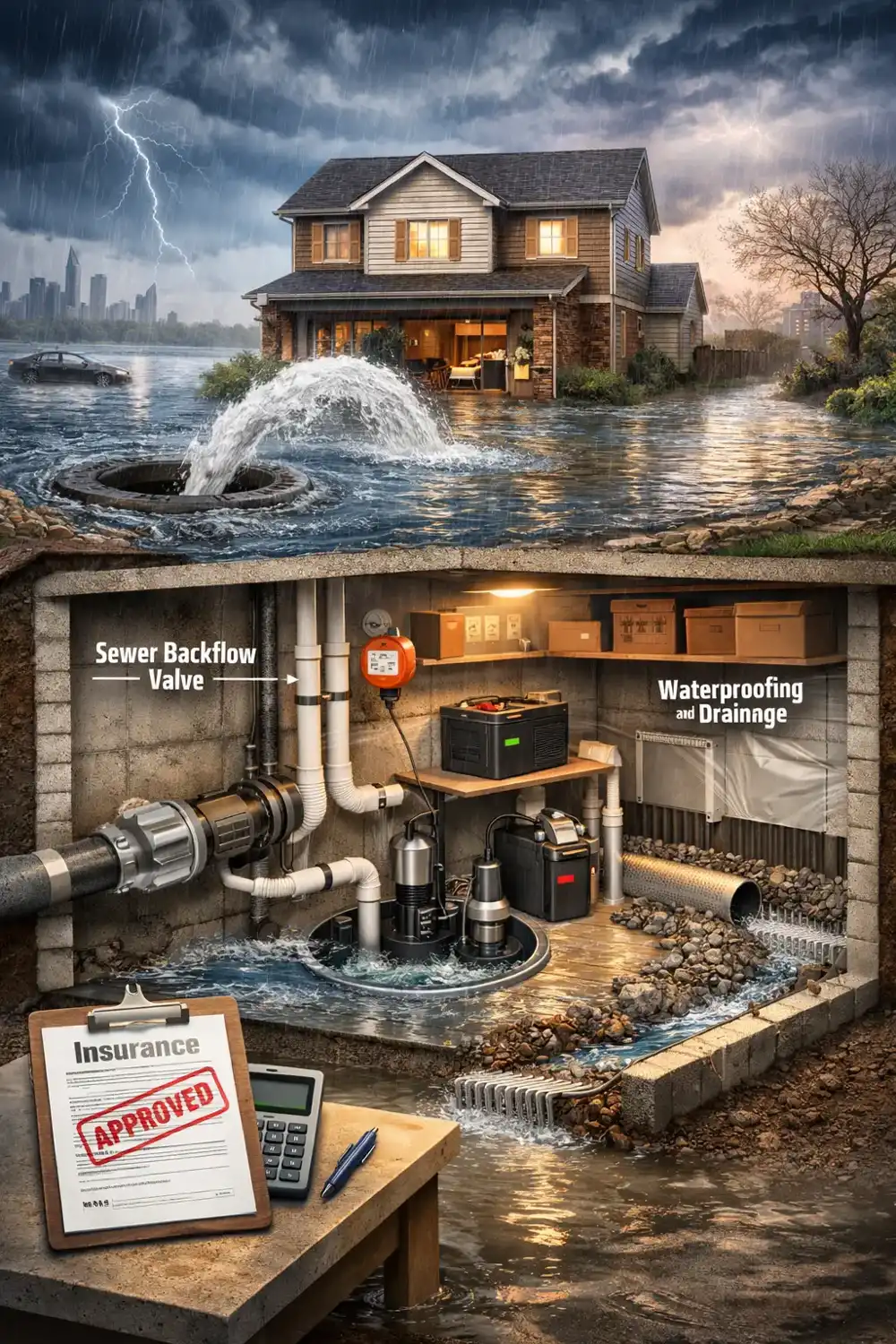
Michigan basements flood one of three ways: groundwater through cracks, rod holes and the cove joint; a sump pump that fails or loses power in a storm; or the city sewer backing up through a floor drain. The fix is layered: seal cracks, drain tile and a sump, a battery or water backup, and a backwater valve. Estimates are free.
The Reality of Basement Flooding in Southeast Michigan
Heavy rains, overloaded sewers, and those sudden spring thaws – if you’re a homeowner in Clinton Township, Sterling Heights, St. Clair Shores, or anywhere in Southeast Michigan, you’ve probably seen it happen. One minute your basement is storage and laundry space, the next it’s a disgusting, expensive nightmare.
According to FEMA’s Michigan flood resources, our region experiences significant flooding events that cause millions of dollars in damage annually. The combination of aging municipal sewer infrastructure, clay-heavy soil, and increasingly intense storm patterns makes basement flooding a persistent threat for homeowners across Macomb County and Oakland County.
The Complete Protection System We Install
At Mansour’s Innovations, our job is to help keep your basement dry. Here’s the protection we put together, piece by piece, based on how your basement takes on water:
Sewer Backflow Valves
When city sewer lines become overwhelmed during heavy storms, sewage can back up through your drain pipes and into your basement. A sewer backflow valve (also called a backwater valve) is designed to allow water to flow in only one direction – out of your house.
There are two main types of backflow valves:
- Normally Open (Flap) Valves: Feature a hinged flapper that rests open and only closes when reverse flow occurs. Many include a clear plastic cover for easy visual inspection.
- Normally Closed (Gate) Valves: Start closed and open when wastewater flows out. If reverse flow occurs, the valve is already in the closed position, providing immediate protection.
Backflow valves should be installed on all pipes that leave the house or connect to equipment below the potential flood level.
High-Capacity Sump Pump Systems with Battery Backup
Your basement can become flooded when your primary pump stops working, when the power goes out, or when torrential rains overload the pump beyond its capacity. According to FEMA’s Basement Flood Mitigation guidelines, a battery backup sump pump is an essential, inexpensive safeguard against basement flooding.
Our high-capacity sump pump systems include:
- Primary pump: Handles normal water table conditions and routine groundwater
- Battery backup pump: Kicks in automatically during power outages – critical during the severe storms that often knock out electricity
- Water alarms: Alert you immediately if water levels rise unexpectedly
- Check valves: Prevent pumped water from flowing back into the sump pit
Full Basement Flood Protection System
Beyond individual components, we design complete protection systems that work together:
- Smart water sensors: Detect moisture before it becomes a flood
- Sealed floor drains: Prevent sewer gas and backup from entering
- Interior waterproofing: French drains and vapor barriers that manage groundwater
- Exterior drainage systems: Direct water away from your foundation before it can enter
Insurance and Your Flood Protection
Here’s something many Michigan homeowners don’t realize: a standard policy often leaves out the most common kinds of basement water damage.
Neither standard homeowners insurance nor flood insurance typically covers damage from sewer backups or sump pump failures. You need specific endorsements for this coverage.
Ask your insurance agent whether a sewer backup endorsement makes sense for your home, and whether the protection you’ve installed affects your rate.
We give you a written estimate and photos of the work for your records.
Why Michigan Basements Are Especially Vulnerable
Southeast Michigan faces unique challenges when it comes to basement flooding:
- Aging Combined Sewer Systems: Older suburbs like Royal Oak and Ferndale have combined sewer systems that handle both stormwater and sanitary sewage. During heavy rains, these systems become overwhelmed.
- High Water Tables: Areas near Lake St. Clair, the Clinton River, and throughout Harrison Township and Mount Clemens have naturally high water tables that put constant pressure on foundations.
- Clay Soil: Michigan’s clay-heavy soil doesn’t absorb water well, causing it to pool around foundations and push through cracks.
- Freeze-Thaw Cycles: Our harsh winters create foundation cracks that become water entry points during spring thaw and heavy rains.
The Real Cost of Not Having Protection
Consider what’s at stake without proper flood protection:
- Ruined carpets, furniture, and stored belongings
- Mold and costly cleanup when water is left sitting
- Drywall replacement throughout the basement
- HVAC system damage if your furnace or water heater is affected
- Lost time dealing with restoration companies at 2 a.m.
- That sick feeling every time you open the basement door after a storm
The right protection, put in before the storm, cuts that risk way down and lets you use your basement again without holding your breath every time it rains.
What We’re Currently Offering Michigan Homeowners
Right now, Mansour’s Innovations is offering Southeast Michigan homeowners:
- FREE flood-risk evaluation of your home – we’ll identify vulnerabilities and recommend solutions
- A heavy discount on bigger jobs: Full-basement waterproofing jobs, and jobs with more than two cracks or rod holes, get a heavy discount.
- A written estimate and photos of the work for your records
Don’t wait for the next big rain to remind you why you needed this protection.
Free Flood-Risk Evaluation
Let us assess your home’s flood vulnerabilities and recommend the right protection system. We’ve been protecting Michigan basements since 2014 – we know what works in our local conditions.
Maintenance: Keeping Your Protection Working
Once installed, flood protection systems require minimal maintenance. You should check your backflow preventer at least once per year to:
- Remove any debris that could clog the valve
- Ensure all moving parts have free movement
- Test that the flapper or gate closes properly
For sump pumps, FEMA recommends testing your system quarterly by pouring water into the pit and ensuring the pump activates. Battery backup systems should have their batteries replaced every 2–3 years.
If something changes in your basement, call us. Coming out to look and give you a price is a free estimate.
What Basement Flood Protection Costs in Michigan
- New sump system with a sealed basin: approximately $2,500–$3,000. Contact us for accurate pricing. We have to inspect the job before we can give you a price. A pump swap in a sound basin is approximately $600 (we bring the pump). See sump pump installation.
- Battery or water-powered backup pump: approximately $1,500 each. Here’s how to decide if you need one.
- Backwater valve: approximately $3,500 to $6,000 installed inside the basement and approximately $6,000 to $8,000 for an exterior install, depending on where the line is, how deep it is, where the valve goes and what is around the dig. Contact us for accurate pricing. We have to inspect the job before we can give you a price. Read whether you need one or see our backwater valve installs.
- Sewer camera inspection: approximately $350, including the line locate, a saved video and a written report. Contact us for accurate pricing. We have to inspect the job before we can give you a price.
- Interior drain tile: approximately $4,500–$8,000 for about 40 linear feet of wall, not including the sump, with a heavy discount on full-basement jobs. A sump pump system adds approximately $2,500 to $3,000. A full basement done from the inside is priced by its total linear footage; a large one (about 250 linear feet, with one or two sump systems) can run up to approximately $35,000. Contact us for accurate pricing. We have to inspect the job before we can give you a price.
- Foundation cracks and rod holes: small cracks approximately $500–$600 each, a full-height crack approximately $1,500, rod holes approximately $150 each.
Frequently Asked Questions
1. How do I protect my basement from flooding?
Layer your defenses: a reliable sump pump with a battery or water-powered backup, a backwater valve if you are on a combined sewer, good grading and downspout extensions outside, and waterproofing (drain tile or exterior membrane) if groundwater gets in. The right mix depends on how your basement floods.
2. What causes most basement flooding in Michigan?
Usually one of three things: a sump pump that failed or lost power during a storm, a sewer backup pushing water up a floor drain, or groundwater seeping in through cracks and the wall-floor joint during the spring thaw. Finding which one is the first step.
3. Does a backwater valve stop basement flooding?
It stops one specific cause: sewage backing up through your floor drain when the city sewer overloads in a storm. It will not stop groundwater or a failed sump pump, so it is one part of a complete plan, not the whole answer.
4. How much does basement flood protection cost in Michigan?
It depends on how your basement floods. Approximately: a new sump system $2,500–$3,000, a battery or water-powered backup approximately $1,500, interior drain tile $4,500–$8,000 for about 40 linear feet of wall, not including the sump, and a sewer camera inspection $350 with the locate, saved video and written report. A sump pump system adds approximately $2,500 to $3,000.
A full basement done from the inside is priced by its total linear footage; a large one (about 250 linear feet, with one or two sump systems) can run up to approximately $35,000. Contact us for accurate pricing. We have to inspect the job before we can give you a price. A backwater valve is approximately $3,500 to $6,000 installed inside the basement and approximately $6,000 to $8,000 for an exterior install. Contact us for accurate pricing. We have to inspect the job before we can give you a price. Estimates are free.
5. Does homeowners insurance cover a flooded basement in Michigan?
Usually not by default. Sewer backups and sump pump failures typically need a separate endorsement on your policy. Ask your agent what yours covers before the next big storm.
Related reading: backwater valves in Michigan: do you need one?, Oakland County’s HomeGuard backwater pilot in Berkley, explained, and what Macomb County’s stormwater projects fix and what they don’t.