


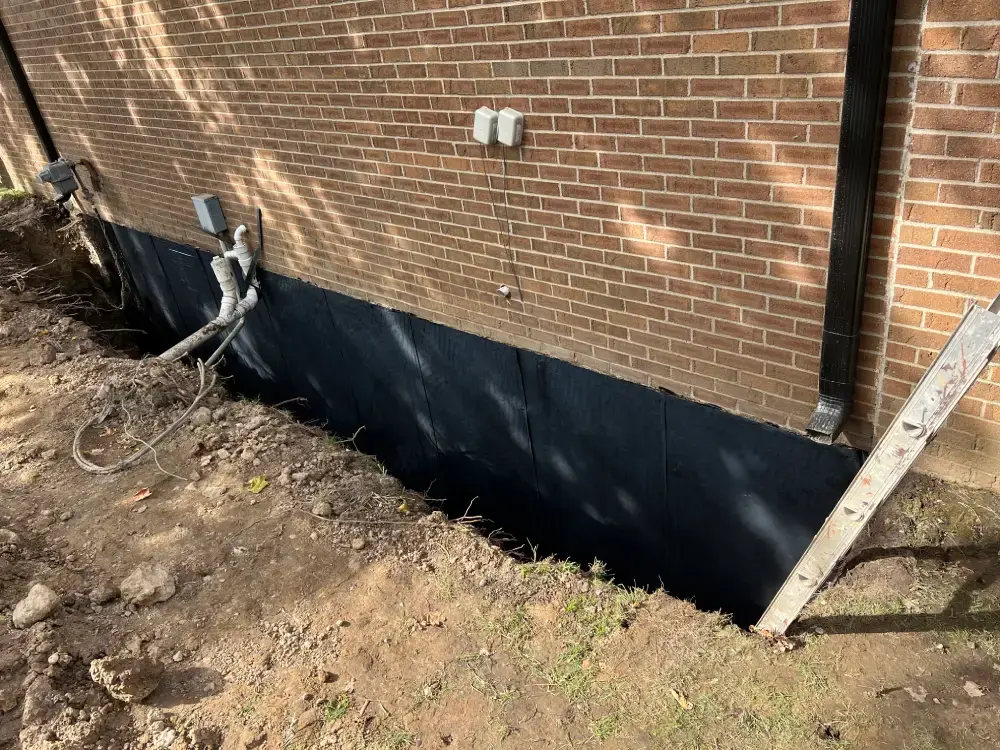
This page is for the day after. Your basement took water, maybe in a storm like the one that swamped the east side and Dearborn at the end of June 2021, maybe because a pump quit while you were away. You need to know what to do first, what has to go, and what to fix so you aren’t standing in the same spot next summer.
The first day
Safety comes before anything else. If the water is up near outlets, the furnace or the water heater, don’t wade in. Have DTE cut the power, or switch off the main breaker yourself only if you can reach the panel from somewhere dry. If you smell gas, get out and call from outside.
Then work out what kind of water it was. In most of the Wayne County towns we work in, water that came up through the floor drain during a big storm is sewer water, even when it doesn’t look like it. Treat it that way. Boots and gloves, and nothing porous that sat in it gets kept. Clean groundwater from the walls is less of a concern than sewage, but wet materials can still start growing mold within a few days.
Photograph and film everything before you move it, including the water line on the walls and the floor drain. Keep a list of what you throw away. Call your insurance company that day and ask specifically about sewer backup coverage. It’s usually a separate add-on to a homeowners policy, and a lot of people learn they never had it.
Filing a claim with the sewer authority won’t pay for the fix
After June 2021, about 24,000 people filed damage claims with the Great Lakes Water Authority, and every one was denied. GLWA leaned on a Michigan law that makes a public sewer owner liable only when a defect in its system was at least half the cause of a backup, and on its own investigators’ finding that the rain simply outran the system. You can still file with your city if you believe its sewer failed, and the legal deadline for notice is short, so don’t sit on it. Just don’t plan your repairs around that money arriving.
What we check when we get there
When we come out after a flood, we’re looking at how the water got in as much as at what it ruined. Did the floor drain back up, and is there already a backwater valve? Sometimes there is one, stuck open with debris. We check the sump pump, the float, the check valve and the discharge line. We look along the walls and the floor joint for where groundwater came through. Once the system has drained down, we run a camera through the sewer lateral.
Roughly 1,300 homes flooded in Grosse Pointe Farms alone that June night, and reports put the Dearborn count in the thousands. A lot of those basements took water both ways at once, up through the drain and in through the walls, and the repair has to answer both.
We also check what you can’t see. A moisture meter along the bottom plate of finished walls, and a thermal camera to find wet insulation and soaked framing behind drywall that looks fine from the room side. A sour, musty smell a week after the water is gone usually means something porous is still holding water. Finding that now saves you from opening the wall again in the fall.
Drying out, and what doesn’t survive
Get the water out fast with a pump or a wet vac, then get air moving. Fans and a dehumidifier running nonstop, with windows open if it’s dry outside. Concrete and masonry come back, they just need a week or two.
After sewer water, these go to the curb:
- Carpet and pad.
- Drywall, cut at least a foot or two above the water line.
- Fiberglass insulation behind it.
- Particle board furniture and paper-backed paneling.
- Cardboard boxes and anything stored in them that soaked up water.
After clean groundwater, drywall that dries within about two days can sometimes stay, though on a finished wall over old masonry we’d usually cut it anyway to check what’s behind it. Solid wood, metal and the masonry walls themselves generally come through fine. Have an HVAC tech look at the furnace before you run it, and get the water heater checked if its burner got wet.
If you’d rather not do the cleanup yourself, our flood restoration crew handles it, opening walls where they need to be opened and taking moisture readings before anything gets closed back up.
Fixing it so it doesn’t happen again, in order
Once the basement is dry, this is the order we’d go in, and the order matters.
First, camera the sewer lateral and repair any broken sections. Second, take downspouts and footing drains off the sewer. Third, put a backwater valve on the main line. Fourth, add or replace the sump pump, with a battery or water-powered backup. Fifth, install interior drain tile if groundwater came through the walls or the floor joint. Last, finish the basement again if you want to.
The valve goes in before the drain tile because on the east side and in Dearborn the sewer is usually the bigger source. The backup pump goes in before the finishes because the storms that flood basements here are the same ones that cut the power. And when you do finish again, choose materials that can take getting wet. Rigid foam insulation instead of fiberglass, vinyl plank instead of carpet, drywall held off the slab with a gap at the bottom.
If it’s the middle of the night and water is still coming in, we take emergency calls around the clock at (586) 345-7292.
Questions we get about this in Wayne County
Our basement in Grosse Pointe Farms flooded overnight. What should we do before anyone gets here?
Stay out of the water if it’s near outlets or appliances, and shut off the main breaker only if you can reach it from a dry spot. Assume water that came up the floor drain is sewage. Photograph and video everything, including the water line on the walls. Call your insurer and ask about sewer backup coverage. Then start getting the water out and air moving once it’s safe.
GLWA denied our June 2021 claim. Is there anything else we can do?
GLWA’s denials rested on a Michigan rule that a public sewer owner has to be at least half the cause of a backup to be liable, along with its investigators’ conclusion that the rain exceeded the system’s capacity. Whether anything more can be done is a question for an attorney, not for us. What we can do is set your house up so the next storm of that size ends differently.
Can we keep the drywall after our basement flooded?
If the water was sewage, cut it out at least a foot or two above the water line, along with the insulation behind it. If it was clean groundwater and the drywall dries within about 48 hours, it can sometimes stay, though we’d still open the bottom to check the insulation and the back of the board. Mold behind drywall in a damp Wayne County basement is very common.
How long does a flooded basement take to dry out?
Once the water is out and fans and a dehumidifier are running around the clock, the air and surfaces dry in a few days. Concrete floors and masonry walls take a week or two to get back to normal. We check with a moisture meter before anyone rebuilds. Closing walls up too early is the most common way a flood turns into a mold problem a few months later.
Our sump pump stopped when the power went out in the storm. What should we have had?
A backup that doesn’t need house power. A battery backup runs a second pump for several hours, and a water-powered backup runs on city water pressure for as long as the water stays on. In big Wayne County storms the power and the pump fail together far too often. We’d also check whether your main pump is sized for the water it’s handling.
Our basement had never flooded before 2021. Do we really need a backwater valve now?
If the water came up the floor drain, yes. The regional sewer will fill the same way in the next storm that size, and a valve keeps sewer water from coming back into the house once the pipe under the street is full. We camera the lateral first, because a valve on a broken pipe doesn’t protect much.
Will homeowners insurance cover a sewer backup in our Dearborn basement?
Only if your policy has a sewer or water backup endorsement, which most standard policies don’t include automatically. Check now rather than after the next storm, and look at the coverage limit too, since basement finishes and contents add up quickly. If you’re not covered, it’s usually something you can add with a call to your agent.
Recent Wayne County jobs on video
Real jobs filmed by Imad “Matt” Mansour and the crew – no stock footage. Tap a video to play it with sound.
Underground Sewer Line Repair in Detroit, MI
Crumbled Catch Basin Rebuilt at Wayne State University, Downtown Detroit
Hydro Jetting + Sewer Camera Scope at a Commercial Plaza in Livonia, MI
See more job videos on our TikTok · Browse our project gallery